
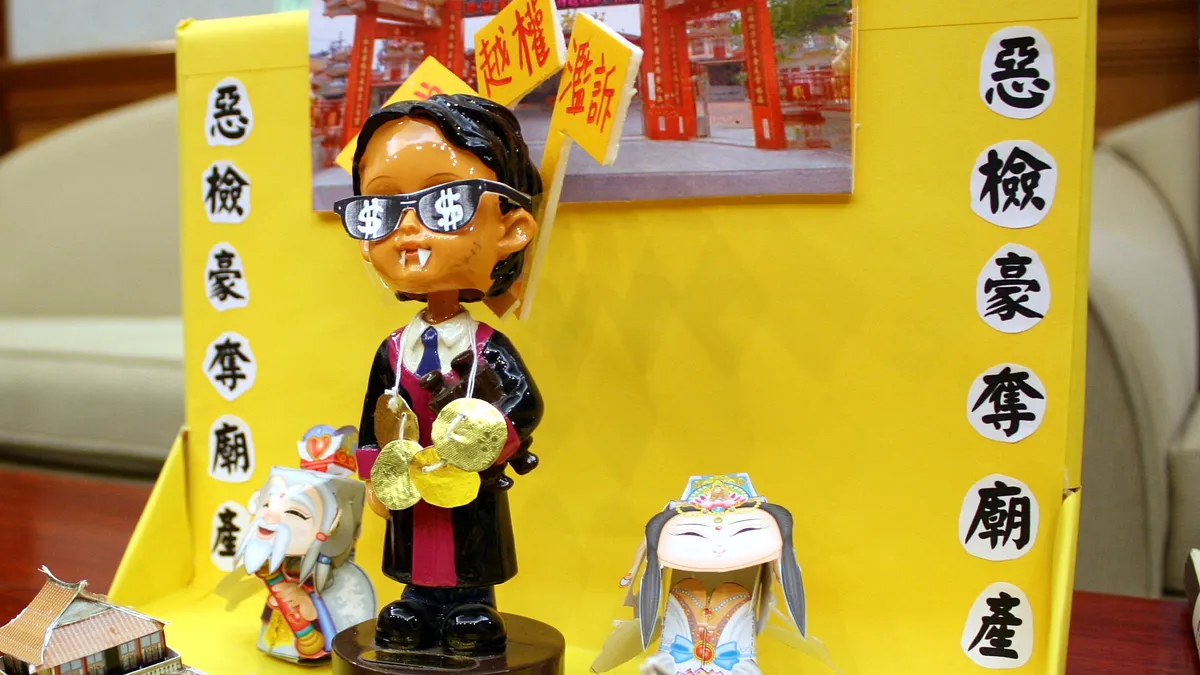
Demanding Judicial Accountability: A Comprehensive Guide to Challenging Unfit Judges and Prosecutors under Taiwan’s Judges Act
Last edited: 2026-08-25
The Judges Act was promulgated by the President on July 6, 2011, establishing an individual case evaluation mechanism to remove unfit judges and prosecutors, which will officially take effect on January 6, 2012. Since then, the public has gained the statutory right to report judges and prosecutors and pursue disciplinary sanctions against unfit personnel through the Disciplinary Court. Although the current Judges Act earns only a modest score of 50 out of 100, compared to the zero-accountability environment before its enactment, it is still far better than nothing! What should members of the public do when encountering an unfit judge or prosecutor? What statutory protections does the Judges Act provide? The following provides an accessible and thorough breakdown:
Which Cases Are Eligible for "Individual Case Evaluation"?
Pursuant to Article 36 of the Judges Act, the limitation period for requesting an individual case evaluation is two years. Counting back two years from the implementation date of January 6, 2012, the underlying facts of the case must have occurred on or after January 6, 2010, to be eligible for evaluation. The various scenarios and illustrative examples are organized in the table below:
| Type | Start Point of Limitation Period | Description and Example |
|---|---|---|
Unrelated to Specific Cases |
Within 2 years from the time of the act |
On March 10, 2012, at a presidential campaign rally for a political party, Prosecutor A attended as a representative of the legal community and canvassed for votes. An evaluation request can be made from that day until March 9, 2014. |
| Involving Specific Cases | Within 2 years from the conclusion of the case |
Judge B verbally abused the defendant during a court hearing with slurs and sentenced the defendant to 7 years' imprisonment on January 26, 2010. An evaluation request can be made from the day of sentencing until January 25, 2012. |
| Cases with Apparent and Material Errors | Within 2 years from final judgment or 6 years after acceptance by the court |
Judge C knowingly convicted a defendant despite blood palmprint evidence excluding them, a decision later overturned on appeal with a final acquittal. The district court docketed the case on July 8, 2006. An evaluation request can be made within 2 years from the day following the final acquittal; or, if not yet finalized but the district court has accepted the case for 6 years, requests can also be made within 2 years starting from July 7, 2012. |
Regarding the limitation period, the public should pay special attention to the following:
- In judicial practice, the "conclusion" of a case does not refer to the point when a case reaches a final and unappealable judgment, but rather the point when the case leaves the handling of the evaluated judge or the investigation of the evaluated prosecutor. For example, if Defendant A-kuang was insulted by Judge B and wished to file a complaint, and Judge B sentenced A-kuang on January 26, 2010, after which A-kuang appealed and was ultimately acquitted on March 5, 2012, the conclusion date for evaluation purposes is January 26, 2010, not March 5, 2012.
- Because the Judges Act does not permit citizens to file evaluation requests directly with the Judges Evaluation Committee of the Judicial Yuan, requests must be submitted through statutory agencies or organizations to be legally valid. For instance, if Defendant A-kuang chooses to lodge a complaint against Judge B with the Kaohsiung District Court, and the court fails to submit an individual evaluation request on his behalf by January 25, 2012, A-kuang's case can no longer be used to request an evaluation against Judge B.
- Currently, judicial practice applies an exceptionally strict standard to "cases with apparent and material errors," making such requests extremely difficult to sustain. Therefore, members of the public are advised not to rely on the deadline of "within 2 years from final judgment or 6 years from court acceptance," but rather to submit petitions to statutory bodies "within 2 years of the case's conclusion before that official."
Which Organizations Can the Public Approach to Request an Individual Case Evaluation?
Pursuant to Article 35 of the Judges Act, the public cannot directly request an individual case evaluation from the "Judges Evaluation Committee of the Judicial Yuan," but must do so through:
Article 35 of the Judges Act: "Where a judge falls under any of the circumstances set forth in the paragraphs of Article 30, Paragraph 2, the following personnel, agencies, or organizations may request the Judges Evaluation Committee to conduct an individual case evaluation if they deem it necessary: 1. Three or more judges belonging to the same organ as the judge under evaluation. 2. The prosecutors office corresponding to the organ, superior organ, or court to which the judge under evaluation belongs. 3. The bar association of the jurisdiction where the court to which the judge under evaluation belongs is located, or a national bar association. 4. A foundation or public interest-oriented incorporated association that has been lawfully established for three years or more, with registered property totaling NTD 10 million or more for foundations, or 200 or more members for incorporated associations, which has achieved results in strengthening the judiciary and has been permitted by the competent authority of the enterprise to request individual case evaluations."
-
Official Channels
File a complaint with the organ where the unfit judge or prosecutor is employed, requesting the initiation of an individual case evaluation. In addition, pursuant to Articles 20 and 94 of the Judges Act, the Judicial Yuan and the Ministry of Justice—as the highest supervisory authorities for the judicial and prosecutorial systems respectively—also have the authority to refer cases for individual case evaluation when they believe a judge or prosecutor has engaged in conduct warranting disciplinary action. -
Private Channels
Local bar associations exist in every county and city where complaints can be lodged to request assistance in filing an individual case evaluation. Other eligible private public-interest organizations include: Name
Telephone / Address
Association for Human Rights, R.O.C.
(02)3993-6900 Ext. 1
4F.-3, No. 23, Sec. 1, Hangzhou S. Rd., Zhongzheng Dist., Taipei City
Taiwan Jurists Association
(02)2758-6306
9F., No. 380, Sec. 1, Keelung Rd., Xinyi Dist., Taipei City
Prosecutor Association Republic of China
(02)2382-5222
3F., No. 131, Bo'ai Rd., Zhongzheng Dist., Taipei City
Judicial Reform Foundation
(02)2542-1958
7F., Lane 90, Songjiang Rd., Zhongshan Dist., Taipei City
What Grounds Subject Judges and Prosecutors to Individual Case Evaluation?
Various behavioral patterns of unfit judges and prosecutors are exemplified in the tables below:
-
Grounds for Judge Evaluation
Grounds
Basis
Examples
Where there is factual evidence that, due to intent or gross negligence, the adjudication of a case contains obvious and significant errors, resulting in severe infringement upon people's rights and interests.
Article 30, Paragraph 2, Subparagraph 1
Judge D failed to carefully review the land registry transcript and directly ruled in accordance with the plaintiff's request that the defendant transfer the land to the plaintiff, only to discover later that the land did not belong to the defendant at all.
Breaching official duties, dereliction of duties, or improper speech and conduct, of a serious nature.
Article 21, Paragraph 1, Subparagraph 2; Article 30, Paragraph 2, Subparagraph 2
Judge E failed to increase the defendant's sentence pursuant to recidivism regulations, disregarded evidence of the defendant's criminal record, abused discretionary power, and sentenced the defendant to probation.
Seriously violating case-handling procedural regulations or official duty regulations, of a serious nature.
Article 30, Paragraph 2, Subparagraph 5
Judge F handled drug and juvenile cases, but failed to draft ruling documents, directly substituting them with oral declaration records, thus severely violating case-handling procedures.
Violating the Code of Judicial Ethics, of a serious nature.
Article 30, Paragraph 2, Subparagraph 7
Judge G scolded the defense counsel more than 20 times during court hearings with terms such as "stupid," "crazy," and "trash."
-
Grounds for Prosecutor Evaluation
Grounds
Basis
Examples
For cases where a final judgment has been rendered or cases that have failed to be adjudicated within six years from the date of first instance affiliation, or cases concluded with a non-prosecution disposition or a deferred prosecution disposition, where there is factual evidence that, due to intent or gross negligence, there are obvious and significant errors, resulting in severe infringement upon people's rights and interests.
Article 89, Paragraph 4, Subparagraph 1
Prosecutor H coerced and induced an innocent defendant into pleading guilty on the condition of a summary judgment procedure.
Slackness in duty, exceeding authority, or unbecoming conduct, of a serious nature.
Article 89, Paragraph 4, Subparagraph 2; Article 95, Paragraph 2
Prosecutor I seized 18 to 20 smuggled firearms, but falsely reported 50. Reporting fewer to claim credit and vie for rewards.
Seriously violating case-handling procedural regulations such as non-disclosure of investigations or official duty regulations, of a serious nature.
Article 89, Paragraph 4, Subparagraph 5
Prosecutor J brought media to the scene to photograph during a search and seizure, and repeatedly accepted interviews to discuss the case details publicly.
Violating the Code of Prosecutorial Ethics, of a serious nature.
Article 89, Paragraph 4, Subparagraph 7
Prosecutor K, under the pretext of discussing the case, privately invited a female party to meet, and demanded sexual acts or committed indecent acts to satisfy his desires.
-
Common Grounds for Evaluation of Judges and Prosecutors
Grounds
Basis
Examples
Where a judge or prosecutor registers as a candidate for public office without resigning from their position, or retiring or being laid off in accordance with the law, at least one year before the expiration of the term of office for the public office they intend to participate in, or prior to registration in the event of a re-election, by-election, or legislative election held after the dissolution of the Legislative Yuan by the President.
Article 15, Paragraphs 2 and 3; Article 30, Paragraph 2, Subparagraph 2; Article 89, Paragraph 4, Subparagraph 3
Prosecutor L's father, Councilor L, unexpectedly passed away four months before the election, and he inherited his father's aspirations to enter the election.
Where a judge or prosecutor joins political parties, political groups, and their activities during their term of office, or fails to withdraw from political parties or political groups joined prior to taking office, of a serious nature.
Article 15, Paragraph 1; Article 30, Paragraph 2, Subparagraph 2; Article 89, Paragraph 4, Subparagraph 4
Judge M organized a judicial sector support group for a presidential candidate and served as its chairperson.
Where a judge or prosecutor concurrently holds any of the following positions or businesses, of a serious nature:- People's representatives at all levels of central or local people's congresses/legislatures.
- Positions prohibited for civil servants to hold concurrently under civil service regulations.
- Members of regulatory committees or appeal review committees of organs other than judicial organs, or members of the Civil Service Protection and Training Commission.
- Directors, supervisors, or other responsible persons of private schools at all levels.
- Other positions or businesses sufficient to affect a judge's independent adjudication or incompatible with their professional ethics and positional dignity.
Article 16; Article 30, Paragraph 2, Subparagraph 2; Article 89, Paragraph 4, Subparagraph 4
Prosecutor N took on concurrent teaching jobs at cram schools specializing in lawyer and judicial officer exams to make money.
Where a judge or prosecutor commits acts damaging to the dignity of their office or trust in their duties, and fails to strictly maintain official secrets, of a serious nature.
Article 18; Article 30, Paragraph 2, Subparagraph 2; Article 89, Paragraph 4, Subparagraph 4
Prosecutor O, entrusted by a friend and under the pretext of investigating a case, retrieved telephone call logs of the friend's ex-wife to help the friend find out whether she had found a new romantic interest.
Unjustifiably delaying the progress of a case, affecting the rights and interests of the parties involved, of a serious nature.
Article 30, Paragraph 2, Subparagraph 6; Article 89, Paragraph 4, Subparagraph 6
Prosecutor P, without justifiable reason, handled 14 cases without holding a court session for half a year, and 6 cases without holding a court session for a year.
If the Judges (Prosecutors) Evaluation Committee determines that the circumstances set forth in the aforementioned statutory provisions indeed exist, the case may be referred by the Judicial Yuan or the Ministry of Justice to the Control Yuan for impeachment, and then submitted to the Disciplinary Court of the Judicial Yuan for disciplinary action. The Disciplinary Court may impose disciplinary sanctions such as dismissal, removal from office, transfer of position, fine, or reprimand against unfit personnel. As for minor or excusable circumstances, the Judges (Prosecutors) Evaluation Committee may refer the case to the Personnel Review Committee to administer administrative penalties.
Public files complaint→Agency or organization requests evaluation→Judges or Prosecutors Evaluation Committee reviews→Judicial Yuan or Ministry of Justice refers case→Control Yuan impeaches→Disciplinary Court disciplines
There are numerous behavioral patterns of unfit judges and prosecutors which cannot be listed exhaustively. Members of the public may visit the online databases of the Judges (Prosecutors) Evaluation Committee, the Control Yuan, the Commission on Discipline of Public Functionaries, and the Disciplinary Court to search past cases of penalized judges and prosecutors for reference and cite them as precedents for requesting individual case evaluations (most examples in this article are drawn from these sources). As for the detailed contents of violations of case-handling procedures, official duty regulations, or ethical norms, searches can be conducted in the regulatory query systems managed by the Judicial Yuan or the Ministry of Justice. Search methods and commonly used regulations are as follows:
| Unit | Search Method |
|---|---|
| Judges Evaluation Committee | Click on "Resolution Decisions on Individual Case Evaluations of Judges" |
| Prosecutors Evaluation Committee | Click on "Evaluation Resolution Decisions of the Prosecutors Evaluation Committee" |
| Control Yuan |
|
| Commission on Discipline of Public Functionaries | Click on "Select Judgment Search" → "Commission on Discipline of Public Functionaries" to search decision documents of the Commission |
| Disciplinary Court | Click on "Select Judgment Search" → "Disciplinary Court of the Judicial Yuan" to search Disciplinary Court judgments |
| Judicial Yuan Regulations | Click on "Our Court's Main Regulations"; commonly used regulations are as follows:
|
| Ministry of Justice Regulations | Click on "Comprehensive Search"; commonly used regulations are as follows:
|
What Kinds of Cases Will Not Be Accepted?
Pursuant to Article 37 of the Judges Act, there are seven categories of circumstances for which evaluations will not be entertained, exemplified in the table below:
| Judges Act Provision | Cases Not Subject to Evaluation | Examples |
|---|---|---|
| Article 37, Paragraph 1, Subparagraph 1 | The request for individual case evaluation does not comply with the provisions of Article 35. (Not requested by a lawful agency or organization) |
Mr. Wang, a member of the public, did not submit the request through a lawful agency or organization, but rather filed it solely under his own name; thus, it was not accepted. |
| Article 37, Paragraph 1, Subparagraph 2 | The request for individual case evaluation exceeds the period prescribed in the preceding article. (Exceeded statute of limitations) |
A-mei's case was prosecuted on December 2, 2011. She filed a complaint with Foundation Q accusing the prosecutor of coercing a guilty plea. Foundation Q requested an individual case evaluation on December 3, 2013, which was not accepted because it exceeded the two-year limitation period. |
| Article 37, Paragraph 1, Subparagraph 3 | Requests for evaluation regarding matters not belonging to individual judge evaluations. (Not circumstances prescribed in Articles 30 and 89 of the Judges Act) |
Judge R of the High Court dismissed an appeal filed by a certain person on the grounds of "failure to state specific reasons in the appeal". The person wanted to request an individual case evaluation against Judge R, but because the matter involved the policies of the Judicial Yuan and did not constitute circumstances prescribed in Article 30 of the Judges Act, it was not accepted. |
| Article 37, Paragraph 1, Subparagraph 4 | Requests for evaluation regarding legal interpretations. (Article 30, Paragraph 3, Article 49, Paragraph 1, and Article 89, Paragraph 5 of the Judges Act) |
Judge S held that a person involved in torture was not a person with lawful judicial adjudicatory functions, and that only minor offenses could be applied, yet the statute of limitations for prosecuting that offense had already expired. If an individual case evaluation is requested on this basis, it will be refused due to involving legal interpretation. |
| Article 37, Paragraph 1, Subparagraph 5 | Requests for evaluation re-submitted regarding events that have already been adjudicated by the Disciplinary Court, impeached by the Control Yuan, or resolved by the Judges Evaluation Committee. (Ne bis in idem) |
The Commission on Discipline of Public Functionaries had already decided to suspend Judge T from duties for 6 months for lobbying on behalf of his son involved in a hit-and-run; consequently, no organization may subsequently request an individual case evaluation based on the same grounds. |
| Article 37, Paragraph 1, Subparagraph 6 | The judge under evaluation has passed away. (Personal exclusivity of administrative penalties) |
Old Su was finally acquitted and wanted to request an individual case evaluation against Prosecutor U who had prosecuted him ultra vires back then, but if Prosecutor U had already passed away, the request would be refused. |
| Article 37, Paragraph 1, Subparagraph 7 | The request is manifestly groundless. (Article 35, Paragraph 2 of the Judges Act) | A certain organization requested an individual case evaluation against Judge V, attaching only several judgment documents rendered by Judge V without specifically stating reasons and applicable statutory provisions in a written petition, nor attaching evidence; thus, the request would be refused for being manifestly without specific grounds. |
Among the various events not subject to evaluation, the most controversial provision is that "legal interpretation" may not serve as grounds for evaluation; that is, disputes over whether a judge or prosecutor has correctly applied the law can, in principle, only be remedied by appealing to a higher court, and individual case evaluations against them under the Judges Act are not permitted.
In addition to "applying the law" when handling cases, judges also "determine facts," and the public is frequently dissatisfied with the "determination of facts." Disputes over the "determination of facts," when serious, constitute what is known as "abuse of discretionary power" (or "unlawful prosecution and appeal" in the case of prosecutors).
What is meant by the abuse of discretionary power? It can be roughly divided into:
- Determining facts without lawful investigation or lacking evidence. For example, without finding the murder weapon, the judge determines that the murder weapon was a bush knife or fruit knife.
- Determining facts not based on investigation results or the contents of evidence. For example, records prove that the defendant rented a car in Miaoli City, but the judge determines that the defendant committed the crime in Hsinchu City at that time.
- Determining facts in violation of empirical rules. For example, a prosecutor indicts and determines that a defendant raised "ghosts" (infants spirits).
- Determining facts in violation of logical rules. For example, hair at the scene did not belong to the defendant, but the judge instead determines that the defendant's statement cleaning the scene is true and cannot disprove that they did not commit the crime.
"Abuse of discretionary power" is a grave judicial problem. Although looking strictly at the statutory text of the current Judges Act, requests for individual case evaluations can be filed regarding the "abuse of discretionary power," judging from the resolutions currently rendered by the Judges (Prosecutors) Evaluation Committee, they are basically reluctant to conduct substantive reviews of judges' (prosecutors') discretionary mental judgments. Therefore, evaluation requests concerning the abuse of discretionary power are extremely difficult to establish.
What to Do When Encountering Unfit Judges or Prosecutors?
If you unfortunately encounter a terrible judge or prosecutor, it is recommended to apply for case file reviews and court recording audio discs after each court session, so as to completely preserve the detailed process of the judge or prosecutor handling the case. Not only can this be used to hold them accountable in the future, but actively reviewing files and copying discs can also convey the message that you take your rights seriously to the judges and prosecutors, reminding them to handle cases prudently to avoid being complained about later.
The above introduces the important provisions of the Judges Act for dealing with unfit judges and prosecutors, but statutory texts are dead letters and require "people" to bring them to life. Once you encounter an unfit judge or prosecutor, the most effective method to protect your own rights is to hire an outstanding lawyer to act as your litigation agent; only through the professional knowledge and skills of a lawyer can the public utilize the judicial system to serve themselves and check judicial officers wielding immense power. If you cannot afford to hire a lawyer, you can apply to the Legal Aid Foundation for assistance with lawyers and litigation fees.
Reporting Unfit Judges and Prosecutors: Doing Public Interest Together
The individual case evaluation system established by the Judges Act is an important tool for the public to check the abuse of power by judicial personnel. Although complaining about judges and prosecutors may not necessarily bring direct benefits to the parties involved, it provides tremendous benefits to society as a whole. Because an unfit judge or prosecutor handles hundreds or thousands of cases every year, failing to weed them out could create tens of thousands of miscarriages of justice at any time. Herein, our foundation calls upon the general public to step forward and report unfit judges and prosecutors to engage in public interest together. Do not let the tragedies that happened to you repeat themselves on others. The Judicial Reform Foundation and numerous public-interest organizations will certainly go all out to act as the strongest backing for complainants, jointly supervising judicial personnel, weeding out the bad to retain the good, and establishing a judicial culture worthy of public trust.
This article is an AI-generated translation of the original Chinese text. In the event of any discrepancy, the Chinese version shall prevail.