

Drug Policy Research
Our Position
-
Widespread drug use is a social problem that can no longer be ignored
In recent years, the spread of drugs in Taiwan has become a social problem whose scale and reach can no longer be ignored. From public health to prison overcrowding, and from the illicit profits of criminal organizations to the lives of drug users and their families, its effects demand serious attention.
-
Harsh drug sentences make it harder for people to return to society
For many years, one of Taiwan's main responses to drugs has been harsh punishment. Since the Statute for the Eradication of Opium and Narcotics was replaced by the Narcotics Hazard Prevention Act in 1997, selling Category 1 drugs, for example, has carried a statutory penalty of death or life imprisonment (in practice, courts usually reduce the sentence to between 15 and 18 years under Article 59 of the Criminal Code). But are harsh penalties really free of drawbacks?
Any criminal policy must take reintegration into account, because long periods of separation from society often make it harder for prisoners to rebuild their lives after release. If a criminal policy is designed without considering these factors, so that people leave prison even more cut off from society—or even more likely to reoffend because they have been pushed to its margins—it clearly defeats the purpose of punishment.
One distinctive feature of drug offenses is addiction. When legislators rely solely on harsh penalties to solve the drug problem, they ignore how vulnerable and isolated people with addictions are, and fail to consider that such penalties may make it even harder for them to return to society.
-
People with drug addictions need help and treatment
Other countries have shown that providing support and medical treatment to people with addictions, rather than punishing drug users, can dramatically reduce the number of people with drug addictions. The best-known example is Portugal.
Australia's range of diversion programs and drug courts also offer useful lessons. Australia offers defendants a variety of criminal diversion options so that they are not automatically sent to prison. In practice, Australian police may fine first-time or minor offenders for drug possession or use, require them to attend education sessions, or refer them to treatment. At the trial stage, specialized drug courts hear these cases and offer many different referral programs, and completing certain programs can even lead to a reduced sentence.
We believe that rather than treating people with addictions simply as criminals and cutting them off from society—leaving them caught in a cycle between prison and the margins of society—providing help and professional treatment is the only way to enable them to return to society and truly address the harm caused by drugs.
Problems with Taiwan's Drug Laws
-
Drug Classification
Article 2 of the Narcotics Hazard Prevention Act provides:
"Narcotics are classified into four categories according to their potential for addiction, potential for abuse, and harm to society, as follows:
1. Category 1: heroin, morphine, opium, cocaine, and related products (as listed in Schedule 1).
2. Category 2: opium poppy, coca, cannabis, amphetamine, pethidine, pentazocine, and related products (as listed in Schedule 2).
3. Category 3: secobarbital, amobarbital, nalorphine, and related products (as listed in Schedule 3).
4. Category 4: allobarbital, alprazolam, and related products (as listed in Schedule 4)."Taiwan thus divides drugs into four categories based on their potential for addiction, potential for abuse, and harm to society. Yet the classification of some substances is hard to justify.
Setting aside the long-running debate over cannabis, even the abortion pill RU486 once came close to being listed as a Category 4 drug. This happened because, when the Act was amended in 2003 to add Category 4, the legislative explanation sought to tie "controlled drugs" (regulated pharmaceuticals) to "narcotics."
These examples show that Taiwan's drug classification lacks rigorous logic and clear justification, and may at times reflect government agencies' concern with public perception. But criminal law is a severe form of punishment. Placing a substance in a particular category without sufficient reasons or empirical evidence is inevitably unfair to those who are punished as a result.
-
Excessive Penalties
The penalties for drug trafficking in Taiwan are set out in Article 4 of the Narcotics Hazard Prevention Act:
"A person who manufactures, transports, or sells Category 1 narcotics shall be sentenced to death or life imprisonment; a person sentenced to life imprisonment may also be fined up to NT$30 million.
A person who manufactures, transports, or sells Category 2 narcotics shall be sentenced to life imprisonment or imprisonment for not less than 10 years, and may also be fined up to NT$15 million.
A person who manufactures, transports, or sells Category 3 narcotics shall be sentenced to imprisonment for not less than 7 years, and may also be fined up to NT$10 million.
A person who manufactures, transports, or sells Category 4 narcotics shall be sentenced to imprisonment for not less than 5 years but not more than 12 years, and may also be fined up to NT$5 million.
A person who manufactures, transports, or sells equipment designed exclusively for manufacturing or using narcotics shall be sentenced to imprisonment for not less than 1 year but not more than 7 years, and may also be fined up to NT$1.5 million.
An attempt to commit any offense in the preceding five paragraphs is punishable."The most controversial provisions are those on selling Category 1 and Category 2 drugs. The closest point of comparison in Taiwanese law is the offense of homicide under Article 271 of the Criminal Code, Paragraph 1 of which provides: "A person who kills another shall be sentenced to death, life imprisonment, or imprisonment for not less than 10 years."
In terms of penalties, then, current law treats selling Category 1 drugs as slightly more serious than homicide, and selling Category 2 drugs as only slightly less serious.
Harsh measures against drug trafficking organizations and drug lords may seem reasonable on the surface. In the real drug market, however, drugs are hard to obtain, and many transactions are simply small exchanges among users themselves, involving tiny quantities and small sums of money.
As a result, in practice nearly all courts handling such cases invoke Article 59 of the Criminal Code, which provides: "If the circumstances of an offense clearly warrant sympathy and even the minimum statutory penalty would be too severe, the punishment may be reduced at the court's discretion." This shows that even most judges consider the penalties too harsh.
In August 2023, in Constitutional Court Judgment 112-Hsien-Pan-13, the Justices likewise held that the penalty for selling drugs under Article 4, Paragraph 1 is excessive and must be amended.
-
Misconceptions Fostered by Years of Government Campaigns
Beyond the problems in the drug laws themselves, the government's long-standing, hardline anti-drug stance has fostered public misconceptions and made legal reform difficult.
Taiwan's anti-drug campaigns have long promoted exaggerated prejudices and stigma against drugs and the people associated with them. The fear and sense of insecurity this creates have led the public to feel strong revulsion toward drug users.
In this climate, expert legal opinions on drug policy are rarely taken seriously or discussed, let alone acted upon.
The clearest example came in 2016, when legislators proposed a "treatment-first" approach to the offense of drug use. The proposal drew a storm of harsh public criticism, and this well-intentioned initiative ultimately went nowhere.
What We Have Done
JRF has worked in many different ways to improve Taiwan's drug policy.
We closely follow every amendment to Taiwan's drug laws and issue statements when appropriate, and we hold seminars on drug policy from time to time so that expert views can be heard and discussed.
On December 23, 2021, the Constitutional Court agreed to hear a constitutional challenge to Article 4, Paragraph 1 of the Narcotics Hazard Prevention Act. In June 2022, to help members of the public protect their constitutional rights, JRF published a guide to filing a constitutional petition together with sample briefs, free for anyone wishing to file, and applied to submit an amicus curiae brief to the Court.
Looking Ahead
Discussing drug policy has never been easy. Given widespread stereotypes about drug offenses and the government's long-standing anti-drug strategy, there has been little room in Taiwanese society for serious discussion of the many important issues drug policy raises.
In 2020, however, in J.Y. Interpretation No. 790, the Grand Justices took up the problem of excessive penalties for growing cannabis and declared Article 12, Paragraph 2 of the Narcotics Hazard Prevention Act unconstitutional. In J.Y. Interpretation No. 792, issued the same year, they criticized Taiwan's courts for interpreting "selling" drugs under the Act far too broadly.
Then, in August 2023, in Judgment 112-Hsien-Pan-13, the Constitutional Court addressed a question that J.Y. Interpretation No. 476 had declined to confront. The Court held that Article 4, Paragraph 1 of the Narcotics Hazard Prevention Act, which provides that "a person who manufactures, transports, or sells Category 1 narcotics shall be sentenced to death or life imprisonment," still results in excessively harsh punishment for extremely minor offenses even when sentences can be reduced under Article 59 of the Criminal Code, so that punishment is disproportionate to culpability. It ordered the relevant authorities to amend the law. In response, JRF formed a working group on amending the Act in 2024. In addition to examining the problem identified by the Court—excessive penalties for minor cases of selling Category 1 drugs—the group reviewed many other issues in the Act. In 2025, we released a civil society draft amendment to the Narcotics Hazard Prevention Act, interviewed people affected by the law and their lawyers, and launched related advocacy efforts.
We have been here all along, and we will continue to be. From legislative reform to justice in individual cases, from dispelling old myths to removing stigma and labels, all of this matters to us. We carry our ideals forward and take on difficult challenges, because everyone in our society deserves a better future.
2025
Op-Ed | Can Our Legal System Distinguish Between a "Major Drug Lord" and a "Minor Drug User"?
Does the Narcotics Hazard Prevention Act truly suffer from excessively heavy penalties? Exploring this issue requires…

2025
JRF Newsletter: October 2025 | Who Is Trapped in the Shadow of Extreme Sentences for Drug Offenses? From the "Constitutional Court Massacre" to "Arbitrary Legislative Amendments by Agencies"
Through this issue of our newsletter, we hope to let everyone see the lives actually impacted behind the law through…
2025
Why Was I Sentenced to 15 Years, Even Heavier Than My Ex-Boyfriend Who Actually Sold the Drugs? The Story of One of the Eight Petitioners Accepted under Constitutional Court Judgment No. 13 of 2023
On those three occasions, she merely followed her boyfriend's instructions to pick up the phone and hand the package to…

2025
The Long and Winding Road of Judicial Reform on the Disproportionality of Drug Laws: Beyond the Eight Individuals Accepted in Constitutional Interpretation No. 13 of 2023
In July of last year, the Ministry of Justice proposed a newly amended draft of the Narcotics Hazard Prevention Act in…

2025
Sidelights | Drug-Using Youth Forum: Perspectives from Policy and Practice
What should you do when a student shares their story involving drugs with you? What are the legal regulations, and how…
2025
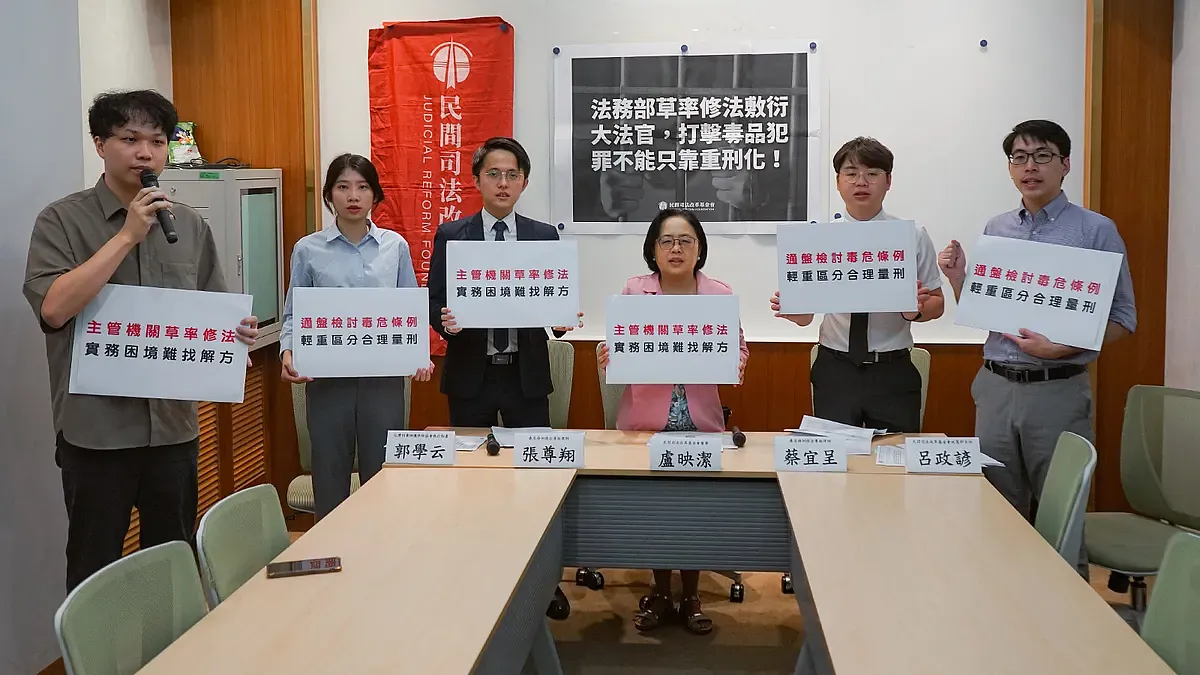
Press Release | Ministry of Justice's Hasty Legislative Amendments Brush Off the Constitutional Court: Combating Drug Crime Cannot Rely Solely on Extreme Punitiveness
Last year, our Foundation established the "Narcotics Hazard Prevention Act Amendment Working Group." In addition to…
2025
The Liang Hsuan-Yung Prohibition of Disadvantageous Modification Case—How Can an Appellant Be Punished? A Reduced Guilt, Yet a Heavier Sentence
The defendant in this case, Liang Hsuan-yung, has been involved in numerous drug-related cases and has recently filed…
2025
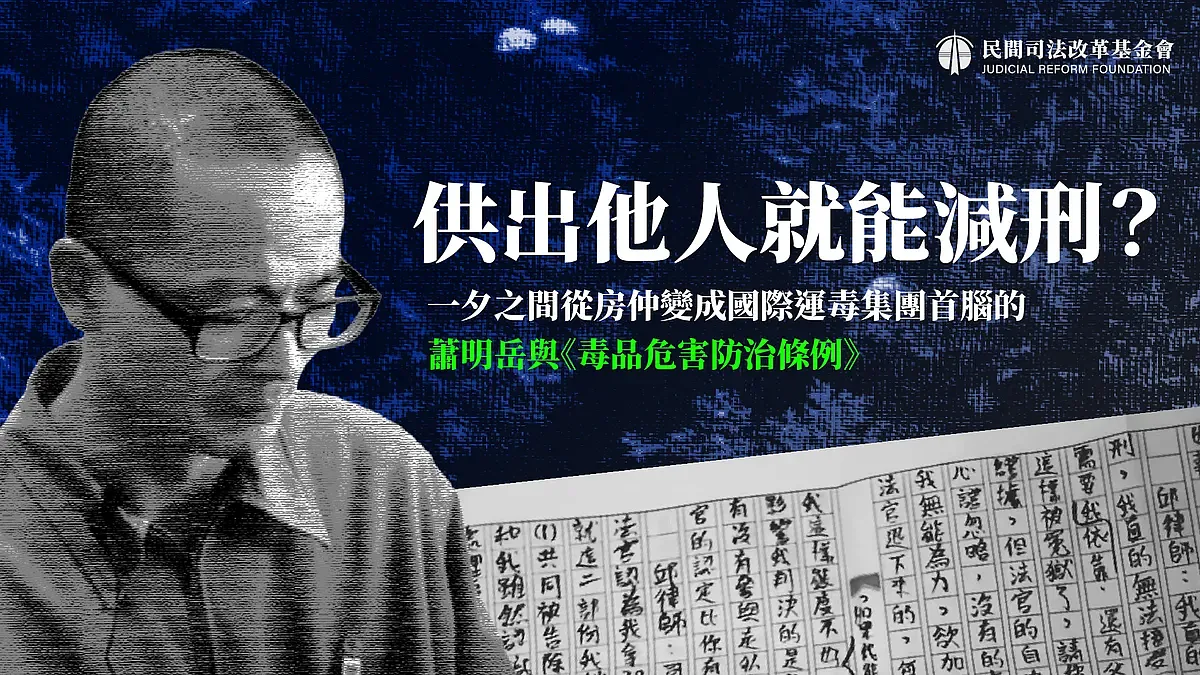
Lecture | Informing on Others Leads to Sentence Reduction? Hsiao Ming-yueh's Transformation Overnight from a Real Estate Agent to the Mastermind of an International Drug Trafficking Ring, and the Narcotics Hazard Prevention Act
In 2011, Hsiao Ming-yueh was accused by a co-defendant of being the ringleader of an international drug trafficking…
2024
Workshop | Campus Regulations Concerning Children and Youths and Drug Prevention Education Capacity Building
Following the amendments to the Juvenile Justice Act, how to connect, integrate, and divide labor among various…
2024
Sidelights | Under the Statutory Provisions, Who Is the Victim of Justice? Potential Miscarriages of Justice Arising from the Narcotics Hazard Prevention Act
This lecture invited Attorney Li I-T'ing, counsel for the petitioner in Constitutional Court Judgment No. 2 of 2023, to…
2024
Statement | The Ministry of Justice's Legislative Draft is Hasty and Remains Unconstitutional—Opinions on the Ministry of Justice's Draft Amendment to the Narcotics Hazard Prevention Act
In response to Constitutional Court Judgment No. 13 of 2023, the Ministry of Justice announced a draft amendment to the…
2023
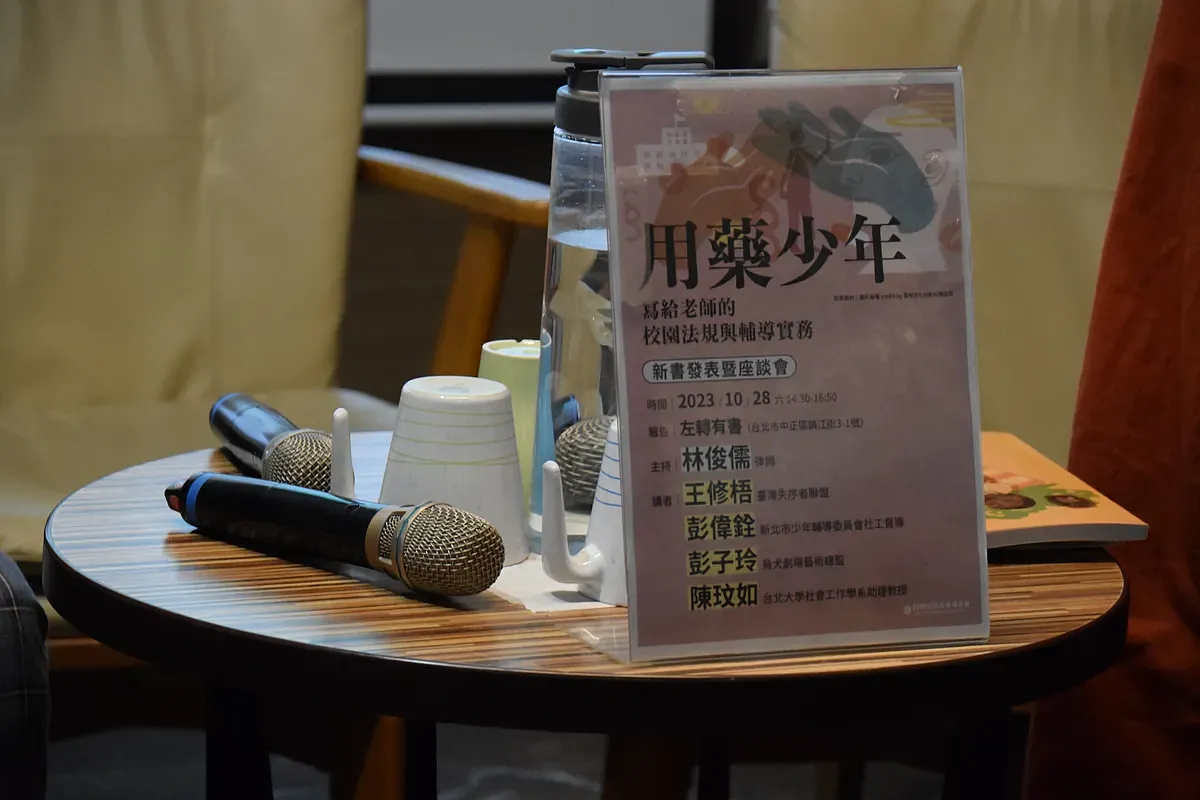
Sidelights | Book Launch: "Youth and Drug Use: Campus Regulations and Counseling Practices for Teachers"
The authors of "Youth and Drug Use: Campus Regulations and Counseling Practices for Teachers" share their thoughts and…