
How to Obtain Evidence for Reporting: A Judges Act Manual on File Review
Last edited: 2026-08-25
The individual case evaluation mechanism under the Judges Act aimed at removing unfit judges and prosecutors officially came into effect on January 6, 2012. Pursuant to Article 35, Paragraph 2 of the Judges Act, reporting an unfit judge or prosecutor requires specific evidence. In the absence of such evidence, the Judges Evaluation Commission will issue a resolution "not to submit for evaluation" in accordance with Article 37 of the same Act, or a resolution that the "request is unfounded" pursuant to the first half of Article 38 of the same Act. To this end, the JRF Complaint Center has authored this article to share practical cases and introduce feasible methods for obtaining evidence, thereby assisting the public in filing reports.
Courtroom Scenes Revealed: Audio and Video Recording Discs of Interrogations
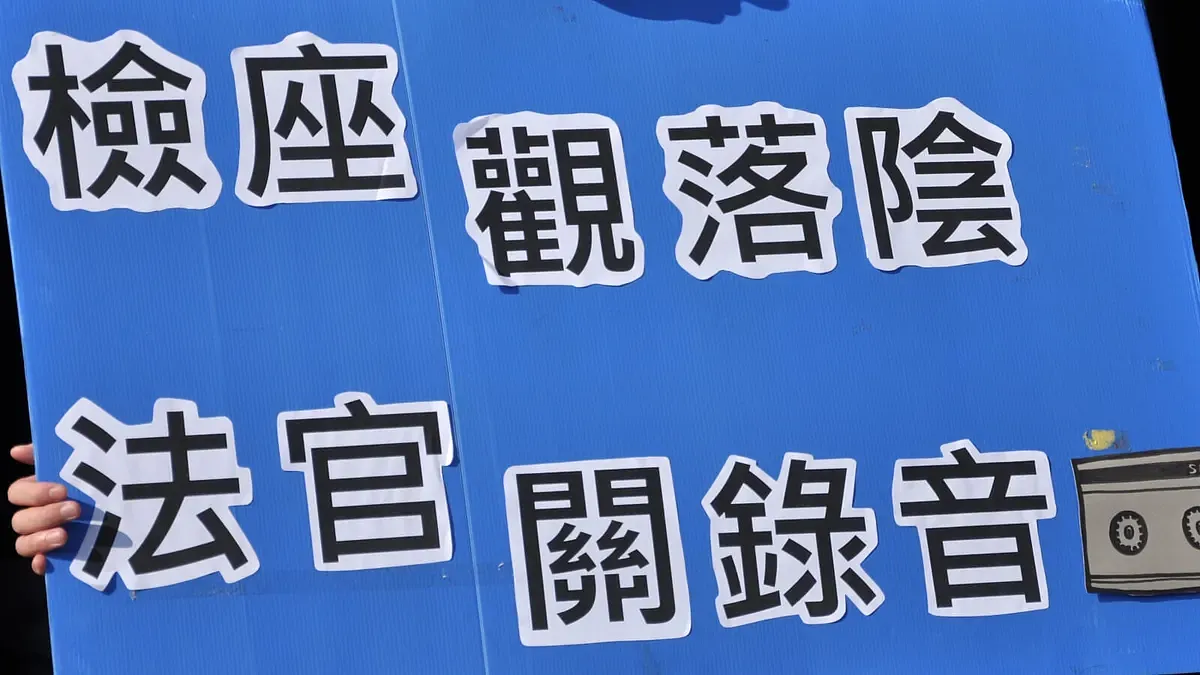
Fair, impartial, and public trials that strictly adhere to procedural provisions of procedural law are the most basic requirements imposed by the Judges Act on law enforcement personnel. However, written transcripts cannot reflect issues of "attitude." Only through synchronized audio and video recordings of interrogations can unfit judges and prosecutors be stripped of their disguise, proving their egregious behavior, prejudgment, and bias.
Among types of reports concerning poor handling attitudes, audio and video recording discs from court and investigative interrogations are the most crucial evidence. Below are two real transcripts of court interrogations illustrating their importance:
Real Case 1: Why Did the Judge Lie to Me?
- Judge:
- The original instance has already reduced it for you! And you can commute it to a fine, just hurry up and earn money to pay it off. Taiwan still allows you to appeal, how would mainland China let you appeal! Is that clear enough? Understand?
- A-Mei:
- Thank you.
- Judge:
- To put it bluntly, you appealing this way is just wasting everyone's time. Just withdraw it. You won't need to keep running to court anymore. Just wait until the prosecutor notifies you to pay the fine, borrow some money to pay it off, and then you'll be free and clear.
- A-Mei:
- Thank you, I understand. But actually, if you check the recording, it states very clearly inside that it can prove it wasn't me.
- Judge:
- Now you are saying the original instance judged wrongly here! That this place shouldn't have been judged this way for you, but if other things are used for judgment, I might even judge you more heavily. I am telling you bluntly, if you want to appeal, there is this risk, and I have said all the kind words I can.
- A-Mei:
- I don't want to appeal anymore. Because as you said, appealing is like this, and not appealing is also like this. I beg the judge to truly show mercy and see if you can reduce my sentence by a few months?
- Judge:
- Impossible. Even probation is impossible, let alone reducing your sentence by a few months. This is not a vegetable market. Taiwan's courts are not vegetable markets. Taiwan's courts are more humane than mainland courts; you can communicate and talk, but it's still not a vegetable market.
- A-Mei:
- Then I'll just borrow money to pay this fine...
A-Mei is a new resident who married into Taiwan from China. When she came to the Complaint Center, she only brought the first-instance judgment and the application to withdraw the appeal, crying that the judge was very unfair and deceived her into withdrawing her appeal. With the assistance of the Complaint Center, she went back to the Taiwan High Court to apply for the recording disc and transcripts, and personally produced the audio transcript (verbatim record), which finally confirmed that her statements were true.
The crux of the matter is that A-Mei was prosecuted for an offense carrying a maximum statutory penalty of 7 years, which by law cannot be commuted to a fine, nor did the first-instance judgment declare that it could be commuted to a fine; yet the presiding judge repeatedly induced A-Mei into withdrawing her appeal by claiming that appealing was less practical than earning money to pay a fine. This is a blatant lie, and it is hoped that the Judges Evaluation Commission will investigate this thoroughly in the future to restore justice to A-Mei.
Real Case 2: The Judge Was in Such a Rush to Scold Someone That They Forgot to Administer an Oath
- Judge:
- Has A-Chiao arrived? Can you find your daughter?
- A-Chiao:
- I don't know where she is, because she hasn't come back.
- Judge:
- You are outrageous!
- A-Chiao:
- I care very much for my child.
- Judge:
- Give me a break! It's truly strange that the prosecutor didn't indict you.
- A-Chiao:
- Why?
- Judge:
- You don't care about her at all!
- A-Chiao:
- I have 3 children.
- Judge:
- So what!
- A-Chiao:
- Presiding Judge, let me ask you, have you ever raised a child in this kind of family?
- Judge:
- Are you interrogating me right now?
- A-Chiao:
- No, I really love my children.
- Friend:
- She has an older brother and a younger brother, should we summon them to ask about their family situation? You can't just listen to the child's side alone.
- Judge:
- Did I give you permission to speak? Who are you?
- Friend:
- I am a friend of this single mother. I have seen her hardships and her tears.
- Judge:
- Quiet down, please get out.
- Judge:
- I'm telling you, your child might have behavioral deviations! But I don't think your approach is right.
- A-Chiao:
- But I must correct her. What if she goes out and turns to a life of crime? If she incurs criminal liability, I will have to take responsibility too.
- Judge:
- No way! How could her criminal liability be your responsibility?
- A-Chiao:
- Didn't my son hit someone? He had already turned 18, and I still paid nearly 300,000 NTD in compensation. So please, Presiding Judge, listen to my thoughts. The boss hitting her is indeed wrong, but my daughter also did something wrong. She brought her boyfriend to the store to steal clothes and money, and I cannot account for it myself, to tell the truth...
- Judge:
- No matter what, applying a little ointment or something is still a basic concern. I truly cannot feel the way you care for your daughter. Please sit down.
- Judge:
- Do you (referring to the "defendant") want to negotiate a settlement? Or should I sentence you directly? I am rather fierce...
A-Chiao was a witness summoned by the court to testify. According to the law, she should have been informed in advance of the obligation to state the truth and the criminal liability for perjury, and then signed an oath before she could begin testifying. It can be seen from the audio transcript that the presiding judge was in such a rush to scold someone that they forgot to fulfill the statutory procedure, failing to order A-Chiao to take an oath from the beginning to the end of the interrogation. This involves Article 30, Paragraph 2, Subparagraph 5 of the Judges Act: "serious violation of case-handling procedural provisions or official duty provisions, with serious circumstances," which can serve as grounds to request an individual case evaluation. In fact, when A-Chiao came to the Complaint Center, she only felt that the judge's attitude was very poor, but did not know whether it violated the law. Fortunately, she also successfully applied for the recording disc, allowing the Complaint Center to make a judgment on the contents of the evidence and report the unfit individual.
Full Record of Court Proceedings: File Review
From the two preceding examples, we can see the importance of obtaining interrogation recordings. However, interrogation audio and video recording discs are actually only a small part of the "case file." They must be combined with transcripts, summonses, written submissions, expert appraisals, official documents, telephone logs, case progress sheets, and external evidence boxes to constitute a complete case file. In short, the case file is the complete record of court activities. The best way to prepare evidence for reporting judges and prosecutors is to obtain the case file.
Obtaining the case file is legally termed file review, or "file perusing" for short. File review is not just reading the file; it also includes copying written materials (such as transcripts), duplicating audio and video (such as recordings), and photographing or measuring physical evidence (such as photographs)—measures to preserve case records and evidence. The aforementioned method of obtaining interrogation audio and video recording discs is a form of file review.
Since the Judges Act is a completely new law, current regulations do not yet have provisions allowing applications for file review on the grounds of "requesting an individual case evaluation." However, the public must still apply for file review in accordance with provisions of various procedural laws to obtain evidence for reporting unfit judges and prosecutors. The following table summarizes the regulations on under what circumstances several common procedural identities are permitted to review files:
| Procedural Identity | Conditions for File Review | Legal Basis Permitting File Review |
| Civil Plaintiff and Defendant | Both may review files | Article 242 of the Civil Code of Procedure |
| Administrative Litigation Plaintiff and Defendant | Both may review files | Article 96 of the Administrative Litigation Act |
| Criminal Complainant | In cases where the defendant receives a non-prosecution or suspension of prosecution disposition, they may only commission an attorney to review files when applying for committal to trial. | Article 258-1 of the Code of Criminal Procedure |
| Once the defendant is indicted, they may immediately commission an attorney to review files. | Article 271-1, Paragraph 2 of the Code of Criminal Procedure mutatis mutandis applying Article 33 of the Code of Criminal Procedure | |
| Criminal Defendant | Once indicted, they may immediately commission an attorney to review files. | Article 33 of the Code of Criminal Procedure |
| After a final guilty verdict, they may commission an attorney to review files on the grounds of filing a retrial or extraordinary appeal. | Article 33 of the Code of Criminal Procedure, Point 2 of the Directions for Attorneys Reviewing Files in Prosecutorial Agencies |
In addition to provisions in procedural laws, current file review regulations are compiled below. If you have any questions, please check the websites of various courts or call their public service centers for inquiries:
- Directions for Attorneys Reviewing Files in Prosecutorial Agencies
- Directions for Attorneys Reviewing Files in Criminal, Administrative Litigation, and Juvenile Protection Cases at Courts at All Levels
- Administrative Litigation File Review Rules
- Civil File Review Rules
- Court Organization Act (Article 90-1, Paragraph 1)
What Should One Pay Attention to During File Review?
The issue that the public should pay closest attention to is time limits. Taking Article 90-1, Paragraph 1 of the Court Organization Act as an example, it stipulates that requests for the delivery of court recordings must be made from the day after the hearing until 6 months after the judgment becomes final; applications are not permitted after the expiration of this period. Other types of case records and evidence also have preservation periods and review restrictions, which are too numerous to detail. In short, it is recommended that the public actively review files while litigation is ongoing to completely preserve case records and evidence, so as to avoid lacking evidence when wishing to report judges and prosecutors in the future.
Secondly, one should strive for completeness of case records and evidence. During file review, do not refrain from copying a transcript just because it seems unimportant, nor fail to duplicate recordings because a hearing session seemed uneventful; preserve the case records and evidence as completely as possible. Ideally, the returned files should look exactly like the court's case files. Furthermore, even if physical evidence (such as a murder weapon) cannot be taken back, photographs should be taken to preserve evidence. This is because the devil is in the details, and sometimes the most inconspicuous data becomes the most crucial evidence.
Thirdly, current criminal litigation places many restrictions on non-attorneys reviewing files, prohibiting non-attorneys from reviewing case records and evidence other than transcripts. If you simply wish to hire an attorney to review files, you may refer to the remuneration standards set by local bar association charters to retain counsel. If you cannot afford an attorney, you can apply for a pro bono attorney through the Legal Aid Foundation. If you still cannot retain an attorney, there are special provisions for defendants in criminal cases, as explained below:
Special Provisions for File Review by Criminal Defendants
Article 33, Paragraph 2 of the Code of Criminal Procedure: "A defendant without a defense counsel may, upon pre-paying fees during trial, request to be provided with copies of the transcripts within the file." This is a special provision for file review by criminal defendants. However, defendants without defense counsel still cannot review all case records and evidence, which is severely inadequate for protecting their right to a defense in litigation. Templates for applying for file review can be downloaded from the Judicial Yuan website under "Reference Templates for Legal Documents - Criminal Litigation Section", specifically item 8, "Application Form for Criminal Defendants Requesting Copies of Transcripts within the File."
In addition, for cases with a final guilty conviction, although they are no longer "during trial," defendants without defense counsel may alternatively cite Supreme Court Ruling 100-Tai-Kang-690, using the grounds of applying for a retrial or extraordinary appeal as the basis for requesting copies of transcripts within the file.
Finally, current restrictions on requesting court recording discs are quite strict; even with retained counsel, such discs may not necessarily be obtained. According to current practical interpretations, when the public requests the delivery of court recording discs pursuant to Article 90-1, Paragraph 1 of the Court Organization Act, they must substantiate the necessity of asserting or protecting legal interests related to the case, and judges still retain considerable discretionary space to dismiss the application.
Conclusion - The File Review System Must Be Reformed Immediately
Since the Judges Act allows the public to report unfit judges and prosecutors, it should correspondingly allow applications for file review under the pretext of "requesting an individual case evaluation" to obtain reporting evidence; otherwise, it is nothing more than a sham. With the individual case evaluation system on the verge of implementation, judicial authorities must immediately reform the aforementioned unreasonable regulations to substantially protect the public's right to oversee judges and prosecutors.
This article is an AI-generated translation of the original Chinese text. In the event of any discrepancy, the Chinese version shall prevail.