
What to Do When Prosecutors Violate Non-Disclosure of Investigation? A Guide to the Judges Act Regarding Non-Disclosure of Investigation
Last edited: 2026-08-25
Article 245, Paragraph 1 of the Code of Criminal Procedure stipulates: "Inquiries and investigations shall not be made public." This means that before an investigation is concluded, personnel participating in investigations—such as police officers, investigation bureau agents, and prosecutors—have an obligation to maintain confidentiality and may not disclose investigative information to the outside world. Despite explicit statutory provisions, instances of police, investigative, and prosecutorial agencies violating the non-disclosure of investigations occur endlessly. In view of this, Article 89, Paragraph 4, Subparagraph 5 of the Judges Act specifically provides that if a prosecutor "seriously violates procedural or official regulations governing case handling, such as the non-disclosure of investigation, and the circumstances are grave," disciplinary action shall be imposed if necessary. To implement the legislative intent of the Judges Act and assist the public in protecting their own rights and interests, the following introduces the concepts and methods for reporting violations of the non-disclosure of investigation.
Clarifying Concepts: Reporting Cases to Superiors ≠ Violating Non-Disclosure of Investigation
Finding out that one has been indicted only after reading the newspaper is the most frequent complaint members of the public make against prosecutors' offices, but this does not necessarily mean the prosecutors' office has violated the non-disclosure of investigation. The reason lies in the operational procedures of prosecutors' offices: the announcement of the conclusion of an investigation is made first, and the disposition document is subsequently served to the parties involved. Because journalists are stationed at prosecutors' offices and report upon seeing the announcements, parties often have not yet received their disposition documents at this time, creating the chaotic phenomenon where the media learns of the investigative results first. Although this generates much public grievance, prosecutors' offices currently take the view that once an investigation is concluded, the issue of non-disclosure no longer applies, and they consider this operational procedure to be compliant with the provisions of the Code of Criminal Procedure.
The Panchiao District Prosecutors Office once held the "'Non-Disclosure of Investigation' Meets 'The People's Right to Know' Judicial Reform Public Opinion Symposium" on May 27, 2011, during which this issue was hotly debated. The following meeting minutes are the official response to questions raised by the JRF, providing a detailed explanation of the operational procedures for announcing the conclusion of investigations:
Panchiao District Prosecutors Office Judicial Reform Public Opinion Symposium—Meeting Minutes (Excerpt)
Response from Meeting Chairperson, Chief Prosecutor Ts'ai Pi-yü:
- Regarding when an investigation is concluded: once a prosecutor concludes an investigation, the original copy of the prosecutor's document is approved by the chief prosecutor, sent to the statistics office for case closure registration, and publicly announced immediately upon closure. The conclusion of an investigation is based on the time of this public announcement.
- Regarding when the media can view the written indictment: in practice, when a case is publicly announced, only the defendant's name, the cause of the case, and the conclusion status are announced. After checking the bulletin board, the media will select cases of interest and request press materials from the prosecution. Because the case has already concluded, the prosecution may provide press materials. This Office's practice is for the handling prosecutor to print the original document, process the personal data of the parties involved, and submit it to the designated spokesperson and senior prosecutor. After screening, it is stamped with the words "Press Material" and provided to the media. Therefore, the media obtains press materials, not the original text of the formal document.
- Regarding why the parties involved learn of the investigative results later: it is because parties should receive the original text of investigative documents. Judicial authorities rely on official written letters for all information provided to parties, and these are used to calculate lawful service periods. The original text of the document is prepared by a clerk, which takes at least ten days at the fastest. Coupled with delivery time, parties usually receive the original document some time after the case has concluded. However, whether it is reasonable to receive documents only after one month will be reviewed by this Office. Furthermore, asking the media to wait until documents are served to the parties before reporting would cause news to lose its timeliness; the media is generally unwilling to do this, and in fact, it is impossible. Therefore, district prosecutors' offices respond by issuing press materials.
- Regarding whether press materials can be given to the parties simultaneously: firstly, press materials are not formal judicial documents; secondly, this would raise issues regarding whether lawful service has been effected and whether the content is accurate. Additionally, press materials are usually published on the external websites of judicial authorities, and parties may download them from the website. Currently, when courts pronounce judgments on major cases, they also provide press materials to the media. At that time, the prosecution—acting as a party—is also unable to obtain press materials or the original text of the judgment; when responding to media inquiries, they always state they will express their opinions after receiving the original copy of the judgment. Even if press materials are already in hand, they still wait for the original judgment before commenting. Therefore, it is suggested that the JRF teach parties how to handle the media in such situations. Nevertheless, it is indeed improper for parties or related persons to learn of the results of their own case investigations or trials later than the media. How to balance these aspects involves policy issues, which will be submitted to the Ministry of Justice for reference.
Reporting Method (1): Identify the Timestamp of the "Conclusion of Investigation"
The confidentiality obligation of non-disclosure of investigation begins with the initiation of an investigation and ends with its conclusion. To report a violation of non-disclosure, one must first identify the timestamp when the investigation concluded and confirm that the leakage occurred prior to that conclusion, thereby enabling a report against the handling prosecutor for violating the non-disclosure of investigation.
The conclusion of an investigation refers to when a prosecutor issues: 1. an indictment, 2. a non-prosecution disposition, 3. a suspension of prosecution, or 4. an administrative closure, and makes a public announcement. If a member of the public has received a disposition document, they can check the date at the bottom of the document; the earlier date is the date the investigation concluded (while the later date is the date the disposition document was drafted).
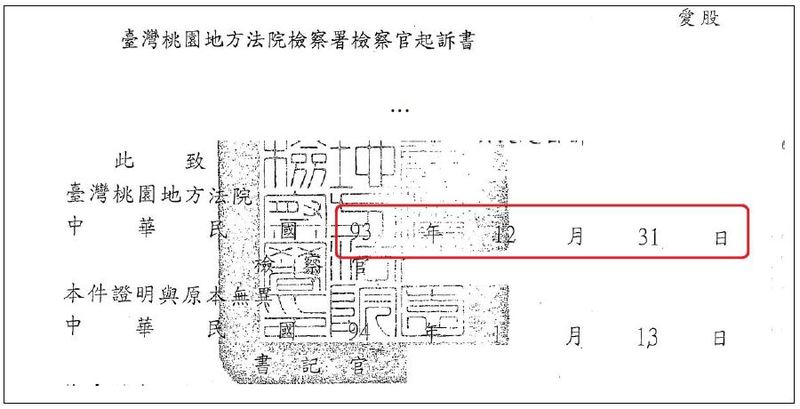
If no disposition document has been received, one can visit the "Investigation Conclusion Announcement" system on the local prosecutors' office website to check whether their case has concluded. It is worth noting that the date announced on the website is later than the date posted on the physical bulletin board. Citizens should make a telephone inquiry to the clerk of the handling division to confirm the exact date of the investigation's conclusion.
How to identify the timestamp of the "conclusion of investigation" is illustrated by the following example:
Prosecution Leaks Information Early, Leaving Witnesses Agrieved
On a certain Saturday, Newspaper A published a front-page headline reading: "Certain Council Member Solicits Prostitution, Falls Victim to Hidden Camera Extortion." The report stated that prosecutors had indicted the operator of the prostitution ring and female employees yesterday, citing as evidence sex tapes seized during a search of the prostitution establishment, with a certain council member—who was set up and secretly filmed by the operators—listed as a witness. On that same day, major television stations also extensively reported on the story, citing an indictment marked with "Press Material" in their broadcasts. Due to the media's extensive reporting by name, the council member publicly apologized and resigned from party caucus positions.
Upon verification with the prosecutors' office, it was confirmed that this case was indicted on Friday—meaning the investigation was concluded on Friday. Therefore, strictly speaking, the reports by Newspaper A and television stations on Saturday did not violate the non-disclosure of investigation. The problem was that in an inconspicuous section of Newspaper B on Friday, there appeared an exclusive scoop on the case, which reported that "yesterday" (Thursday), the council member in question had denied to reporters that he was being extorted over soliciting prostitution.
Newspaper B's report proved that prior to the case announcement on Friday, the prosecution had already leaked information to reporters, allowing Newspaper B to scoop the story a day early. This kind of preemptive leaking by prosecutorial authorities constitutes a violation of the non-disclosure of investigation, and the handling prosecutor should be subject to disciplinary action.
Reporting Method (2): Identify the "Press Spokesperson"
Specific regulations concerning the non-disclosure of investigation by prosecutorial authorities are set forth in the "Directions for Handling Criminal Case Press Releases by Prosecutorial, Police, and Investigation Agencies." Point 2 of these Directions stipulates:
Prosecutorial, police, and investigation agencies shall designate a press spokesperson and establish a press room. News related to cases under investigation shall be uniformly released by the spokesperson or their agent in the press room. Except for making public statements and written explanations, a press spokesperson shall not privately disclose or provide any information to the media upon media request.
Except for personnel designated as spokespersons by agency heads, police, investigative, and prosecutorial personnel shall not disclose or release news regarding cases under investigation.
For cases under investigation, only the press spokesperson has the authority to release information to the media. Therefore, if a press spokesperson can be identified within media reports, the non-disclosure of investigation has generally not been violated. Conversely, if no press spokesperson can be found in the news report, and the source of the information clearly originates from official sources, the report is highly likely to violate the non-disclosure of investigation, and a report may be filed against the handling prosecutor.
Pursuant to the Freedom of Government Information Act, members of the public may request government agencies to provide information proactively disclosed by government agencies. Therefore, if one cannot determine whether the interviewee in a report is a press spokesperson, citizens can call the prosecutors' office to inquire, or request the prosecutors' office to provide press materials or publish them online to facilitate comparison.
Reporting Method (3): Examine "Confidential Matters" and Their Exceptions
Point 3 of the "Directions for Handling Criminal Case Press Releases by Prosecutorial, Police, and Investigation Agencies" stipulates:
Before the conclusion of an investigation, prosecutorial, police, and investigatory personnel shall maintain confidentiality regarding the following matters and shall not disclose or release news thereof; nor shall they allow defendants, criminal suspects, or juvenile offenders to be photographed, directly interviewed by the media, or filmed through surveillance camera footage:
- Whether a defendant or criminal suspect has surrendered or confessed, and the content thereof.
- Investigative methods that have not yet been implemented or should continue to be implemented, including summons, communications surveillance, detentions, custody, searches, seizures, inspections, on-site simulations, appraisals, travel restrictions, and asset tracing.
- The direction, progress, techniques, specific content of investigations, and mental impressions derived therefrom.
- Matters that may cause the defendant or criminal suspect to flee, or give rise to the risk of destroying, forging, or altering evidence, or colluding with accomplices or witnesses.
- Situations where a victim is being held hostage and has not yet escaped to safety, posing a threat to their safety.
- Case files, transcripts, audiotapes, videotapes, photographs, electromagnetic records, or other important documents during the investigation.
- Circumstances of the crime that pertain to the privacy and reputation of the defendant, criminal suspect, their relatives, or spouse.
- The privacy or reputation of victims, as well as photographs, names, or other information sufficient to identify victims of sexual assault cases.
- Photographs, names, residential addresses, schools attended, family names, and case contents of juvenile offenders.
- Names, identity information, residential addresses, telephone numbers, statements, or evidence provided by informants and witnesses.
- Visitor data, meeting records, and other contents of discussions held by prosecutorial, police, and investigative personnel with various agencies during the investigation period.
- Other matters sufficient to affect the investigation.
Prosecutorial, police, and investigative personnel shall not bring media along to handle cases, nor shall they release video or audio recordings of evidence gathering.
The provisions above are confidential matters for cases under investigation and can be examined item by item. However, merely meeting the aforementioned confidential matters does not guarantee a successful report; one must also check whether any exceptions permitting the release of news listed in Point 4 of the Directions apply. Because there are quite a variety of exception clauses stipulated in these Directions, it is recommended that once citizens confirm the news content conforms to confidential matters, they provide the relevant information to the JRF for reference, and we will offer further evaluative opinions.
Reporting Method (4): Apply for File Review and Compare News Content
Before a case is indicted, because the prosecution's handling of the case is unknown, it is often very difficult to determine the source of news content and prove that the prosecutors' office violated the non-disclosure of investigation. If citizens suspect that the prosecution has leaked secrets regarding their case, it is recommended that after the case is indicted, they promptly apply to review the case files to obtain the investigative records of the police, prosecutors, and investigators, and use them to compare against the news content. If the news content matches the transcripts or evidence characteristics in the case files, and reporters could not have obtained it through other channels, it can be proven that the investigative personnel unlawfully leaked secrets, and a report may be filed against the handling prosecutor. This is illustrated by the following example:
Searching for Sex Photos, A Flawed False Alarm
One day, the social news section of Newspaper B reported: "Yesterday, holding a search warrant, police went to the residential townhouse of suspect ○ at ○ Street, ○ City, ○ County, and seized evidence suspected of obstructing privacy, including one laptop, two portable hard drives, a camera, and DV tapes containing sex photos of two people, along with dozens of photos and hours of sex videos, successfully intercepting suspect ○ from uploading the sex photos to the internet." "Suspect ○ argued that the sex videos and photos he took with his girlfriend were for keeping memories, and his claims about publishing nude photos were only meant to scare his girlfriend." The newspaper also published a front-facing photo of suspect ○ in handcuffs and a photo of his computer studio.
From the published photographs, it is evident that prosecutors and police brought reporters along during the search; furthermore, the disclosure of the suspect's surname, residential location, criminal modus operandi, and confession content in the report all constitute strictly confidential matters that could only be obtained through official channels. It can be deduced that this case allegedly violated the non-disclosure of investigation.
It must be particularly pointed out that after the case was indicted, the defendant was acquitted in the first, second, and third instances. Review of the case files also confirmed that the defendant did not commit the offenses mentioned in the report at all, nor was there any guilty confession during the investigation, proving that the handling prosecutor severely violated the non-disclosure of investigation.
Reminder: "Non-Disclosure of Investigation" Does Not Mean the Defendant Should Be Completely Kept in the Dark During Investigations
Some citizens (usually informants or complainants) file complaints with the JRF alleging that prosecutors disclosed investigative content to defendants, claiming these prosecutors violated "non-disclosure of investigation." For instance, a prosecutor showed a defendant the content filed or evidence provided by the complainant; or a complainant requested a search of the defendant's home, but the prosecutor stated right in front of both of them that there was no need to conduct a search at all.
It must first be explained here that the principle of "non-disclosure of investigation" is established for reasons such as protecting the rights of defendants, preventing related persons from suffering harm, and ensuring the smooth conduct of investigations. Furthermore, in judicial proceedings, there are also issues regarding the protection of the defendant's right of defense and right to counsel, which require investigative procedures and content to be disclosed to the defendant to a certain degree. Therefore, whether a prosecutor providing certain information to a defendant violates the non-disclosure of investigation must be evaluated by returning to the reasons for establishing this principle and the protection of the defendant's rights of defense and counsel. In the aforementioned cases, a prosecutor showing a defendant the complaint contents or evidence provided by the complainant basically does not raise an issue of violating the non-disclosure of investigation, because only by providing this information to the defendant can the defendant mount a defense. Meanwhile, the prosecutor stating in front of the defendant and complainant that there is no need to search the defendant's home also does not violate non-disclosure. Because the prosecutor had already made the investigative decision not to conduct a search, the issue of avoiding informing the defendant prior to a search in order to prevent the destruction of evidence naturally did not arise. As for whether the prosecutor's determination that a search was unnecessary was proper, that is a separate matter (in principle, because such investigative actions afford considerable discretionary space, according to current prosecutorial evaluation practices, such reports are not easily successful).
Conclusion: Supervising Prosecutorial Agencies and Implementing the Presumption of Innocence
In recent years, intentional or unintentional errors by prosecutorial agencies have caused irreparable harm to many people. Building a reputation takes a lifetime of effort, but destroying a reputation requires only a single false news report. This article details the operational procedures of prosecutorial agencies, clarifies the concept of what constitutes a violation of non-disclosure of investigation, and proposes four concrete reporting methods, suggesting that citizens gather evidence and make judgments accordingly while seeking assistance from the JRF Complaint Center to report illegality and correct chaotic practices. Actively reporting violations of the non-disclosure of investigation is intended to make investigative personnel more careful and cautious when handling cases. Only by doing so can the people's right to the presumption of innocence be safeguarded.
This article is an AI-generated translation of the original Chinese text. In the event of any discrepancy, the Chinese version shall prevail.