
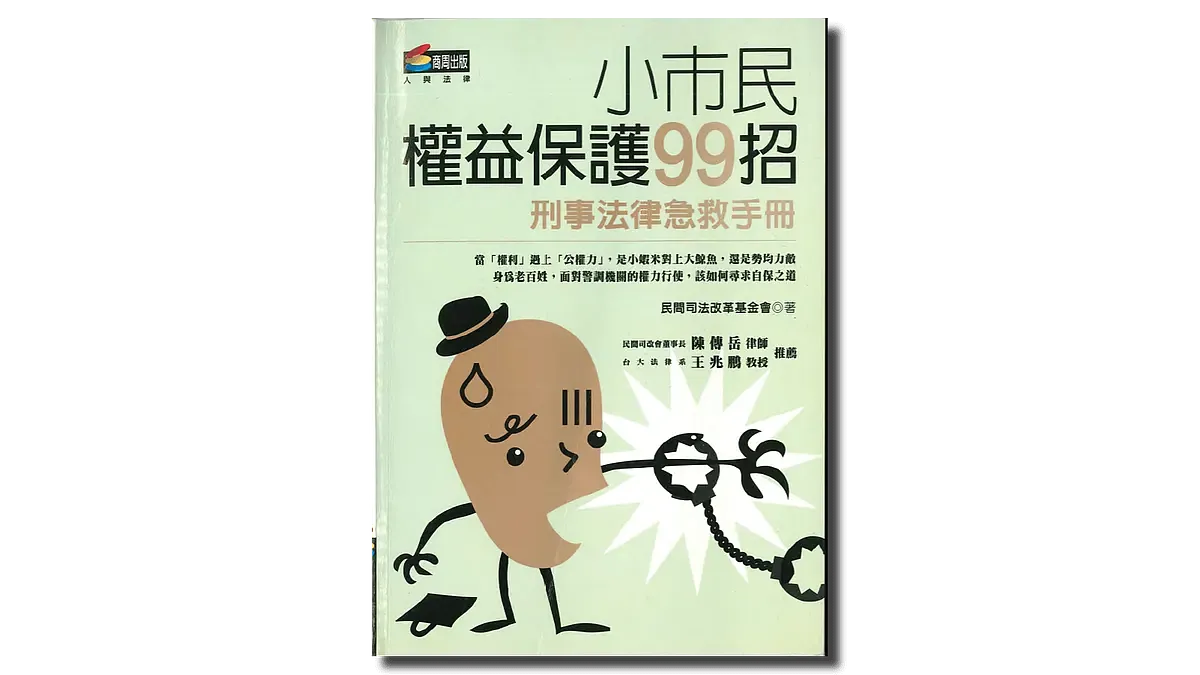
99 Ways to Protect the Rights of Ordinary Citizens
Last edited: 2026-08-25
When "rights" meet "public power," is it a David-versus-Goliath struggle or a fair fight? As ordinary citizens, how can we protect ourselves when facing the exercise of power by police and investigative authorities? From police power, searches, arrests, interrogations, trials, to sentence enforcement, this book provides step-by-step answers and explanations regarding criminal procedure. It brings the law down from its pedestal, turning it into everyday common sense that everyone can easily access and master.
Table of Contents
- Chapter 1
- Exercise of Police Powers
- Chapter 2
- Searches
- Chapter 3
- Arrests
- Chapter 4
- Miranda Warnings and Identification
- Chapter 5
- Interrogations
- Chapter 6
- Urine Tests, Breathalyzers, Hair Samples, Fingerprints, Photography, and Preservation of Evidence
- Chapter 7
- Conditional Non-Prosecution, Summary Judgments, Discretionary Non-Prosecution, and Plea Bargaining
- Chapter 8
- Detention
- Chapter 9
- Trials
- Chapter 10
- Appeals and Interlocutory Appeals
- Chapter 11
- Enforcement
- Chapter 12
- Juvenile Justice Act
- Chapter 13
- Legal Aid Act
- Chapter 14
- Mental and Physical Disabilities
Co-authors of the Text
- Attorney Ma Tsai-chin
- Attorney Huang Ta-yuan
- Attorney Yu Po-hsiang
- Attorney Kao Jung-cheng
- Attorney Chen Chien-hung
- Attorney Chou Yi-chun
- Attorney Huang Shih-han
- Attorney Hsieh Yung-ting
- Attorney Chen Chen-tung
- Attorney Hsieh Chia-po
- Attorney Tsai Chih-yang
- Attorney Chan Shun-kuei
Full Text Reading
This article is an AI-generated translation of the original Chinese text. In the event of any discrepancy, the Chinese version shall prevail.