
Legal Services Special Topic "Man-of-Straw Account Cases" Course Reflection: Lin Shih-kai
Last edited: 2026-07-27
Reflections on Interviewing Clients
Our group had a total of ten people, paired up to conduct interviews across roughly seventy cases. Quite coincidentally, the cases handled by our pair were either already judged without any intention to appeal, already finalized without any desire to seek a retrial, or had received a disposition of non-prosecution. Therefore, our group focused much more on cases resulting in non-prosecution compared to the other groups.
Naturally, these two types of cases drew my attention even more: what factors drove these individuals to forgo defending their innocence? Ms. A told me that her bank account was borrowed and used by friends and relatives, turning her into a man-of-straw account holder out of nowhere, leading to a summary judgment out of nowhere, and resulting in a finalized conviction out of nowhere. She said she was sentenced to two months. What worried her, however, was her inability to serve the two-month detention because she had two children to raise, not to mention that commuting the sentence to a fine would cost nearly 60,000 NTD. As a single mother doing piecework at home, she simply could not understand why society was treating her so cruelly.
When I told her she could apply for community service in lieu of imprisonment, which might allow her to balance her current situation, she repeatedly asked me over the phone on how to proceed. At that moment, I couldn't help but question: why wasn't there a single person in our judicial authorities who told this lady she could do this? What on earth is wrong with our judicial system that it can be so devoid of human sympathy? Of course, I am not arguing that special treatment must be granted to clients; rather, it is that our judicial system is so perfunctory and contemptuous. They have no idea how massive an impact two months and 60,000 NTD can have on a family at the bottom of society. Not to mention another case where a husband and wife had to resort to borrowing from loan sharks just to pay a fine, purely to temporarily settle a judgment for a crime they never committed, suffering prosecution for no reason at all.
In the non-prosecution cases, we observed that these cases shared a common thread: reports were successfully accepted at the very first instance. Therefore, in our symposium presentation, we also compiled and analyzed a series of issues regarding police refusal to accept reports and police interrogation records. Of course, the sample size of these cases was not large, but they certainly served as a valuable reference.
All in all, through the interviews, aside from having first-line contact with the clients, we were also able to assist them from a supportive standpoint, making this a very important and precious experience throughout the entire course.
Reflections on the Symposium
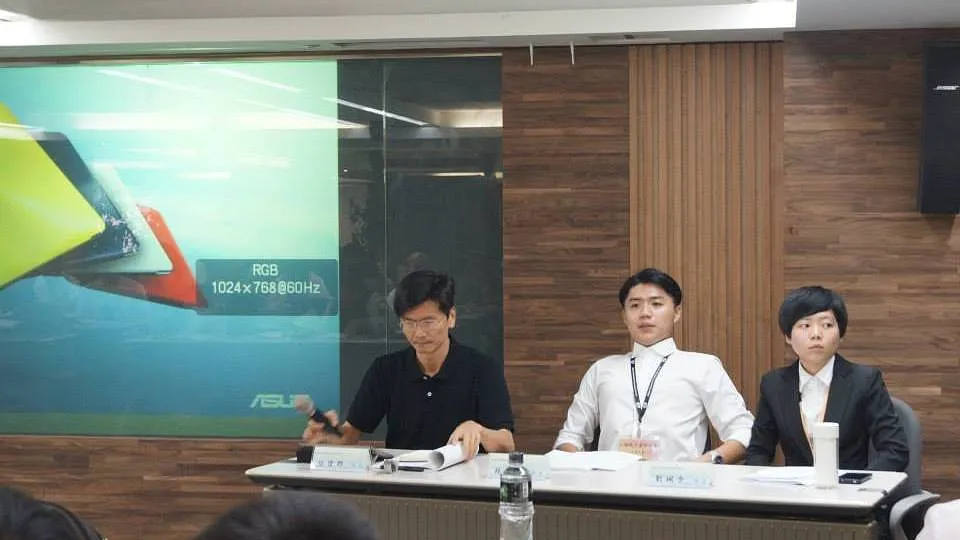
From the beginning of preparing for the symposium, we had no mental preparation that our group would be assigned to present on stage. About a month before the symposium, upon learning of the opportunity to present, we began preparing the presentation content. In truth, simultaneously preparing for the symposium and drafting the presentation content was a somewhat overwhelming workload. Fortunately, my team members helped share the burden; otherwise, juggling the roles of a group leader assigning tasks while organizing case data and figuring out how to present would have been simply unbearable.
During the preparation process, we initially mapped out several aspects. After intensive discussions with Wei-t'ing, we ultimately decided to use a single argument (phenomenon) as a core block, weaving these stories together sequentially using one or two narratives. The parts I was responsible for involved explaining the cases we handled during our winter internship at the Judicial Reform Foundation through "the clients' background (higher education)" and "the dilemma faced by clients (police interrogation records)." Since these cases were selected as typical examples from the interview records of various groups, even though only my classmate P'ei-han and I took the stage to present, these were the collective blood, sweat, tears, and achievements of our entire group.
On the night before the presentation, I repeatedly practiced how to deliver it. I originally thought I had public speaking under control, but at such a crucial moment, no matter how many times I ran through the draft, it just wouldn't flow smoothly. My only fear was embarrassing the Department of Financial and Economic Law at Chung Yuan Christian University, or letting down Professor Wei-chün, worrying that my content might be flawed and unworthy of a formal stage. Fortunately, my team member Tsai Hsin-fang stayed with me to go over the draft. Even though we had to be in Taipei by 7:00 AM the next day, we were still tweaking the PowerPoint slides past 3:00 AM. But this feeling was priceless; beyond the sense of teamwork, and despite having delved into the "man-of-straw account" field for quite some time, I felt immensely insignificant in the broader "legal world." Yet, this only motivated me to climb higher and let everyone see the results of our group's half-year of hard work.
Finally, although I was a bit stiff during the presentation itself, overall, I would give myself a passing grade. This isn't because I hold myself to high standards, but because there is still a lot of room for improvement. However, given the circumstances of that day, we at least clearly and completely expressed what we wanted to say. For me personally, the experience of presenting on stage at a symposium is quite rare and invaluable.
This article is an AI-generated translation of the original Chinese text. In the event of any discrepancy, the Chinese version shall prevail.