
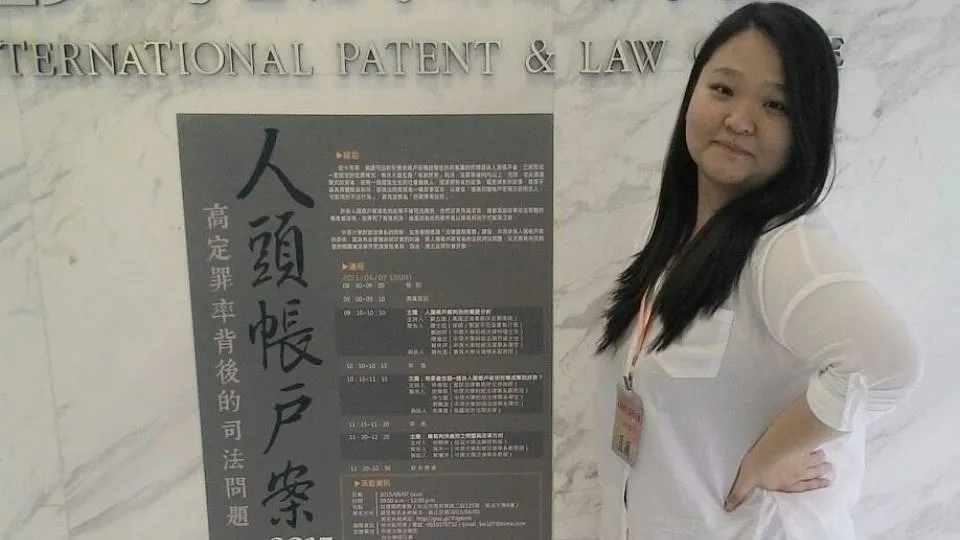
Legal Services Special Project "Dummy Account Cases" Course Reflection: Chen Ying-ying
Last edited: 2026-08-28
Starting with an anxious heart, I communicated with the client over the phone, expecting them as usual to refuse an in-person interview. Unexpectedly, they agreed right away. After scheduling the time and location, my partner and I began discussing the interview questions and methods. It was then that I realized how crucial interview etiquette and techniques are: how to guide interviewees to tell their stories without making them feel uncomfortable, how to prompt them to recall potentially overlooked memories from those stories, and more importantly, how to search their memories for avenues where we might seek relief.
One of the clients expressed with great indignation right at the start of the interview that their purpose in coming was not to seek relief for their own case, but to let more people see the issue of dummy accounts! This client felt extremely uncomfortable with the way the prosecutor and judge questioned them, feeling that the judicial system had already presumed them guilty before any trial, which was utterly unfair! Therefore, they hoped to help us bring more visibility to the problem of dummy accounts. As I watched them indignantly recount how they became a dummy account, I couldn't help but wonder: do the judges in the courtroom ever truly listen to these stories behind the clients? From the copy-pasted judgments in the written opinions, there is simply no way to tell whether the judges are aware of what the clients went through. Although courts tend to issue lenient sentences for cases of this nature, often allowing fines to be commuted to community service or paid in installments, many clients fell victim because they were seeking employment or loans. How can individuals living in financial hardship possibly afford to pay these fines? Before coming into contact with dummy accounts, I believed that under no circumstances would anyone hand over their account and password to a stranger. If someone actually did so, then regardless of the reason, they ought to pay a price for their action of handing over the account. Consequently, I used to think that the courts' judgments on these cases—mostly letting people off with a fine—were quite lenient and proportionate to the crime.
However, after interacting with those clients, my perspective changed. A client once said, "When you have no money, you really panic!" At that time, they were facing extreme financial hardship. By chance, they answered a phone call regarding a loan, believing it to be a helping hand, and thus handed over their account to create a simulated cash flow to facilitate the loan, resulting in an indictment for aiding and abetting fraud. From our conversation, it was evident that clients often feel ashamed and deeply self-reproachful about being scammed into becoming dummy accounts. Some clients even dared not mention it to their families at all. Is being scammed really such a shameful thing? Language is a magical thing; the same words in different combinations yield different effects. When humans encounter new things, they sometimes fail to think logically and are led by the nose—just as I once almost got scammed by the popular installment-deduction scam involving convenience store pickups. Upon closer reflection later, I thought to myself: I paid the full amount in cash at the convenience store, so how could there possibly be an installment issue? If ordinary people under normal circumstances can be deceived, can we really demand that someone at their wits' end meet the same standard of expectations as an ordinary person? Furthermore, since many of the victimized clients lack money in the first place, can paying a fine truly be considered a lenient punishment?
The interview process allowed me to get closer to the reality of dummy accounts and altered my initial views. While interviews may not necessarily change the outcome of a case, they are undeniably one of the fastest ways to understand the meaning behind a case.
This article is an AI-generated translation of the original Chinese text. In the event of any discrepancy, the Chinese version shall prevail.