
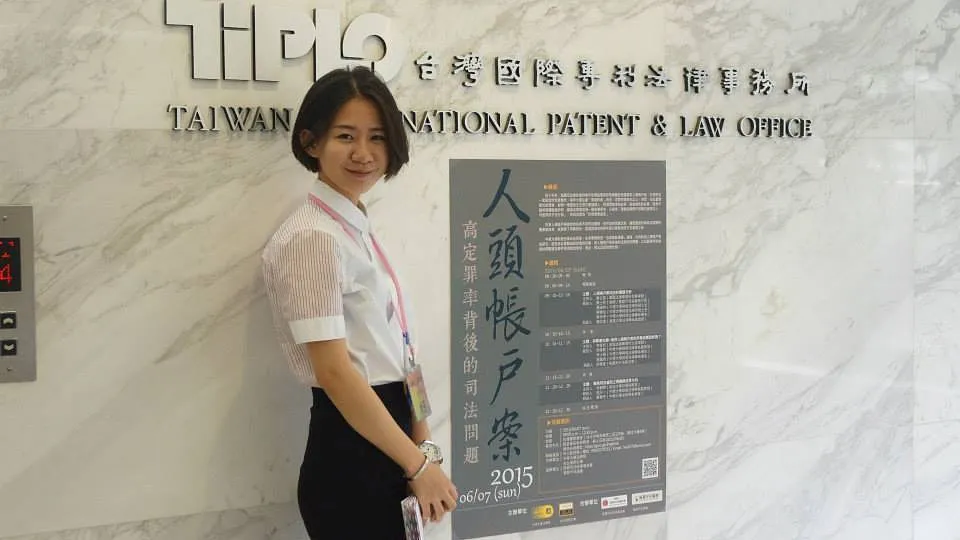
Legal Service Special Topic "Dummy Account Case" Course Reflection: Tsai Hsin-fang
Last edited: 2026-08-28
Organizing a symposium is a fascinating experience. Having never hosted such an event nor even participated in one, we started completely from scratch to build the event up and carve out its contours. This is not like studying, which is a solitary endeavor; rather, it relies on the collaborative assistance of everyone.
From the initial state of universal bewilderment to everyone pitching in—including students from other groups, the department office, and the teachers—everyone selflessly helped us. A symposium is a tremendously cumbersome event with numerous details that require attention. I cannot deny that my own performance was barely passing, but with the mutual encouragement of teachers and classmates, the symposium was successfully concluded. Through such an event, I learned about teamwork and mutual assistance. Work is not about shifting responsibilities onto one another, but about helping each other complete the task together. This is because an event like this transcends grades; numbers cannot be used to evaluate this symposium. It is a responsibility, and we had to do it well—not for a passing grade, but out of the determination to do it right.
It was not easy, nor is it like what we usually encounter. Exams do not test such things, yet they are crucially important—not knowledge, but attitude. Exams do not teach us to have a sense of responsibility, nor was this a legal ethics course, yet I learned these things in the special topics class.
This class was immensely rewarding for me. I learned how to think critically and developed empathy for clients. In the past, my idea of empathy regarding legal facts was merely self-righteous assumption, because I had never truly interacted with clients. To me, clients were distant concepts that existed outside textbooks and were unnecessary for exams. Therefore, I had never imagined what real clients were actually like. Their hardships defied description in words or writing; I could only perceive their helplessness toward the law through their helpless gazes. The supreme irony is that we are constantly striving to perfect this very legal system.
Perhaps what this class has given us is a conviction, or perhaps a perspective from which we will view the law in the future. Sometimes, what the law deems wrong may not truly be wrong; it is simply that the law tells us it is wrong. Should we still place such blind faith in the notions of right and wrong defined by the law?
This article is an AI-generated translation of the original Chinese text. In the event of any discrepancy, the Chinese version shall prevail.