
2013 Top 5 Rule of Law and Human Rights Incidents—Selection by the Chinese Human Rights Lawyers Group
Last edited: 2026-07-27
Photo Source / Lawyer Ch'en Chien-kang, weibo.com/lvshionline
Introduction
The Chinese Human Rights Lawyers Group primarily focuses on human rights and rule of law incidents (cases) in China, providing legal services to victims of infringed civil and political rights. At the end of 2013, the group selected the top ten human rights and rule of law incidents of 2013, providing brief overviews, reasons for selection, and commentary. The original selection comprised ten incidents, which intuitively reflect the state of human rights and the rule of law in China over the past year. This article selects and excerpts five of these incidents to help the public in Taiwan understand the human rights and rule of law conditions in China.
1. The Civil Rights Cases Involving Hsuch Chih-yung, Wang Kung-chuan, Liu P'ing, Kuo Fei-hsiung, Wang Teng-chao, Li Pi-yun, and Others
(1) Overview:
- Hsuch Chih-yung, Ph.D. in Law from Peking University and initiator of the New Citizens' Movement. He actively promoted campaigns for the public disclosure of officials' assets and educational equity. On July 16, 2013, he was criminally detained. On January 26, 2014, he was sentenced to four years in prison on the charge of "gathering a crowd to disrupt public order."
- Wang Kung-chuan, an entrepreneur who has long been committed to promoting civil society building. On September 16, 2013, he was criminally detained on suspicion of "gathering a crowd to disrupt public order." He has since been released on bail pending trial.
- Liu P'ing, a retired worker from the Hsinyu Steel Plant in Kiangsi and a rights activist. She participated in elections for the National People's Congress and in civil society building. In April 2013, she was detained for holding signs demanding that officials disclose their assets and faced multiple charges. Her first-instance trial has recently been held.
- Kuo Fei-hsiung, an independent writer and prominent democratic rights activist. He participated in almost all major rights-defense activities in China after 2000. In November 2007, he was sentenced to five years in prison for illegal business operations. On August 8, 2013, he was criminally detained on the charge of "gathering a crowd to disrupt public order," with authorities accusing him of participating in and leading the "Southern Weekly street incident" in early 2013.
- Wang Teng-chao, a former Shenzhen police officer. In early 2012, he planned to hold a rally promoting democracy in Shenzhen, which was suppressed by authorities. He was subsequently sentenced to 14 years in prison in the first instance and 11 years in the second instance for embezzlement and obstructing official duties.
- Li Pi-yun, a native of Shunte, Foshan, Kwangtung. She has long and actively participated in villagers' rights-defense affairs. In late August 2011, Li Pi-yun ran for the Shunte District People's Congress and was accused of disrupting the election. In July 2013, she was charged with obstructing official duties, and the case was dismissed in August. On October 13, she was re-prosecuted for obstructing official duties and arrested. She is currently in the review and prosecution stage.
(2) Reasons for Selection:
Unlike in the past, political prisoners emerging since 2011 have all arisen from promoting the progress of the rule of law and exercising civil rights. Before the 1970s, they were rightists, counterrevolutionaries, landlords, or agents; in the late 1980s, they were student leaders; and in the late 1990s, they were "cult members." If one were to label the enemies of the state in this era, it is undoubtedly the citizens. When a state begins to fear its citizens, it may soon usher in its era of the citizen. Let history remember Hsuch Chih-yung, Wang Kung-chuan, Liu P'ing, Kuo Fei-hsiung, Wang Teng-chao, and Li Pi-yun; they are the purest and bravest citizens of this country.
2. Religious Belief Cases in Nanle, Pingtingshan, Dalian, and Other Places
(1) Overview:
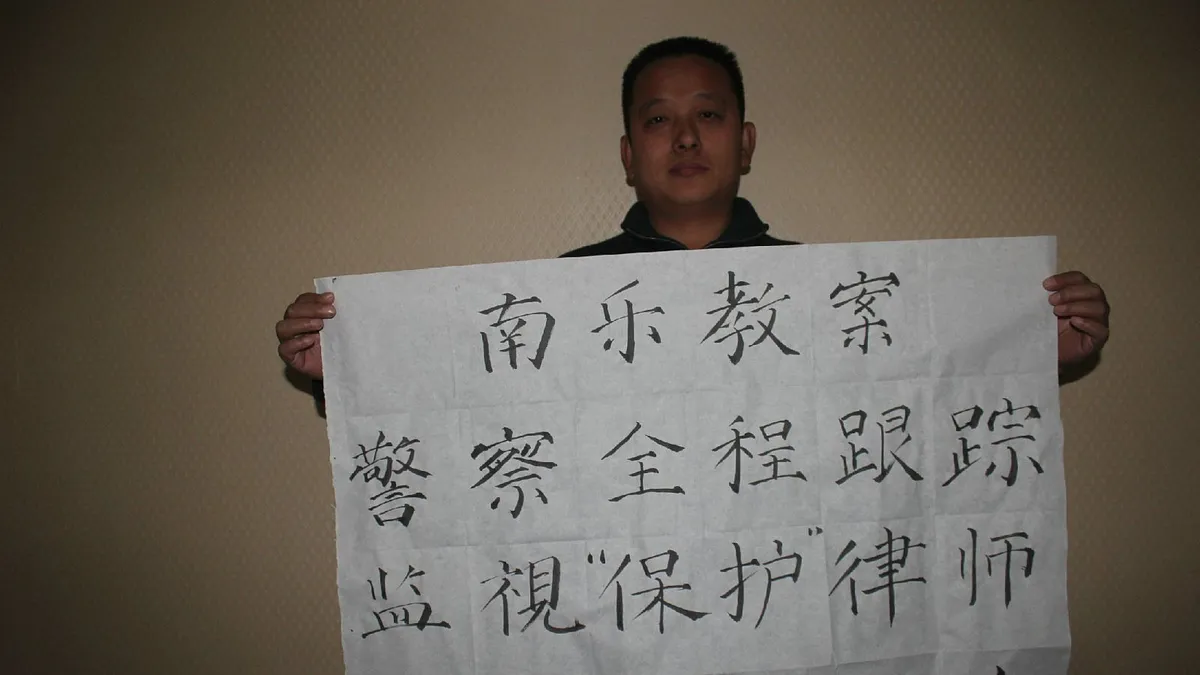
- On November 16, 2013, Pastor Chang Shao-chieh of the Nanle Christian Church in Honan and more than 20 believers were detained by local police. Subsequently, 15 defense lawyers went to request meetings and were refused, while also being beaten by a large group of organized personnel whose members snatched their mobile phones. Nanle police sat idly by at the scene, resulting in multiple lawyers being injured and their phones stolen.
- On April 14, 2013, 32 villagers in Yeh County, Honan, gathered in a home to worship God and were detained by the Yeh County Public Security Bureau. Seven of them were prosecuted and sentenced to prison terms, and seven filed appeals. During the second-instance trial at the Pingtingshan Intermediate People's Court, the presiding judge lacked professional competence, disregarded the law, insulted the lawyers, and severely violated the defense rights of the parties and lawyers.
- Thirteen Falun Gong practitioners in Dalian were accused of using a cult organization to undermine law enforcement due to installing satellite receiving dishes, and multiple lawyers represented them. Before the trial, defense lawyers were repeatedly harassed by local police, and during the trial, two lawyers were beaten and injured inside the courtroom by police officers. The trial personnel in this case ignored the law, stripped the defendants and defense lawyers of their defense rights, and delivered a miscarriage of justice sentencing the defendants to four to six years in prison.
(2) Reasons for Selection:
In 2013, numerous cases emerged across the country where local governments abused public power to undermine religious beliefs, while the courts brazenly delivered miscarriages of justice, acting as accomplices to wrongdoing. Such ugly acts of ignoring the Universal Declaration of Human Rights and trampling on international human rights covenants have aroused public indignation domestically and drawn high attention from the international community.
3. Online Speech Cases Involving the Supreme People's Court and Supreme People's Procuratorate's "Interpretation on Several Issues Concerning the Application of Law in Handling Criminal Cases Such as Defamation Through Information Networks," Along with Liu Hu, Ch'in Huo-huo, Pien Min, Hsueh Man-tzu, a Juvenile in Changchiaochuan, and Others
(1) Overview:
- In July, the Supreme People's Court and Supreme People's Procuratorate's "Interpretation on Several Issues Concerning the Application of Law in Handling Criminal Cases Such as Defamation Through Information Networks" made its grand debut, directly serving as a fire extinguisher for authorities. This interpretation—which established that a post being reposted more than 500 (two 250s) times could lead to a criminal conviction—astonished the world.
- On August 25, New Express reporter Liu Hu was criminally detained on charges of defamation. Liu Hu had previously reported online that Ma Cheng-ch'i, Deputy Director of the State Administration for Industry and Commerce, and other officials were suspected of corruption, dereliction of duty, and other offenses.
- On August 25, online celebrity Ch'in Huo-huo was arrested. China Central Television immediately claimed that Ch'in had fabricated rumors regarding sky-high compensation for the bullet train accident, mandatory Red Cross donations, the entire family of the Ministry of Railways spokesperson serving as leaders, attacked Chang Hai-di, "commented on the greenness" of Li Shuang-chiang, smeared Yang Lan, disparaged Lei Feng, and successfully promoted Kan Lu-lu, Kuo Mei-mei, and Sister Feng, aiming to "rumor-flip China." As a result, Ch'in Huo-huo did not "rumor-flip China," but instead "rumor-flipped himself."
- On September 10, well-known netizen "Pien Min" was criminally detained on charges of false capital contribution. Pien Min was extremely active in multiple public incidents in Yunnan. Before his criminal detention, "Pien Min" paid the most attention to the Kunming Petrochemical incident.
- On August 23, Hsueh Man-tzu—a prominent Weibo opinion leader with 12 million followers, a "red-generation" scion, and a wealthy angel investor—was administratively detained in a rental housing unit in Peking's Chaoyang District for suspected prostitution, and was later criminally detained on charges of gathering a crowd for sexual promiscuity.
- On September 15, a juvenile in Changchiaochuan, Kansu, posted on Weibo questioning a homicide that occurred in a karaoke parlor in the county. Because the post was reposted more than 500 times, he was criminally detained—becoming the first person to experience the "two 250s" clause in practice.
(2) Reasons for Selection:
The internet can be said to be the most important part of our modern life. A wide target audience for crackdowns, a concentrated crackdown period, and the highlight of the two 250s—these are all reasons for the selection of online speech cases. Under a totalitarian regime, the internet is basically the sole channel for the public to express opinions. Netizens in China consciously assumed civic responsibilities during the transitional period. Embracing ideals and showing compassion for the common people, they used their pens as banners to utter cries as poignant as the blood of a cuckoo for the advancement of China's civil rights. For this, they became the greatest enemies of corrupt officials and public power. Meanwhile, some prominent opinion leaders grew into influencers in the online world, threatening the monopoly of the totalitarian regime over public opinion and narrative control. Therefore, cracking down on the internet was inevitable.
4. Three Influential Death Penalty Cases: Hsia Chun-feng, Tseng Cheng-chieh, and Wang Shu-chin
(1) Overview:
The Hsia Chun-feng case. The Hsia Chun-feng case caused a massive shock throughout society, yet grassroots cries to "spare his life" ultimately failed to stop the Supreme People's Court's death penalty review decision. The Hsia Chun-feng case involved both immense controversy over its legal nature and reasonable doubts regarding the facts. Even if the defense's claim of "legitimate defense" lacked sufficient evidence to prove it, rejecting this claim likewise violated people's rational judgment. Whether official or grassroots, the Hsia Chun-feng case was no longer a simple criminal case; two conflicting underlying interests influenced the handling of this case and swayed public sentiment: the right of small vendors, represented by Hsia Chun-feng, to use the streets to seek survival, versus the power of local governments, represented by urban management officers (chengguan), to expel vendors in pursuit of a "clean and bright" urban appearance. In a society of the people, by the people, and for the people, the people's right to survival should be paramount, and officials' "face" should not be a factor considered in urban development. Cities and streets belong to the people, and the people have the right to use them lawfully. Although the court judgment rejected the finding of legitimate defense for Hsia Chun-feng, the public can judge for themselves: if a street vendor had not been treated brutally, how could he possibly have dealt such a heavy blow to "law enforcement personnel"?
The Tseng Cheng-chieh case. The Hsia Chun-feng case was, after all, a "homicide case," and the death penalty represents a form of retributive justice. However, Tseng Cheng-chieh was sentenced to death with immediate execution, which was carried out in secret—denying even his family visits before his death. This was not only inhumane but also provoked immense suspicion of silencing him to cover up the truth! This is because even if Tseng Cheng-chieh's actions constituted a crime, it was merely a property crime with no direct link to the victim's life; why must the death penalty be imposed? The court's death penalty judgment and execution for Tseng Cheng-chieh were carried out so hastily that even the right to see loved ones for the last time was stripped away. People have reason to question how much truth was hidden behind this haste. If the handling of the Hsia Chun-feng case made the grassroots populace feel unsettled, the judgment and execution of the Tseng Cheng-chieh case undoubtedly brought a sense of sorrow and fear akin to "the fox mourning the death of the rabbit" upon the entrepreneurial community.
The Wang Shu-chin case. Compared to the aforementioned two cases, the Wang Shu-chin case appeared somewhat "unconventional." Wang Shu-chin carried multiple homicides on his conscience, and sentencing him to death would not normally attract attention. However, because Wang Shu-chin's confession "heavily overlapped" with the Nieh Shu-bin case from a decade ago, and Nieh Shu-bin had already been executed based on the same "criminal facts." Wang Shu-chin's confession brought information to the surface suggesting that the Nieh case lacked sufficient evidence and that case handlers were suspected of extracting confessions through torture. Wang Shu-chin dealt judicial organs a major headache: if Wang Shu-chin's confession were deemed true, the Nieh Shu-bin case was a wrongful conviction, and the case handlers were suspected of crimes. Thus, in this courtroom of a country claiming to be ruled by law, an absurd drama unfolded where the defendant desperately tried to identify himself as the criminal, while the public prosecutors resolutely denied that he was the criminal.
(2) Reasons for Selection:
Aside from the death penalty and their high influence, the contents of these three cases bore no similarities or commonalities. They could be grouped together simply because the abolition or retention of the death penalty is a highly prominent topic today. As an extremely harsh penal measure, the death penalty was once endowed with lofty retributive value. In the debate over the abolition or retention of the death penalty, contrary to the academic community's calls to abolish and restrict it, grassroots voices demanding the retention of the death penalty formed an overwhelming majority. The public hopes to retain the death penalty to punish vicious felons guilty of "heinous crimes," with the sole purpose of preventing and eliminating infringements upon the right to life to safeguard their own safety. However, the reality of the death penalty system in actual implementation runs counter to public expectations; instead of sparing the public from fear, it has brought immense doubt and unease.
5. The Illegal Arrests of Lawyers Chiang Yuan-min, Wang Ch'uan-chang, and T'ang Chi-t'u; the Nanle Religious Case and the Series of Incidents Involving Lawyers Being Beaten and Detained While Witnessing the Tzeyang Black Jail
(1) Overview:
- Shenzhen lawyer Chiang Yuan-min represented Sanya villagers in Hainan regarding land rights defense and detention cases, accusing local police of torture through interrogation and reporting the local government for illegal land requisition. He was criminally detained and arrested on charges of "gathering a crowd to disrupt social order." Under the attention of the legal community, Lawyer Chiang was released without charges after being detained for 170 days.
- In early April 2013, Peking lawyer Wang Ch'uan-chang represented a case tried by the Chingchiang People's Court in Kiangsu regarding "using a cult organization to undermine law enforcement." Using his mobile phone in court to photograph and copy evidence he had submitted, he was subjected to 10 days of judicial detention by the Chingchiang court. As soon as the news broke, nearly 20 lawyers from various regions and dozens of citizens gathered in Chingchiang within a day, demanding the immediate release of Lawyer Wang Ch'uan-chang. Under pressure, the Chingchiang court released Lawyer Wang Ch'uan-chang early after two days of detention.
- In October 2013, Peking lawyer T'ang Chi-t'u accompanied a victim's family to the Chixi City 610 Office to demand the release of Falun Gong practitioners illegally detained in the Chixi City "Legal Education Center." He was administratively detained for five days on charges of "disturbing social order." During his detention, over 20 lawyers and citizens successively arrived at the scene in solidarity.
- The Nanle Religious Case occurred in Honan in November 2013, prompting multiple lawyers from across the country to travel there for defense. The Nanle authorities manipulated numerous unidentified individuals to surround, attack, verbally abuse, and beat the lawyers. Among them, Lawyers Liu Wei-kuo and Chang Wei-yu were beaten, Lawyer Chiang T'ien-yung's clothes were torn and his phone snatched, and Lawyer Chao Yung-lin's electronic equipment was seized.
- On May 13, 2013, 11 lawyers—including Liang Hsiao-chun, Chiang T'ien-yung, T'ang Chi-t'u, Li Ho-ping, Wen Hai-bo, Wang Ch'eng, Kuo Hai-yueh, Chang K'e-k'e, T'ang T'ien-hao, Lin Ch'i-lei, and Yang Hui-wen—went to witness the "Legal Education Center" in Tzeyang City, Szechwan, where they were violently beaten and illegally detained by local police for over 24 hours.
(2) Reasons for Selection:
It was the best of times, it was the worst of times, it was an age unsuited for being a lawyer, and it was an age best suited for being a lawyer. In this era, lawyers' rights and interests are wantonly infringed upon by various forces, particularly unlawful public power, leaving lawyers' personal rights and professional privileges as precarious as eggs piled high, utterly devoid of safeguards. Yet precisely in this era, human rights lawyers win the world's respect through their steadfastness and courage in the face of hardship, and through their resilient and indomitable yearning and pursuit for democracy and the rule of law. In case after case and incident after incident, they fight for rights, struggle for the rule of law, and strive for social progress. What a time to be alive, Chinese human rights lawyers.
This article is an AI-generated translation of the original Chinese text. In the event of any discrepancy, the Chinese version shall prevail.