
Why Be a Lawyer? Insights on Practice from Attorney Li I-Ting
Last edited: 2026-08-28
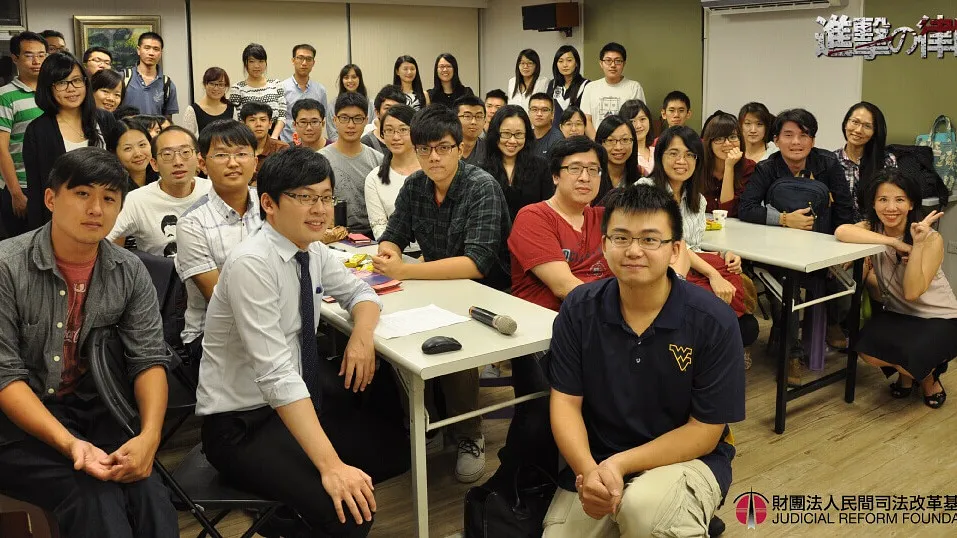
2015/08/27 The JRF organized a tone-shifting lecture for junior lawyers, inviting Attorneys Li I-Ting and K'o I-Shan to share their legal lives up to that point, providing trainee lawyers about to embark on their legal paths with different professional imaginations. This article summarizes the content shared by Attorney Li I-Ting.
Why Be a Lawyer?
"Why be a lawyer?" At first glance, this seems like a question law students would repeatedly ponder and chew over before choosing to embark on the path of national examinations. Yet Attorney Li I-Ting, who has been in practice for nearly five years, still posed this simple yet most profound question—one that affects the future of one's legal practice—to the "junior schoolmates." Therefore, "Please raise your hand if you still don't know why you want to be a lawyer right now." This became Attorney Li's "opening remark" at this [Tone-Shifting Lecture]. "What kind of things can you do as a lawyer?" Attorney Li added with a question.
We Can Make This Society Better
The legal profession is actually composed of roles such as judges, prosecutors, lawyers, and legal professionals. Attorney Li pointed out that because lawyers possess a considerable degree of "freedom," compared to other professions, besides being able to fully exercise their expertise in their work, they also have extra time to participate in social activities. "In Taiwan's past, many legal reforms and even social political and democratic movements were related to lawyers." Here, Attorney Li also specifically highlighted the importance of "lawyers connecting with society."
Attorney Li I-Ting, a graduate of the Department of Law's Graduate Institute at National Taiwan University (Civil and Commercial Law Group), mentioned that influenced by the scholarship of Professors Chiu Lien-kung and Hsü Shih-huan, he planned to study abroad and pursue his desired academic path after three years of legal practice. However, as he is about to enter the fifth year of his legal career—nearly two years later than originally planned—Attorney Li still moves forward with this dream. "Action: when we see things, we have many thoughts, but we dare not jump out and speak, we dare not take to the streets." During the lecture, Attorney Li also shared how, during his time in the Graduate Institute of Law, he was influenced by the enthusiasm of students from the Basic Law Group and Criminal Law Group who participated in school affairs and social issue "actions." His values gradually shifted, becoming one of the catalysts for his future path toward public interest defense.
"We can make this society better in the issues and fields we each care about," Attorney Li said.
Major Questions for Junior Lawyers
Job Hunting Campaign
Attorney Li shared his personal experience, advising applicants to send resumes to any ideal law firm. He recalled calling firms one by one to ask about open trainee positions: "Do you have any openings?" He even mentioned a peer in lawyer training who rushed up to a lecturer during training to ask if there were any openings, and subsequently successfully secured a traineeship. Therefore, "finding a traineeship requires proactivity." In addition, because he wanted to pursue an academic path, Attorney Li aimed for large law firms when submitting resumes, hoping to handle leading cases and tackle complex matters in a short time to improve himself. When writing a resume, one can reference the experiences of senior alumni who have successfully found jobs. Aside from important attachments, "foreign language proficiency" is certainly an essential qualification. As for the resume content, Attorney Li even included his past jobs working at McDonald's and construction sites, but he believes that the prerequisite for junior lawyers to include such life experiences is that they must add value to the job application and make employers interested in the resume. Even if one does not currently meet the firm's needs, as long as highlighted personal traits are recognized, there will at least be an opportunity for an interview or written test. After entering a firm, the most important thing is interpersonal relationships. In a large firm, one may need to deal with numerous partners, learn their habits well, and properly prioritize tasks. Attorney Li reminded everyone: "Ask more and learn more about the unwritten rules of a firm after entering."
In addition, during written tests, Attorney Li has also encountered Chinese-to-English and English-to-Chinese translation tests as well as English self-introductions, which demonstrate the importance of "foreign language proficiency." As for interviews, they often test an applicant's adaptability on the spot; for example, sometimes detailed or sharp questions are asked regarding personal traits (family background, interests and specialties, personal experiences, etc.), which requires the ability to turn weaknesses into strengths. Attorney Li also mentioned that before an interview, one can search online for information related to the law firm. Besides gaining a preliminary grasp of the boss's field, the key is to first understand what you want to learn and what kind of boss you want to work with, rather than blindly catering to the boss, because the boss's field might just be what you want to learn and invest in the future.
Large Firms vs. Small Firms
Attorney Li analyzed that in large firms, which easily have sixty or seventy lawyers, there may be four groups, and the division of labor is more detailed. Therefore, before applying, one should consider which group or category in the firm they want to enter. Although this is difficult to discern from a webpage, one must gather information from multiple sources. The advantage of a fine division of labor is being able to specialize in a specific legal field, encountering relatively difficult cases whose volume is enough to fill a small room. Although the process is painful and dealing with cases is relatively single-focused, due to the large number of people, there will be more discussion and research regarding the cases. In small firms, one can learn directly from the boss and may encounter various types of cases; such firms are also suitable for lawyers who hope to open their own practices in the future. Here, through his interaction experience with Attorney Ku Li-hsiung, Attorney Li emphasized the importance of cultivating rigorous attitudes such as quickly grasping the core points of a case and keeping abreast of case statuses at all times, and conveyed the concept: "A good lawyer is not someone with good eloquence; a good lawyer constantly learns how to make strategic judgments."
Boss, Can We Not Work Overtime?
Some junior lawyers also raised the question of "whether overtime is mandatory." Attorney Li responded that he does not decide whether to work overtime based on whether the boss is present or not, but rather that if more time is needed—for example, taking three days to complete a legal brief—he will try his best to complete the brief within a day even if it requires working overtime. Furthermore, what is exceptionally crucial is "attitude." Although leaving work when time is up, the submitted brief must still maintain a certain quality so that the boss can accept leaving work on time.
Lawyer, What to Do When Stuck?
Junior lawyers start out not knowing anything—unable to write briefs or make judgments. At this point, one can "imitate" precedent drafts and predecessors' case records in the firm, accumulating practical experience from them. Moreover, when reviewing a case, the first thing that must be paid attention to is relevant deadlines. This helps determine peremptory periods, statutes of limitations, or prosecution periods to avoid disadvantages caused by exceeding deadlines. As for the second common difficulty junior lawyers frequently encounter: what to do when facing questions they do not know during consultations? The correctness of legal opinions often relates to the execution of the client's litigation strategy. Unless a case is very simple and can be determined just by consulting relevant regulations, when encountering questions in unfamiliar fields, it is safer to directly admit the situation or respond by saying one will go back to research further and inform them by phone later, and clients will mostly be understanding.
In addition, "being questioned" is also a frequent occurrence in the early stages of practice. Attorney Li mentioned that besides showing a serious and proactive attitude during the first meeting—even if professional advice cannot be provided on the spot—after long-term cooperation with clients and building trust, related doubts will gradually decrease. "Although it is more tiring, what young lawyers rely on is physical strength; having time and conscientiously providing consultation opinions," Attorney Li added. Regarding the part raised by trainees on "how to gauge fee standards," Attorney Li suggested referring to peer prices or even "adapting to local conditions" to formulate reasonable fee standards, and reminded peers to avoid price-cutting competition, otherwise there is a risk of falling into "cheap labor." When encountering situations where free consultation "should" be given, the time and cost spent on the case, the type of case, and the client's financial resources can be used as factors and bases for consideration.
Victory and Defeat Are Common Matters in Military Affairs
Lawyers must moderately detach themselves from cases. Attorney Li specifically mentioned that although judges with poor attitudes currently exist, if the formation of mental conviction in a judgment is favorable to the client, one might as well "ignore" the poor attitude problem. In the current court ecology, phenomena such as the "presumption of guilt" in criminal courts, "induced evidence gathering" in civil courts, and "losing courts" in administrative courts are still common. Situations where handled cases are less than ideal happen frequently, and Attorney Li gave junior schoolmates a preventive shot: "Practice is not as simple as imagined, just do your best." Some lawyers put the client too much on themselves; based on the client's interests, excessive emotional investment must be avoided, and one must make a timely cut with the case. In addition, one needs to develop diversely in various fields, such as domestic relations cases, engineering cases, and labor cases, rather than focusing solely on general civil and criminal cases as the main axis, and this will be even more so in the future.
In this session, Attorney Li finally concluded with the involvement of NGOs as the finale. If the proposition of judicial reform is an affirmative answer, lawyers bear an unshirkable obligation. Once judges enter the system, they are bound by the bureaucratic system; professors as scholars may not have close contact with practice. Therefore, Attorney Li also used "lawyers are practically born to be reformers" as the ending of the lecture. In addition, during the Q&A, Attorney Li and Attorney K'o answered questions from the attending trainees together and provided sound advice.
This article is an AI-generated translation of the original Chinese text. In the event of any discrepancy, the Chinese version shall prevail.
