
The Third Imagination: What Do Lawyers Do in NGOs? Post-Event Report
Last edited: 2026-08-28
Why did you want to become a lawyer in the first place? Why take the national bar examination? Many people may harbor a blueprint and a dream for being a lawyer—perhaps the glamour of working in a law firm, or the sense of accomplishment from handling cases. However, reality often diverges from imagination. When this sense of fulfillment cannot be attained, are there truly no other possibilities?
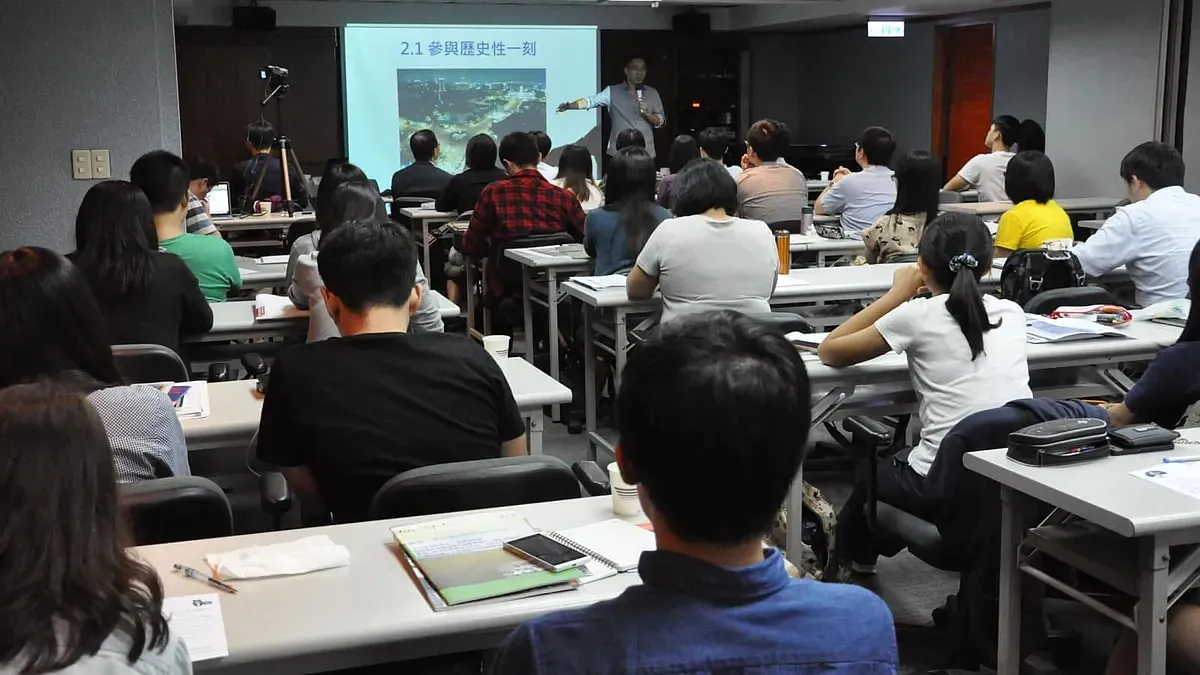
"I believe there certainly are, and they are right here in NGOs!" said JRF Deputy CEO Ch'en Yü-fan firmly in her opening remarks at the event "What Do Lawyers Do in NGOs?". Through the sharing of personal practical experiences and growth insights by lawyers such as Huang Hsü-t'ien, Chou Han-wei, Lo Shih-hsiang, Chang Yü-yin, and Kao Jung-chih, who have long worked in NGOs in various capacities, lawyers can not only walk a path different from the traditional one, but perhaps also become another progressive force in Taiwanese society.
"Getting Things Done Internally, Having a Voice Externally" – Huang Hsü-t'ien, Chairman of the Taipei Bar Association
Attorney Huang Hsü-t'ien stated that the Taipei Bar Association engages in many "side jobs." First, it "gets things done internally." In terms of member welfare services, it provides compulsory liability insurance for members. Additionally, starting from January the year before last, annual membership dues have been halved for new members under 30 who have joined the association for less than three years, aiming to reduce the burden on young members. There are also many dynamic and static clubs within the association to foster bonds among members.
The association also provides "internationalized" services, such as organizing delegations to attend the IBA Annual Meeting held in Tokyo and the IPBA Annual Meeting held in Hong Kong. It continues to deepen cooperation and exchanges with partnered bar associations, such as the Dai-ni Tokyo Bar Association, the Seoul Bar Association, and the Law Society of Hong Kong. Furthermore, if litigation requires assistance in Japan, one can request recommendations for assisting lawyers through exchanges organized by the association. This is a "mutual lawyer recommendation" and "lawyer internship at member law firms in other jurisdictions" system currently being promoted by the association. If members wish to pursue advanced studies abroad in the future, the association strives to secure scholarships from local schools—such as UC Hastings College of the Law providing up to four scholarships for members and dispatching students to intern at the association.
In addition, "having a voice externally," the association holds regular meetings with other NGOs to exchange information, cooperate in promoting affairs, issue statements specifically on major public issues, and establish a pro bono platform. Regarding academic exchanges, Attorney Huang specially emphasized that "the association possesses academic strength." It cooperates with law departments of universities in northern Taiwan, such as National Taiwan University, National Taipei University, Soochow University, and Fu Jen Catholic University, allowing lawyers to audit courses for free. The association also attaches great importance to enhancing members' capabilities, such as cross-examination skills, specifically dispatching lawyers to receive training at the U.S. National Institute for Trial Advocacy (NITA) and holding workshops upon returning to Taiwan to improve lawyers' courtroom advocacy skills. Attorney Huang concluded by stating that the rewards of working in the bar association far outweigh the efforts, and it is a very suitable environment for developing a comprehensive view of legal learning.
"A Different Practical Experience" – Chou Han-wei, Staff Attorney at the Legal Aid Foundation
Attorney Chou Han-wei started by sharing a story. The Legal Aid Foundation (LAF) was established in 2004, the year he passed the bar exam. He heard a personal experience from Attorney Lin Yung-sung at a certain occasion that he still remembers to this day. Attorney Lin said he took on an occupational disaster case where a worker's arm was amputated after being struck by 120,000 volts of electricity. Attorney Lin asked him if it hurt very much, and the worker replied that while the electrical burns were indeed painful, the real pain was wanting to reach for a cup in front of him to drink water, only to find he could not—that was the true pain.
The clients aided by LAF are those who fall between the cracks of systems and cannot obtain help, "and these clients are usually very disadvantaged." In addition to individual case assistance, LAF also has key special projects, such as the 〈Legal Aid Project for Consumer Debt Clearance Procedure Cases〉 and the 〈Project for Lawyer Accompaniment During Police and Prosecutorial Interrogations〉. LAF once had a case where a client undergoing interrogation at a police station stated they wanted a lawyer present, but the prosecutor simply noted down "wants a lawyer" and asked, "Can we start questioning now?" "There is still a lot of room for reform in Taiwan's judicial procedures," Attorney Chou shared with a wry smile.
The work of intern lawyers mainly includes assisting branch offices with applicant reception, reviewing records, and other tasks; they can also learn many technical skills alongside other lawyers. Administrative lawyers primarily conduct regulatory research, revisions, and project promotion. Currently, the most needed are assisting lawyers: those with over two years of practice are classified as general assisting lawyers, or those with less than two years who submit 15 case briefs approved by the review committee can also become general assisting lawyers. Those with less than two years of seniority mainly handle first-time police-prosecutorial accompaniments and debt clearance services. Attorney Chou added at the end that encountering these cases allows one to see cases vastly different from those in law firms, while also providing the opportunity to cooperate with many prominent lawyers and gain distinctive practical experience.
"Working on Wrongful Convictions Is a Great Learning Opportunity in Life" – Lo Shih-hsiang, Executive Director of the Taiwan Association for Innocence
Wrongful conviction relief has in recent years become a very important activity leading Taiwan's criminal justice reform. The establishment of the Taiwan Association for Innocence (TAI) is, to a certain extent, a response to Taiwan's democratization process and how we handle possible judicial miscarriages. Attorney Lo Shih-hsiang used an analogy: "Wrongful conviction relief is not like a basketball game where offense and defense score quickly; it should be like a 90-minute soccer match where no goals might be scored even until the end." Yet he found that this soccer match has been played for two years without finishing—perhaps the system is flawed, or perhaps it is not a soccer game, but another challenge requiring even more energy and collective effort.
"Wrongful convictions often carry very heavy sentences; if even one case happens, how can that be tolerated?" TAI holds a wrongful conviction rescue review committee monthly to evaluate different cases. If a miscarriage of justice is confirmed, the association takes up the case, forms a pro bono legal team, and begins rescue operations. Since 2011, TAI has accepted 491 cases to date, with 12 actually rescued. The main reason is the shortage of case-review manpower, making the assistance of more lawyers urgently needed.
Furthermore, to give wrongful convictions a better chance at relief, TAI's recent goal in institutional reform is to move toward legislative amendments and loosening the standards for retrials by courts. The next step is addressing retrial procedures, strengthening procedural safeguards, and establishing the retrial system as a mechanism for remedying the innocent. From a long-term perspective, because the current system challenges human nature too much—as "judges are asked to say that their colleagues, classmates, or senior peers judged wrongly"—it is hoped that the retrial organization can be externalized. Referring to the Nordic criminal review commission system, a pluralistic committee independent of the judicial power under administrative and supervisory authority should be established, responsible for the review, approval, and rejection of retrial cases.
In addition to institutional reform, TAI also exchanges knowledge on wrongful conviction rescue with international organizational networks across different countries. TAI is the 69th member of the Innocence Network globally and the second in Asia. The annual TAI forum in August this year invited Japanese lawyers and scholars to Taiwan for exchanges; the deliberation and meticulousness of Japan's wrongful conviction rescue efforts far exceed Taiwan's current status. TAI is also translating books, such as *Wrongful Conviction: Crossroads of Science and Law* and *The Innocent Man* (note: titles translated based on context/standard translations like *Anatomy of Injustice* or *The Trial of Innocence*), etc.
"The path of innocence relief leads to the unknown." Attorney Lo concluded by sharing the Liu Cheng-fu case and the Houfeng Bridge case. In the former, he never expected the Supreme Prosecutor's Office to file two Extraordinary Appeals; in the latter, because the court required expert mechanical judgment, a fluid mechanics professor later contacted Attorney Lo via Facebook, expressing a willingness to assist. On this path of wrongful conviction relief, although one constantly walks toward the unknown, you are definitely never alone.
"Born from Ideology, Making Environmental Litigation a Profitable Profession" – Chang Yü-yin, Executive Director of the Environmental Jurists Association
A lawyer's "first imagination" and "second imagination" might be law firms or In-House counsel, which organize people through interests, whereas NGOs organize people through ideals and beliefs. About five years ago, the Environmental Jurists Association (EJA) was mainly born in response to Taiwan's unjust land and environmental development cases in recent years. It has operated with difficulty through small-scale fundraising and small fundraising banquets. Yet, despite scarce resources, it has accomplished quite a few things, such as the Central Taiwan Science Park (CTSP) Phase III and Phase IV cases, the Sanzhi and Yuanli anti-wind turbine cases, the Danhai Light Rail/Tamshui-Bali Bridge road project (Tan-Pei Road) case, the Chen-nan case at Hsinyuan Farm in Kaohsiung, and the Taoyuan Aerotropolis case. Attorney Chang Yü-yin observed that Taiwan's two major political parties are both right-wing, coupled with the "religion" of land development believed by the majority of people in Taiwan; often, once political parties seize power, they use political and business forces to usurp Taiwan's land, potentially through development projects, zone expropriation, or major national plans. The victims may be humans, or sentient beings unable to speak for themselves, such as flora, fauna, and cultural assets. "What are environmental jurists fighting against? They are fighting against Taiwan's deeply deformed belief in land development."
Fighting cases born from such ideals can be exhausting, and might not earn one a house, "but at least it lets you know that you are still alive" and "touches souls." Environmental litigation affects the communities in that environment; if these groups are persuaded to support the association drop by drop, the association can afford lawyer fees to fight environmental litigation cases. And this donation is made by residents for themselves. If this structure is built in the future, it will be able to counter an even more massive structure.
"Stand in the Position You Have Chosen and Work Diligently" – Kao Jung-chih, Executive Director of the Judicial Reform Foundation
Attorney Kao Jung-chih shared that upon entering practice, he saw many lawyers—such as Huang Hsü-t'ien, Lin Yung-sung, and Lo Ping-cheng—and was deeply influenced by their professional yet enthusiastic demeanor, shifting from a naive imagination to a contextualized sense of justice. For example, every opening remark when going out to give speeches with Su Chien-hsu was: "My humble name is Su Chien-hsu, currently engaged in judicial reform work, and my identity is that of a defendant." Or take the Hsu Tzu-chiang case, where a person is sentenced to guilty despite having done nothing wrong, and while the public sympathizes with you, they still think you might have been involved; the subtle complexities of human nature left a profound impression on Attorney Kao. Another example is the Chiang Kuo-ching case: initially, no one thought it could be vindicated, but after trying various methods over more than ten years, it became a rescue platform, and the eventual successful vindication made people deeply realize the importance of an organization's existence. "Because everyone may have different career plans, the existence of an organization allows cases to keep moving forward. Although you don't know where it will lead, you can be certain that it will keep moving forward."
Attorney Kao also shared that another interesting aspect of joining an NGO is the feeling of participating in a "historic moment." The promotion or abolition of many bills is not as simple as it appears on the surface; behind the scenes, there must be a accumulation of favorable timing, geographical convenience, harmonious human relations, and various other factors, coupled with someone giving a timely push, in order to succeed.
Finally, Attorney Kao stated that the most valuable part of working in an NGO is that "although judicial reform reforms others, to a certain extent it feeds back into oneself." "If you continue to practice law, it will give your legal life three-dimensional depth," and he invited more lawyers to join JRF and NGOs.
This article is an AI-generated translation of the original Chinese text. In the event of any discrepancy, the Chinese version shall prevail.