
Supreme Court's Sentencing Debate Deserves Commendation, But People-Friendly Measures Still Need Improvement
Last edited: 2026-07-27
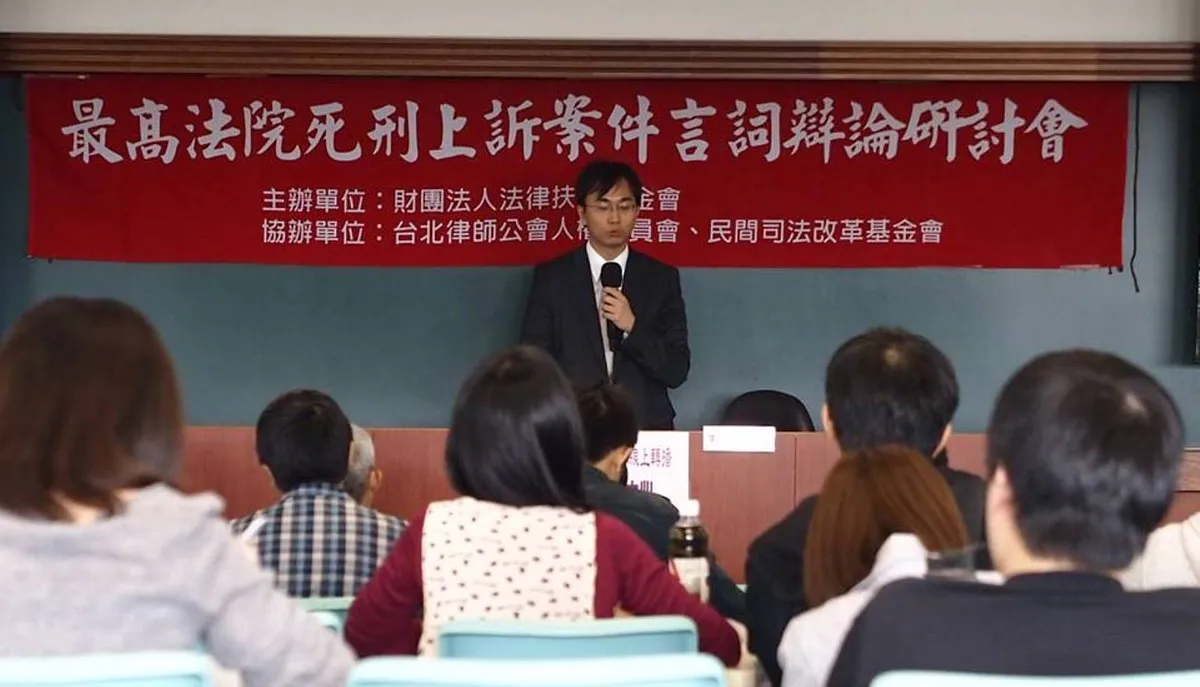
Regarding the Supreme Court's sentencing debate hearing for the Wu Min-ch'eng case held today (24 December), our Foundation makes the following statement:
1. The refinement of sentencing debates deserves commendation, and we expect the Supreme Court to hold hearings routinely for controversial cases:
- There are numerous factors to consider in sentencing, which cannot be left without standards. After the International Human Rights Covenants acquired domestic legal effect, how Article 6 and Article 7 of the International Covenant on Civil and Political Rights, the intent of the Constitution of the Republic of China to protect the right to life, the Grand Justices' Interpretations regarding "human dignity," and the sentencing guidelines in Article 57 of the Criminal Code should be synthesized and interpreted is truly an important issue. We look forward to the Supreme Court leading our nation's judiciary forward.
- Our Foundation commends the Supreme Court for valuing the refinement of sentencing and gradually moving toward the requirements of establishing due process of law. We further look forward to the Supreme Court routinely holding hearings in the future for cases involving major legal controversies.
2. The Supreme Court is clearly not yet prepared to open its doors to the public:
- However, perhaps because its doors have remained closed for too long, the Supreme Court appears unprepared in both its physical facilities and personnel mindset to adopt an open attitude. First, compared to the people-friendly and convenient practices of other courts, the Supreme Court's security checks are strict, nearly matching airport standards. While prohibiting cameras, recorders, and photographic equipment is justifiable, there seems to be no necessity to ban items such as cell phones, laptops, and PDAs that other courts do not restrict. What is even more perplexing is that even liquids and drinking water cannot be carried on one's person—are we going to court or boarding a plane? Appropriate security checks are necessary, but this measure by the Supreme Court makes the entire public feel as though they are being treated as terrorists.
- Regarding seating for observers, Article 3, Paragraph 3 of the "Court Observation Rules" states: "If there are empty seats in the observer seating area, observation passes may be issued at any time." Yet, the Supreme Court would rather leave over 20 reserved seats empty at the venue than timely and appropriately open them to the public. One can easily imagine the status of the people in the eyes of the Supreme Court.
- Furthermore, there is a live broadcast in the fourth-floor conference room with over a hundred seats. Just imagine: every citizen woke up extremely early specifically to observe the hearing, and not a single person arrived later than the start time. The Supreme Court should have been more than welcoming; we cannot understand why it would rather make people wait in bitter suffering in the 13-degree Celsius winter cold than find a solution for those waiting outside. Does the Supreme Court welcome the public or repel them? Is this true openness or false openness?
- Finally, the Supreme Court likely overlooked the fact that filling out observation information also constitutes the collection of personal data, which is similarly governed by the Personal Data Protection Act. Whether collecting personal data under the guise of trial observation is unlawful raises prior concerns; the form is overly complex, requesting excessive unnecessary information, which likely exceeds the scope necessary for the purpose of observation; moreover, it lacks warning notices. That the highest judicial adjudication organ takes the lead in violating the law without self-awareness is astonishing. Compared to its recent strenuous efforts to protect litigation and adjudication records, its underlying mindset is evident.
3. Oral arguments offer numerous benefits; the Supreme Court should utilize them more frequently and sincerely welcome the public to observe trials:
- In short, the benefit of conducting oral arguments lies in broadly soliciting diverse opinions from all sides, providing comprehensive legal advice through expert witnesses, achieving the Supreme Court's function of unifying legal interpretations and eliminating controversies, and avoiding the pitfalls of arbitrariness caused by working behind closed doors. We believe this Supreme Court hearing is a good start, and it is bit by bit shaping our nation's legal due process; it deserves commendation.
- However, the Supreme Court should simultaneously adjust administrative matters related to trial observation to achieve the objective of a judiciary for the people.
Press Contact
Attorney Lin Fêng-chêng, Executive Director, Judicial Reform Foundation
This article is an AI-generated translation of the original Chinese text. In the event of any discrepancy, the Chinese version shall prevail.