
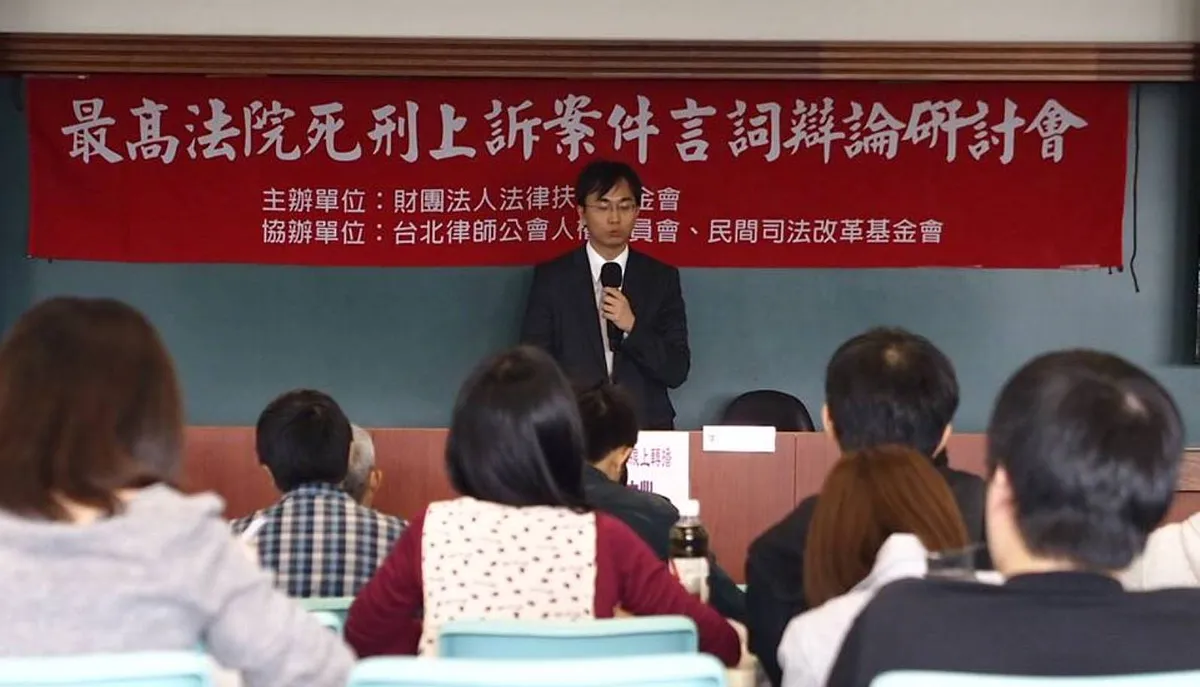
Supreme Court Holds Preparatory Hearing for Oral Argument on Death Penalty Sentencing: Minor Flaws Do Not Overshadow the Merits
Last edited: 2026-07-27
Regarding the preparatory hearing for oral argument on death penalty sentencing held today (the 3rd) by the Supreme Court in the Wu Min-ch'eng murder case, the Foundation conducted court observation and issues the following statement:
- There are numerous factors to be considered in sentencing; if they lack standards, it is tantamount to arbitrariness. The heavier the sentence, the more refined the sentencing procedure should be to meet the requirements of due process of law. The Foundation is pleased to see the Supreme Court announce that all future death penalty judgments will be subject to oral argument, but we further hope that in addition to the less than 0.1% of death penalty cases, oral argument hearings should also be held more frequently for other cases involving major legal controversies, and the Supreme Court should hold court on a regular basis.
- While minor flaws certainly do not overshadow the overall merits, the proceedings nevertheless exhibited some unfamiliarity: for instance, the debate procedure was only preliminarily drafted without established rules; the defendant did not quite seem to be the focal point of the trial, and whether they should be summoned to court remains undecided; are the failure of the first and second instances to conduct sentencing investigation and sentencing debate merely "improper" rather than illegal? Furthermore, there appeared to be considerable hesitation regarding whether to summon expert witnesses to provide legal opinions. These issues could potentially diminish the effectiveness of oral argument and must be handled with utmost care.
- In short, the benefit of conducting oral argument lies in gathering diverse opinions from all sides and providing comprehensive legal advice through expert witnesses, thereby fulfilling the functions of unifying legal interpretations and resolving controversies by the Supreme Court. This is, after all, the true essence of establishing the Supreme Court.
Press Contact
Attorney Kao Jung-chih, Office Director, Judicial Reform Foundation
This article is an AI-generated translation of the original Chinese text. In the event of any discrepancy, the Chinese version shall prevail.