
"The Unfaceable Truth of Torture"
Last edited: 2026-07-27
Following the Taiwan High Court's guilty verdict against defendants Ch'en Ho-shun and two others on May 12 this year, the defendants filed an appeal. The Supreme Court received the case records in early June, yet reviewed and concluded a case that had dragged on for 24 years through 11 retrials in less than two months, sentencing Ch'en Ho-shun to death. The facts established in the court's judgment completely depart from common reason and logic, making it all the more bewildering. It is a hasty and arbitrary decision that disregards the presumption of innocence and the principle of evidence-based adjudication, which are the cornerstones of the Code of Criminal Procedure, effectively killing the innocent. For this, we express our deepest disappointment and anger!
This judgment is entirely based on the confessions of the defendants and others. However, during the investigation stage, the defendants were subjected to torture by police officers, such as being beaten and having chili water forced down their noses, which is proven by interrogation audio and video recordings (refer to the attachments below). This was also investigated and corrected by the Control Yuan, and the police officers involved in the torture were convicted by a final court judgment! Yet, because the defendants' accounts from the very beginning failed to match the objective evidence, it instead exposed that the defendants were indeed ignorant of the true facts of the case and could not have committed the crime. Consequently, the police and prosecutors had to repeatedly alter the contents of the defendants' statements, ultimately producing nearly 300 police and prosecutorial interrogation records. However, the key witness in this case, Lo Chi-hsun (the informant), had already explained to the court during the previous trial that his false statements were made after being tortured by the police, and that neither the defendants nor Lo Chi-hsun himself were actually involved in the case. Nevertheless, the court turned a blind eye to the informant's notarized testimony, arbitrarily cherry-picking, cutting, and pasting the inconsistent false confessions extracted from the defendants under torture, and fabricated facts out of thin air to render a guilty verdict. Under torture, what confession cannot be obtained? What logic and rules of reasoning led the court to ignore the aforementioned fact of torture and use such contradictory confessions as evidence to sentence a person to death?
Moreover, in the Lu Cheng case, there is also the following objective evidence to prove that the defendants Ch'en Ho-shun and others are truly innocent: (1) The car rental agreement from the 888 Car Rental Agency in the case file (refer to the attachment below) clearly states: "The rental period is from 19:40 on December 21, 1987, to 20:00 on December 23, 1987, totaling 2 days." However, Lu Cheng was abducted between 18:10 and 18:15 on the evening of December 21, 1987, and the Lu family received three extortion calls between 18:40 and 19:30 that same evening. Therefore, aside from proving that the defendants' confessions do not match the truth, the aforementioned rental agreement also proves that the defendants rented the car after the incident occurred, making it impossible for them to have committed the crime; (2) The police obtained seven fingerprints from the extortion note and collected the extortion audio tapes of 13 calls from the real perpetrator. If Ch'en Ho-shun's confession were true—that he participated in collecting the ransom and made the extortion calls—why did the aforementioned fingerprints not match those of the defendants, and why did voiceprint analyses of the 13 extortion audio tapes show not a single match with Ch'en Ho-shun? (3) According to the content of the defendants' confessions, the crime was initiated because they witnessed Lu Cheng boarding a luxury private car to school in the morning, leading them to conclude that Lu Cheng's family was wealthy, so they targeted Lu Cheng and agreed to abduct him after school. However, according to the Lu family's testimony, Lu Cheng took the bus to school that day, making the defendants' confession clearly inconsistent with the truth; (4) Aside from the aforementioned doubts, the method of extortion and the method of collecting the ransom on the highway in this case are similar to the modus operandi of the Hu Kuan-pao criminal syndicate involved in the Hsin Kuang kidnapping case, and both the time and location of the crime are consistent with the Hu Kuan-pao syndicate. Furthermore, Hu Kuan-pao even confessed to the police before his execution that he committed this crime. Additionally, the case file notes that an unidentified naked male child corpse was found in a well in Hsinchu, but it was hastily buried without forensic examination; thus, the possibility cannot be excluded that this child corpse was Lu Cheng and that he may have been murdered by other killers.
Furthermore, regarding the court's determination that the defendants were involved in the K'o Hung Yu-lan case based solely on the defendants' confessions, the following materials also prove that the content of the defendants' confessions is untrue: (1) The autopsy report of the deceased K'o Hung Yu-lan records that "K'o Hung's corpse has a fracture on the anterior chest and a fist injury on the back." According to the expert opinion provided by forensic doctor Dr. Yang Jih-sung in the current trial: "The victim was first punched in the back, fell face down, and was then strangled to death with a rope around the neck. This was a continuous sequence of actions." According to Dr. Yang's opinion, the victim in this case was clearly attacked from behind by someone familiar with her and then strangled to death with a rope. However, according to the defendants' confessions, nine people jointly committed this crime and took K'o Hung Yu-lan to the Hui-huang Ranch before harming her. According to common reason and logic, would it be necessary for all nine defendants to ambush the victim from behind, forcefully push her down from behind, and thereby cause a sternal fracture? Moreover, looking across the nearly 300 confessions of the defendants, not a single person mentioned the rope used to kill K'o Hung, which clearly shows that the defendants were indeed ignorant of the true process of the homicide. Yet the court managed to determine criminal facts without evidence—what is the basis of its judgment, and how can the reasoning of the judgment be convincing? (2) Moreover, the judgment determined that the defendants abducted K'o Hung Yu-lan in the evening. However, at that very same time that day, three of K'o Hung Yu-lan's friends and relatives—Lin Tsung-sheng, Lin Chi-cheng, and Lin Sung-p'eng—witnessed K'o Hung Yu-lan's whereabouts, and their testimonies do not match the content of the defendants' confessions. The court failed to investigate the aforementioned testimonies, and instead arbitrarily determined in the judgment through speculation and presumption that the three individuals encountered K'o Hung Yu-lan "at the same time" and "misremembered" the time. Its investigation of evidence and determination of facts are unlawful; (3) Furthermore, according to the investigation report of the Chu-nan Precinct of the Miaoling County Police Bureau: "The next morning, dragging was conducted in the ditch 17 meters east (upstream) of the corpse, and a plastic bag was found containing a pair of black plastic shoes, a butcher knife, a rectangular small knife, a veterinary stainless steel injection syringe, a man's white underwear, and other items. The black plastic shoes were identified by her daughter and neighbor respectively as belonging to K'o Hung Yu-lan." The aforementioned plastic bag was found not far from where K'o Hung Yu-lan's remains were discovered, and it was clearly discarded by the real killer. Aside from the fact that it defies common sense that the defendants' nearly 300 confessions made no mention of this plastic bag and related items, investigations into the butcher knife, rectangular small knife, veterinary stainless steel injection syringe, and man's white underwear found in the bag pointed to them being possessed by a third party familiar with K'o Hung, raising a reasonable suspicion that the real killer was someone else! (4) Also, three days before K'o Hung's corpse was found, K'o Hung Yu-lan's daughter received a call at her workplace from an unknown person informing her that there was a dismembered body on Ch'ing-ts'ao Beach, which might be K'o Hung Yu-lan. At that time, no one knew that K'o Hung Yu-lan was dead and had been dismembered by the killer. Therefore, the aforementioned phone call was highly likely to be a call from the real killer, and it can be inferred that the real killer had a close relationship with the K'o family. However, not a single confession from the defendants mentioned the aforementioned content, which proves the defendants' ignorance of the true crime information.
The aforementioned case records and evidence are sufficient to create a firm conviction in any ordinary person that the real killer in this case was someone else and that the crime was not committed by the defendants. Moreover, after the indictment in this case, important evidence—including the black plastic bag containing the victim K'o Hung Yu-lan's shoes, butcher knife, and men's underwear, as well as the perpetrator's extortion audio tapes—mysteriously went missing. In reality, at the time of the incident, the defendants Ch'en Ho-shun, Lin K'un-ming, and Wu Shu-chen were youths under the age of 30, while Lo Chi-hsun and others were juveniles under the age of 16 with no criminal records. If the defendants had indeed committed the crime, why, after 23 years of criminal investigation, is there still no direct evidence of their involvement? How can the court hastily convict them based on tortured confessions when vital physical evidence is absent? How can such an outcome allow the deceased to rest in peace and the living to be free of grievance? The inexplicable loss of vital evidence has deprived the defendants of the ability to prove their innocence—how can this disadvantage be borne by the defendants? Is a guilty verdict fair?
Although this case has been finalized by the Judicial Yuan, it remains fraught with doubts. The defense counsel team firmly believes that the defendants were never involved in either of the two cases and will therefore uphold their consistent conviction to continue assisting the defendants in clearing their names. They will pursue extraordinary appeals, retrials, and other relief measures for the defendants in order to restore public trust in the judiciary. Furthermore, we earnestly implore the Minister of Justice to spare their lives under the gun and refuse to endorse a judicial judgment that merely seeks "swift trials," lest another innocent soul be added to Taiwan.
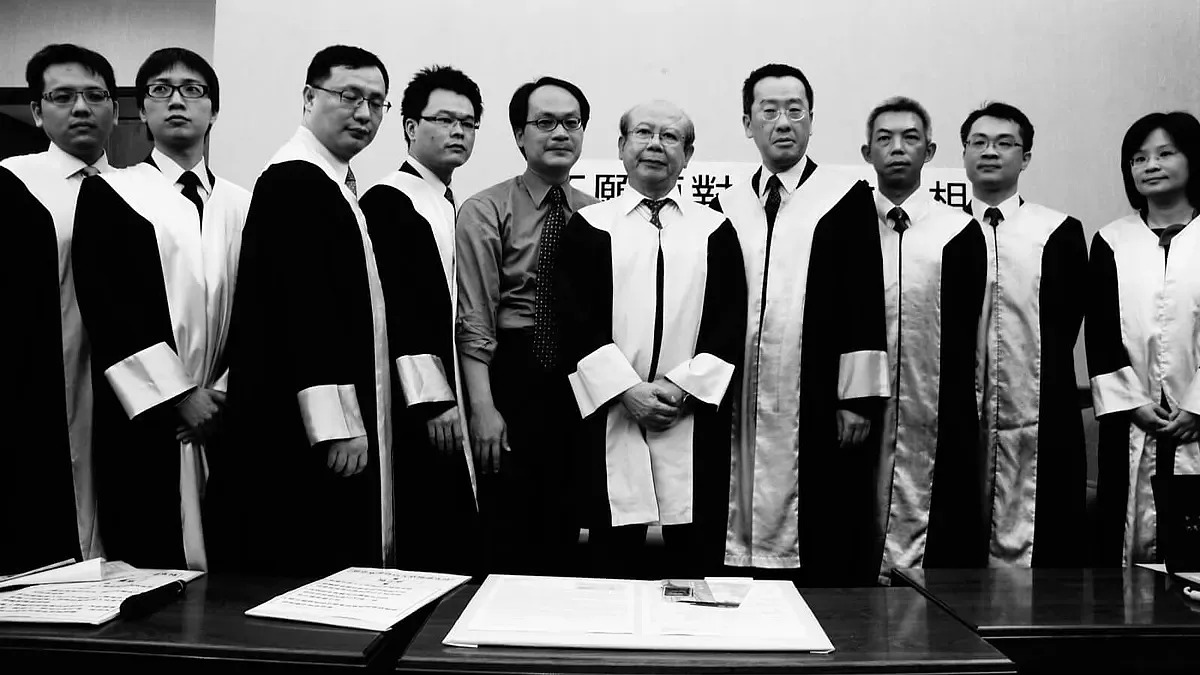
Attorneys Yu Po-hsiang
Attorney Ku Li-hsiung
Attorney Wei Tsao-tsung
Attorney Chou Han-wei
Attorney Sung Yi-hsin
Attorney Lin Chun-hung
Attorney Li Sheng-hsiung
Attorney Lin Hung-wen
Attorney Cheng K'ai-hung
Judicial Reform Foundation, August 11, 2011
Attachments
- Interrogation audio of co-defendant 01 (Police intimidation and coercion)
- Interrogation audio of co-defendant 02 (Police intimidation and forcing chili water)
- Interrogation video of co-defendant (When Ch'en Ho-shun's co-defendant was making his statement, the interrogated person stood up, revealing that his lower body was clad only in underwear. The defense counsel considers this proof that his pants were once stripped off and his lower body subjected to electrocution torture.)
- Dialogue between Taipei City Police Department officers in a car (Two Taipei City Police Department detectives driving to inspect the crime scene of the K'o Hung Yu-lan case discussed having beaten Ch'en Ho-shun to force him to retract his statement.)
- Table of "Confessions Obtained via Torture Lacking Physical Evidence Support" and "Ch'en Ho-shun Car Rental Agreement"
This article is an AI-generated translation of the original Chinese text. In the event of any discrepancy, the Chinese version shall prevail.