
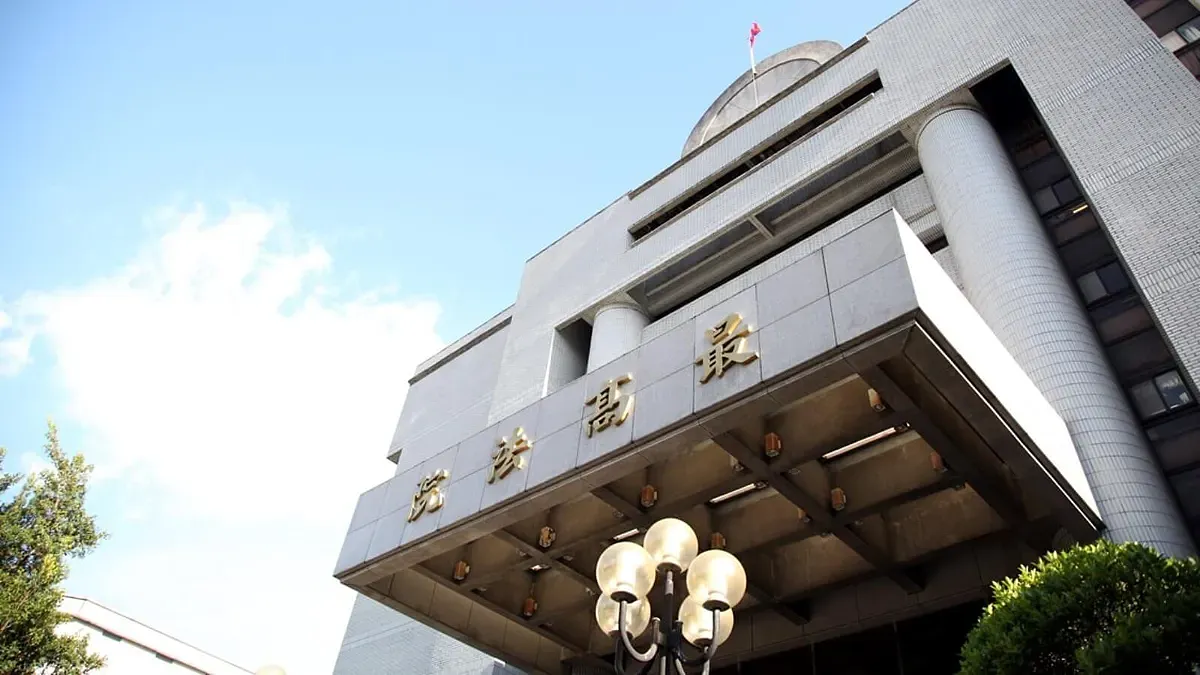
A Half-Open Door Letting in No Sunlight: Judicial Reform and Human Rights Organizations' Earnest Expectations of the Supreme Court
Last edited: 2026-08-30
The "Taiwan Death Penalty Report" published by civil society organizations in 2010 publicly called on the Supreme Court to hold oral arguments in death penalty cases, mandate legal counsel for defendants in third-instance death penalty trials, and require a unanimous decision by the panel of judges for death penalty verdicts.
On November 16, 2012, the Supreme Court issued a press release announcing: "Criminal cases in which the second instance pronounces the death penalty shall uniformly hold oral arguments, to demonstrate prudence and manifest the judiciary's respect for life." In December of the same year, the Supreme Court held oral arguments for a death penalty case for the first time, and defendants began receiving mandatory defense counsel. Over the past three years, there have been 21 oral arguments in the Supreme Court (among which 4 cases were appealed to the Supreme Court twice).
Judicial reform and human rights NGOs are gladdened by the Supreme Court's changes, but as we mark the third anniversary of the Supreme Court initiating oral arguments, we also wish to put forward our observations and appeals:
-
Formulate Rules for Oral Arguments
Based on the 21 Supreme Court oral arguments over the past three years, we have observed that due to the lack of rules for oral arguments, the handling methods vary by panel and by judge. Whether there are preparatory proceedings and how the arguments should be conducted leave parties and lawyers with no rules whatsoever to follow. Holding oral arguments for death penalty and major cases in the Supreme Court is an irreversible direction for judicial reform; therefore, it is time to formulate a comprehensive set of defense rules applicable not only to death penalty arguments, but also encompassing arguments on all important legal disputes.
-
Do Not Neglect Either Sentencing or Legal Arguments
The consequences produced by a death penalty judgment are irreversible once executed. Therefore, in trials at all instances, arguments concerning sentencing are necessary in addition to the conviction. Prosecuting prosecutors, defense lawyers, and presiding judges should all present concrete reasons explaining why the party concerned meets the "most serious crimes" criteria under the International Covenant on Civil and Political Rights.
However, the Supreme Court should not forget that it is a "court of law." When facing appeals against death penalty judgments, in addition to sentencing, it should engage in arguments on legal disputes and criminal policy. We even expect the Supreme Court to elevate the judicial level to constitutional arguments, not only advancing Taiwan's death penalty issue to meet the minimum requirements of the International Covenant on Civil and Political Rights, but also exhibiting a high degree of constitutional awareness. In short, the Supreme Court must not abandon its own strengths or belittle the function of a court of law.
-
Defendants Have the Right to Appear and Participate in Trials
Pursuant to Article 14 of the International Covenant on Civil and Political Rights, everyone charged with a criminal offense shall be entitled to the minimum guarantees in full equality, including the minimum guarantee set forth in paragraph 3(d) of this Article for the accused to be tried in presence and to defend themselves in person. Furthermore, General Comment No. 32 of the United Nations Human Rights Committee points out that a criminal defendant's right to defend themselves in person and to assign counsel for defense are distinct defense rights enjoyed by the defendant, and they are by no means mutually exclusive. Even if a defendant has defense counsel present in court, the court still shall not thereby deprive them of their constitutional right to a hearing by appearing at trial and defending themselves in person.
In the past 21 Supreme Court death penalty oral arguments, not a single defendant appeared in court. Conversely, crime victims' family members or legal representatives have appeared in court to make statements, rendering the courtroom unfairly tilted. Even though lawyers strenuously petitioned, the Supreme Court still insisted that a court of law need not mutatis mutandis apply the provisions requiring a defendant's presence during factual trial arguments; yet, in each death penalty argument, the Supreme Court does not conduct legal arguments, but instead performs merely hollow "sentencing" factual trials with the defendant absent.
If the Supreme Court believes there are difficulties with existing courtroom facilities, it should all the more improve courtroom facilities and supplement security personnel, rather than deprive parties of their rights. Furthermore, we oppose using video conferencing to resolve the issue, because video conferencing lacks legal basis and has its limitations; defendants cannot exchange opinions with defense counsel in court or conduct an effective defense, which constitutes a deprivation of the defendant's right to presence and right to a hearing.
-
Death Penalty Judgments Must Be Rendered by a Unanimous Decision of the Panel of Judges
Death penalty judgments must pass the most rigorous legal scrutiny. If it is impossible to go beyond a reasonable doubt, "presumption of innocence" and "in dubio pro reo" should all the more be principles judges constantly remind themselves of. Currently, the Court Organization Act still permits death penalty judgments to be rendered by a majority vote. Consequently, even if a judge on the panel believes the defendant is innocent or should not receive the death penalty, under such severe "reasonable doubt," a death penalty can still be handed down! Therefore, under the current circumstances where Taiwan still retains the death penalty, a death penalty judgment must never adopt a majority vote; only through unanimity—when all judges have no objections—is there room for the death penalty.
Expectations
The Supreme Court opened the door to reform in 2012, moving toward the direction of complying with the two Covenants. However, the door to reform should not be left only half-open; a half-open door lets in no sunlight, but rather more doubts. We expect the judges of the Supreme Court to muster the courage to lead the judicial system and become the vanguard of judicial human rights.
This article is an AI-generated translation of the original Chinese text. In the event of any discrepancy, the Chinese version shall prevail.