
Who Will Monitor the Judiciary?
Last edited: 2026-08-30
Media reports indicated that on October 26, the Personnel Review Committee of the Judicial Yuan sparked controversy over the transfer case of President Lü T'ai-lang of the Nantou District Court. It is rumored that the controversy stemmed from "personal grievances," which, if true, cannot help but evoke a sense of sorrow. In Taiwan, which lacks a "Judges Act," the Personnel Review Committee of the Judicial Yuan—which champions the spirit of "judicial self-discipline"—is actually an organization that holds the "power of life and death" over judges. Although the resolutions can be viewed on its website, the decision-making process is not transparent, and the public has no way of understanding it at all. Citizens pay taxes to the government so that the government can pay salaries to civil servants. Under this concept, "serving the people" should be the natural vocation of civil servants. However, judicial authorities seem to be different. If one were to say that judicial officers are also "special civil servants who should serve the people," citizens who have dealt with the courts and judicial officers themselves would probably not agree: there is a lingering sense that the power of judicial officers is still somewhat greater than that of other civil servants.
When encountering bad judicial officers, the public is often helpless and deeply aggrieved, wishing to file a complaint yet fearing unfair treatment in their specific cases. Keeping the public constantly in such a situation is truly not a phenomenon that a democratic country should exhibit. Amid the democratic wave of "public oversight," judicial officers, who likewise draw their pay from taxpayers' money, have no reason to be exempt from oversight.
Judges all argue that judicial self-discipline is necessary to maintain judicial independence. However, the effectiveness of the "Personnel Review Committee," a self-disciplinary organization under the current system, can already be glimpsed from this incident. The "judges' meetings" in various courts are largely the same in practice, and are not necessarily capable of rational "self-discipline."
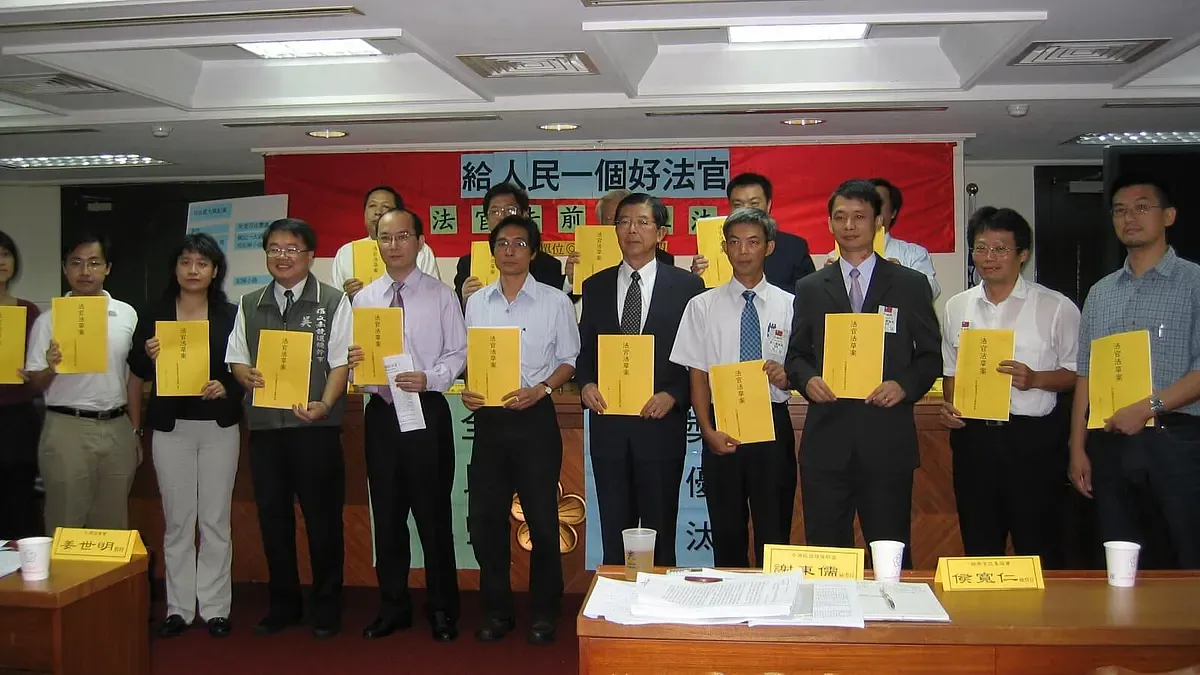
Based on this belief, the draft version of the "Judges Act" actively promoted by the JRF hopes to implement judicial evaluation and other tasks through an external independent mechanism (such as the Judicial Evaluation Foundation) to win public trust; only then can competent and dedicated judges receive fair treatment.
※ Published in: China Times / Forum Square
This article is an AI-generated translation of the original Chinese text. In the event of any discrepancy, the Chinese version shall prevail.