
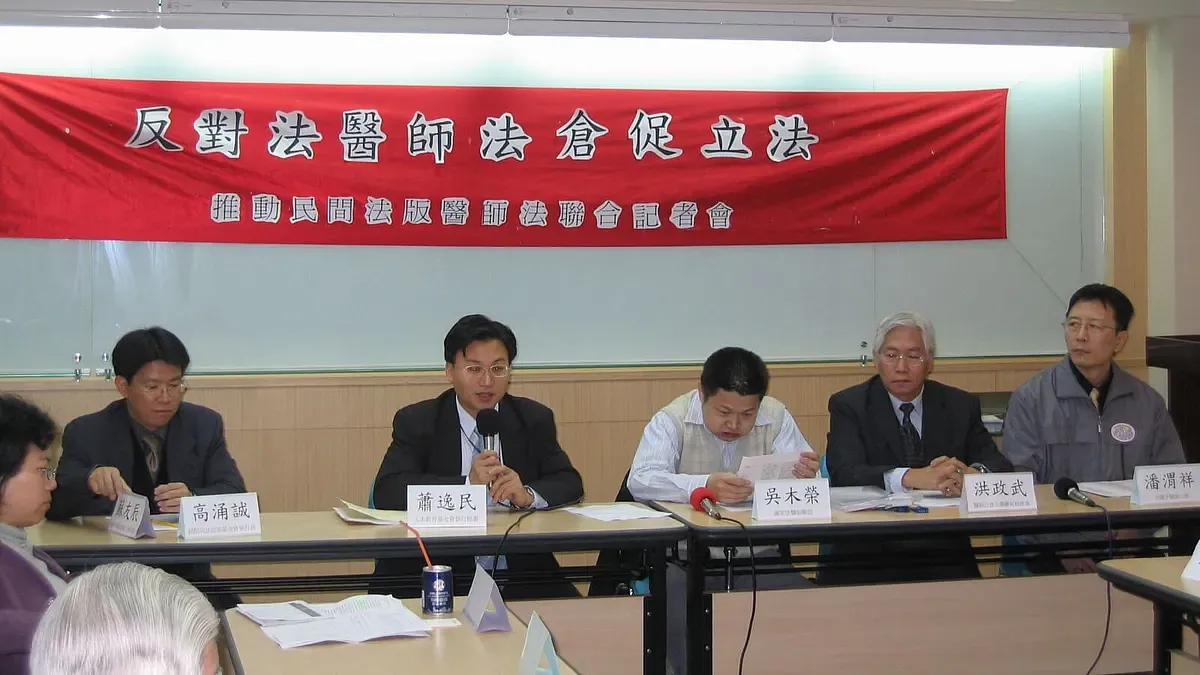
Statement by the Judicial Reform Foundation on the Draft Coroner Act
Last edited: 2026-07-27
According to reports from the Legislative Yuan, the Judiciary and Organic Laws and Statutes Committee and the Social Welfare and Environmental Hygiene Committee will hold a two-day joint review meeting on May 11 and 12 regarding the draft Coroner Act. In response, the Judicial Reform Foundation stated that while it warmly welcomes the Ministry of Justice's design of coroners as specialized professionals and technicians, several conceptual issues still need to be clarified.
First, the supreme guiding principle for the practice of so-called "specialized professionals and technicians" is professional independence and quality. For coroners, this means relying on solid academic training and knowledge to faithfully make professional forensic judgments free from any interference. However, Article 12 of the draft Coroner Act incorporates coroners who have already obtained licenses into the civil service system, requiring them to serve in the Ministry of Justice for two years before they can practice independently. This clearly violates the requirement for professional independence. The Judicial Reform Foundation believes that once someone has passed the national examination and obtained a coroner's license, there is no justification for prohibiting them from practicing independently. Furthermore, if it is deemed necessary for newly entered coroners to accumulate practical experience, they should also be permitted to serve in other public or private forensic departments, rather than having the Ministry of Justice hold a monopoly.
Second, one of the most important tasks of a coroner is to participate in judicial proceedings, serving as an expert witness in court to undergo consultation. Therefore, it is necessary to stipulate the coroner's obligation to appear in court within the Coroner Act. In addition, the distinction between general coroners and specialist coroners is not delineated in the draft. Since this involves the specialization of coroners as well as the content and scope of their practice, it is imperative that this be explicitly regulated.
Finally, regarding important mechanisms genuinely related to death management, such as mandatory autopsies, the draft also lacks more forward-looking planning. It is true that our society's cultural sentiments are averse to mandatory autopsies; however, compared to advanced nations, our autopsy rate is indeed remarkably low, which also hinders human rights. Therefore, the Judicial Reform Foundation advocates for appropriately broadening the scope of mandatory autopsies while incorporating judicial review to take public sentiment into account, thereby achieving a balance.
In addition to the above legislative amendment recommendations, the Judicial Reform Foundation hereby calls upon the Legislative Yuan to coordinate opinions from all sectors and establish a coroner system that meets our nation's needs as soon as possible. Only by doing so can Taiwan truly enhance the quality of forensic science and evidence-based criminal investigation, thereby achieving the positive outcomes of safeguarding human rights and promoting the development of criminal proceedings.
This article is an AI-generated translation of the original Chinese text. In the event of any discrepancy, the Chinese version shall prevail.