
A Christmas Gift for the Poor—The Legal Aid Act
Last edited: 2026-07-27
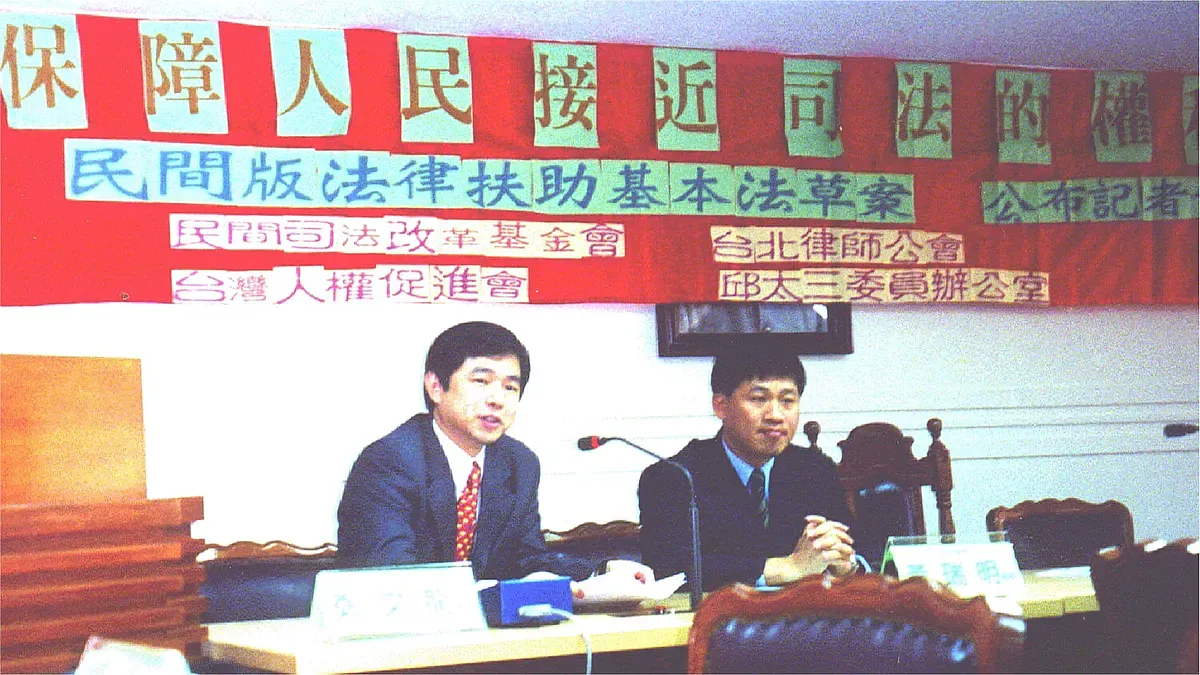
The Legislative Yuan finally passed the third reading of the Legal Aid Act on the 23rd. This is fantastic news for vulnerable and impoverished groups such as laborers, women, children, and Indigenous peoples. Moving forward, vulnerable individuals in need of legal assistance—such as legal consultation, drafting of legal documents, or retaining attorneys for litigation—will no longer have nowhere to turn, as the government-endowed Legal Aid Foundation will provide assistance. This system aims to realize the rights to litigation and equality guaranteed by the Constitution, while also deepening the substance of Taiwan's democracy and rule of law.
Although the Legal Aid Act has indeed been passed, its subsequent execution and implementation will pose an even greater challenge. We believe there are still matters that require attention to avoid repeating the regret of the ineffective performance seen under the Crime Victim Protection Act.
-
The authorities may supervise the operation of the Foundation, but should avoid dominating it
While the Foundation endowed by the authorities naturally holds guaranteed board seats, the focus should remain on a supervisory role rather than a dominant one. This legislation adopts a government-funded, privately-operated foundation model primarily to avoid the traditionally conservative habits of official agencies, thereby enabling the promotion of the Foundation's operations to maintain the proactive and effective characteristics inherent to the private sector. In particular, we must prevent the common official phenomenon where agency heads concurrently serve as chairperson or secretary-general; otherwise, individuals can neither concentrate on their primary duties nor devote themselves to part-time positions. The lesson of the Crime Victim Protection Association—where most positions are concurrently held and dominated by chief prosecutors or senior prosecutors, leading to poor performance to this day and even misguided concepts—serves as a clear warning not far off.
-
The Foundation and its branches must not degenerate into political patronage
The Foundation and its branches must not degenerate into political patronage or become the exclusive domain of local factions. Although the directors of the Foundation, as well as the presidents or members of the branches, serve on an unremunerated basis, they still shoulder the heavy responsibility of promoting the Foundation's public affairs. Truly enthusiastic and selfless personnel must be carefully selected to serve, and the positions must under no circumstances be casually reduced to patronage or distributed among local factions. Only then can the operation of the Foundation remain professional and pure.
-
The Foundation should cultivate a group of lawyers with a passion for public interest and dedication
When the United States established the Legal Aid Foundation in the 1970s and widely set up legal service centers, its primary purpose was to alleviate poverty, not merely to provide legal assistance. Legal assistance is merely a means; through legal assistance, participating lawyers engage in long-term support for impoverished and vulnerable people, thereby uncovering social problems and further proposing solutions, which is the only way to effectively resolve various problems stemming from poverty.
Therefore, the Foundation should cultivate lawyers with public-interest mindsets and enthusiasm, foster their long-term focus on specific types of issues (such as labor, women and children, Indigenous peoples, the elderly, etc.), and in turn help them develop into specialists in professional fields to assist in solving structural social problems. This will enable the Legal Aid Act to unleash even broader functions.
-
Regulations and implementing agencies for legal aid should be gradually integrated
At present, legal aid laws, regulations, and responsible units are scattered across various agencies and operating independently. For instance, the Domestic Violence Prevention Act has its own legal aid system, the Crime Victim Protection Act has another, Article 31 of the Code of Criminal Procedure and the Public Defender Act also have their own, and the Act of Gender Equality, the Regulations on Subsidies for Civil Servants Involved in Litigation Due to Official Duties, as well as units such as the Executive Yuan, the Ministry of National Defense, the Council of Indigenous Peoples, and the Council of Labor Affairs each have their own internal aid rules. These are chaotic, inconsistent, incomplete, and incapable of providing professional personnel to handle cases. In the short term, these should indeed still be retained, but in the long term, the Foundation should take charge of coordination and integration to avoid redundant structures and the waste of overlapping resources.
-
The Foundation must treat applicants with humanity
Those eligible for legal aid are mostly economically disadvantaged in society, and are frequently information-disadvantaged as well. If the Foundation treats them with the bureaucratic attitude of a government yamen, it will create yet another barrier to access. For example, if applicants do not know how to fill out application documents, the Foundation should assist them rather than remaining rigid and making things difficult for applicants. Furthermore, regarding proof of indigence, we must not be bogged down by document reviews; certain information can be obtained through inquiries, which is both authentic and convenient. Therefore, the Foundation must treat applicants humanely in order to fulfill the objectives of promoting this Act.
-
The Foundation must rely on performance to vie for budgetary subsidies in the future
The implementation budget for the first year of this Act is approximately 500 million NT dollars, which is certainly insufficient. However, the Foundation must still rely on service performance to vie for support and recognition. Furthermore, the Ministry of Justice, the Ministry of the Interior, and the Ministry of National Defense should also assist the Judicial Yuan in allocating annual budgetary subsidies to ensure the operation of the Foundation.
※ Published in: Liberty Times
This article is an AI-generated translation of the original Chinese text. In the event of any discrepancy, the Chinese version shall prevail.