
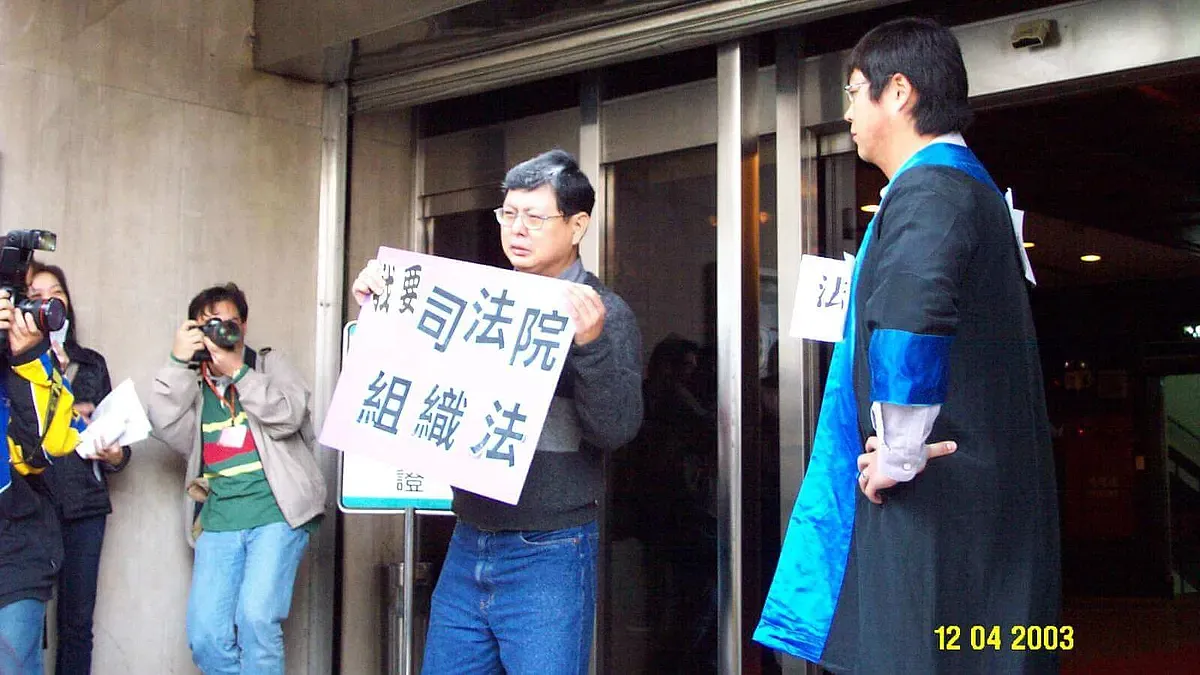
Responding to Public Opinion: Expedite the Amendment of the Judicial Yuan Organization Act
Last edited: 2026-11-03
We deeply admire the China Times for recently inviting cross-party legislators, scholars, and experts to hold a symposium on "Judicial Reform and the Transformation of the Judicial Yuan's Organization." However, we are gravely concerned that the legislative progress on the draft amendments to the Judicial Yuan Organization Act remains deadlocked in the Legislative Yuan.
Although the version of the constitutional and legal amendments currently proposed by the Judicial Yuan can hardly be called "flawless," its direction for amendment undoubtedly reflects a national consensus: The National Judicial Reform Conference held in July 1999 covered judges, prosecutors, lawyers, and academics in terms of its participants, and its issues were divided into three major categories totaling 32 items. Compared to the passive and restrained nature of the judiciary (which does not act without a complaint), this must be considered extraordinary. Looking back today, the ability to gather all parties together at that time, apart from the aspirations and determination of the leadership, was also due to the cross-party consensus on judicial reform reaching a near-tipping point. The convening of the Judicial Reform Conference provided a platform for dialogue to a significant degree, allowing the frustrations of all parties to be vented; it is hardly surprising that it was able to forge a concrete consensus for reform.
Furthermore, the implementation of the pyramid-shaped litigation system also corroborates the necessity of organizational adjustment: Although the comprehensive implementation of the pyramid-shaped litigation system for civil and criminal procedures has been brief, court practices that initiated pilot programs earlier have proven that the new system can shorten trial durations. Furthermore, because factual determinations are thoroughly implemented, the necessity of appeals is relatively reduced, and public acceptance is enhanced. What can be foreseen is a reduction in cases in upper-instance courts (most of the backlog in the court of final instance currently is accumulated under the old system). Considering that judges exist for cases (the people), maintaining a massive court of final instance and personnel is unnecessary. An organizational adjustment into a pyramid shape is both a necessary and the only choice.
The pursuit of any reform has never been an easy task. This is because reform mostly involves altering the status quo, and since the outcomes of such changes make it difficult to maintain the original state, anxieties arising from doubts and even resistance—such as the legal circle's so-called "Seven Warriors"—are understandable. However, when pondering the purpose of the judiciary's existence, it relies entirely upon the people; organizational adjustments must be considered in this direction. We are pleased to see a satisfactory conclusion to the review of the Judicial Yuan's budget, and we look forward even more to the long-stalled amendments to the Judicial Yuan Organization Act being restarted to complete the legislation.
※ Published in: Taiwan Daily
This article is an AI-generated translation of the original Chinese text. In the event of any discrepancy, the Chinese version shall prevail.