
What Issues Were Blazed Out by "Taiwan Tornado"?
Last edited: 2026-07-27
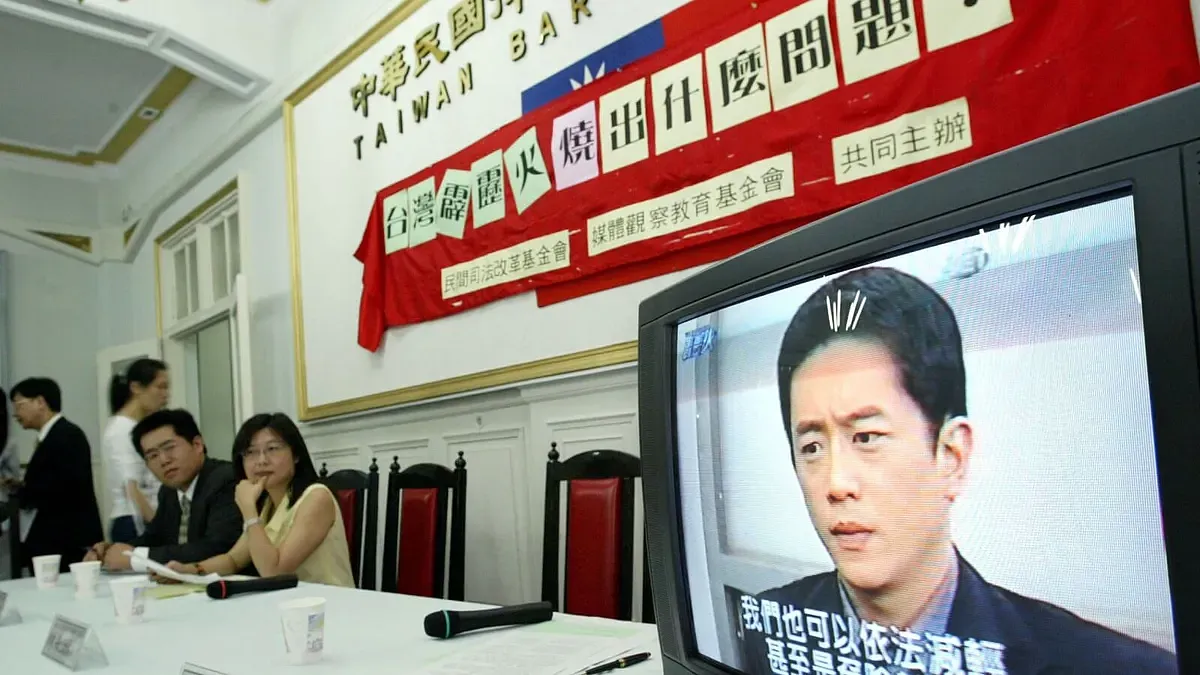
The Judicial Reform Foundation (hereinafter referred to as the JRF) and the Taiwan Media Watch Foundation (hereinafter referred to as the MWF) jointly held a press conference today (the 2nd) to offer several comments and suggestions regarding Taiwan's most popular TV series, "Taiwan Tornado," and its practice of incorporating a large number of criminal investigation and trial plots into its storyline and characters.
-
The series has a positive significance for human rights of criminal defendants and the advocacy of certain laws:
The JRF, which has long promoted judicial reform, stated that in the plot descriptions of criminal interrogations in "Taiwan Tornado," suspects are mostly able to timely assert their rights, such as: refusing nighttime interrogation, exercising the right to remain silent, requesting the appointment of defense counsel, etc.; and the police are mostly able to comply with relevant provisions of the Code of Criminal Procedure, lawfully informing defendants of their rights and audio or video recording the entire interrogation process of criminal suspects or defendants, etc. All of these effects in promoting relevant rule-of-law concepts often far surpass the government's dogmatic policy propaganda, which is commendable.
-
Plausible yet incorrect rule-of-law concepts in the show easily mislead the general public:
However, precisely because the plot of "Taiwan Tornado" is captivating and the actors' performances are superb, many plots in the drama that run counter to current legal systems are also easily mistaken by the public as true, producing negative impacts. For example, during the court trial of the "fake medicine case," aside from the obviously incorrect courtroom positions of the prosecutor and defense counsel, police officers did not sit in the witness box but instead stood in a row behind the prosecutor, which completely contradicts actual situations. In addition, as a result of the JRF "monitoring" the drama for many days, it was also discovered that there are indeed many plausible yet incorrect legal concepts that urgently need clarification, such as:
Premiere Date Plot Summary Correct or Not Explanation 2003.6.19 The police arrested defendant Hsing Su-lan (actually Chou Pi-yu after facial plastic surgery), and on the grounds that the next day was Sunday and she could not be escorted to the detention center, detained Hsing Su-lan in the police station detention cell.
╳ The police and prosecutors should transfer the defendant to the court within 24 hours (Article 8 of the Constitution); furthermore, weekends and public holidays are not "statutory grounds for exclusion from the 24-hour period" under Article 93-1 of the Code of Criminal Procedure, so the police's handling in the drama is wrong. Co-defendant Li Cheng-hsien, his defense attorney Ma A-min, and prosecutor Lin Hsiu-ju went together during the proceedings to the home of presiding judge Cheng Shu-fen to discuss the case and requested the judge to allow Li Cheng-hsien to meet with Hsing Su-lan. ╳ The person, matter, time, and place are all inappropriate. The judge's image of a "pure and upright judicial official" in the drama stands in sharp contrast to her behavior of violating the judges' code of conduct. The judge refused Li Cheng-hsien's request, citing Article 77 of the Enforcement Rules of the Detention Act: "Defendants may not request visits with other defendants." ○ Attorney Ma A-min stated that the judge had reassigned prosecutor Lin Hsiu-ju to exclusively handle this case, and the judge smiled and tacitly agreed. ╳ Judges have no authority to interfere with prosecutors' personnel arrangements. The plot severely deviates from the principle of the separation of adjudication (judges) and prosecution (prosecutors) in modern states governed by the rule of law. 2003.6.23 The judge interrogated defendant Hsing Su-lan (actually Chou Pi-yu after facial plastic surgery) in the police station interrogation room to confirm her true identity and whether she should be detained, and ultimately decided to wait for the appraisal report before making a decision. Present at the time were the prosecutor, attorney, police officers, co-defendant Li Cheng-hsien, and others. ╳ Judicial interrogation of defendants should in principle take place in a courtroom. If there are grounds for detention (e.g., awaiting appraisal), the defendant should not be held in a police detention cell, but should be transferred to a detention center. When Li Cheng-hsien questioned whether Chou Pi-yu might be locked up for a few extra days as a result, calling it "unfair," the judge coldly replied: "Restoring an innocent person's clarity and bringing evildoers to justice—isn't that delivering justice to everyone!" ○; ╳ Detaining or holding an innocent person by judicial organs may raise issues of compensation for wrongful incarceration. Li Cheng-hsien's questioning is very reasonable, but the judge's concept in the drama that "restoring an innocent person's clarity is delivering justice to them" is open to debate. After the appraisal report came out, confirming that the person arrested by the police was indeed Chou Pi-yu after facial plastic surgery, the judge announced her release and instructed prosecutor Lin Hsiu-ju: "Leave the rest of the investigative matters for you to investigate!" Lin Hsiu-ju saluted and replied, "Yes!" ╳ Judges have no authority to direct prosecutors in handling cases. The plot severely deviates from the principle of the separation of adjudication and prosecution in modern states governed by the rule of law. Moreover, since the fake medicine case had already entered the court trial stage, why did it return to the prosecution investigation stage? It can be seen that the drama is extremely vague about criminal procedure and the roles played by judges and prosecutors. 2003.6.30 Prosecutor Lin Hsiu-ju informed Li Cheng-hsien If he harbors defendant Hsing Su-lan (turned Chou Pi-yu), he will commit the crime of harboring criminals under Article 164 of the Criminal Code, punishable by up to two years of imprisonment. ○ If he is willing to confess now, his sentence may be mitigated or exempted according to law. ╳ Li Cheng-hsien's situation does not meet the provisions for sentence mitigation or exemption under Article 167 of the Criminal Code. Is the prosecutor's move an attempt to trick the defendant into pleading guilty? If he is still unwilling to confess, his crimes will be compounded, additionally violating Article 168 of the Criminal Code for perjury, punishable by up to seven years of imprisonment. ○; ╳ The legal provisions and prison terms cited for perjury are correct; however, the perpetrator must be under oath and make false statements regarding matters of material importance to the case to constitute perjury. Merely failing to disclose the whereabouts of a fugitive defendant does not constitute perjury. -
Hoping that media outlets will balance social responsibility while producing content that is exciting and captivating:
The MWF stated that it is truly rare in Taiwan to see a TV series like "Taiwan Tornado" that can naturally integrate judicial practical operations into its plot while generating widespread repercussions. However, precisely because the drama's viewership ratings continue to hit record highs and spark widespread street-corner discussions, it should at least strive for rigor and correctness when portraying law-related subjects, as this is the minimum social responsibility of the media.
In addition, the JRF hopes that domestic television stations will portray the spirit of modern rule of law more in future productions of exciting and captivating dramatic programs, rather than ancient Justice Pao-style legal concepts full of subjectivity and bias. In particular, the foundation would be even more delighted to see native legal TV dramas emerge that are comparable to American shows like "Law & Order" or "The Practice," making "watching TV" truly a pleasant experience that combines education with entertainment!
※Note: The footage broadcast at this press conference is from Sanlih Television's drama "Taiwan Tornado."
This article is an AI-generated translation of the original Chinese text. In the event of any discrepancy, the Chinese version shall prevail.
