

Court Interpreters: Just for Show?—Imbalanced Justice Under Linguistic Hegemony
Last edited: 2026-07-27
Whether teaching "Law and Society," "Gender and Law," or other legal courses, I always arrange a "Court Visit." The idea is simple: just like learning to swim, no matter how much body mechanics, posture, and theory you study, eventually you have to get into the water to experience it firsthand. Learning law is no different. Every visit receives "rave reviews." University students, who spend their days immersed in abstract rational debates, spend just two hours in a courthouse and immediately make minute, concrete observations that close the gap between law and life. Students often excitedly point out strange phenomena that legal professionals have simply "gotten used to," always giving me, the teacher, a "teachable moment."
What Role Do Court Interpreters Play?
Taiwanese people have an extraordinary ability to adapt and get used to their environment, thereby coexisting with problems, and I am no exception. I vaguely remember attending a court session with my supervising attorney ten years ago during my time as a trainee attorney. The party to the case was a German company, and we deliberately brought along an English interpreter, asking the party to speak English while the interpreter simultaneously translated it into Chinese, and then translated what the judge and the opposing party said into English. I couldn't help wondering: why have the party speak English when he was clearly German? Why not find a German interpreter? The interpreter stationed in the courtroom occasionally stood up to pass documentary evidence and case files, and occasionally operated the tape recorder, with no intention whatsoever of helping with translation.
In the blink of an eye, a decade has passed, and upon returning to Taiwan to teach, the "peculiar sights" I observed in the courtroom back then still exist today. Last semester, a student from National Taiwan University of Science and Technology taking the "Gender and Law" elective course spent about ten minutes in court before asking with a slightly provocative and jocular tone: "Teacher, do our court interpreters only translate Taiwanese [Hokkien]?" While this remark harbors some myths and stereotypes regarding Taiwanese languages, it also ruthlessly points out the current predicament in the deployment of court interpreters. It spurred me to actively participate in the Judicial Reform Foundation's sub-project entitled "Reform of the Interpreter System" under this year's core issue project, "Judicial Accessibility."
Ever since I was a child, I was an easily trusting student. I believed what teachers said; I believed in fairness and justice. When the Constitutional law teacher said that everyone is equal before the law, I believed it. When Constitutional law textbooks talked about everyone having the right to access to courts, I believed it. It was only after entering the courtroom that I learned that "the people" refers to those who are fluent in Chinese, eloquent in debate, and know how to utilize judicial remedy channels. Whether this right to access to courts can be realized depends on the circumstances; everyone has the right to access to courts, except that some people have more opportunities to realize this right than others.
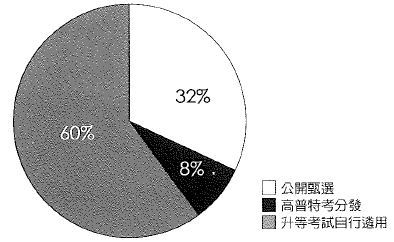
Whether people can exercise their basic rights to "use judicial procedures" and "receive a fair trial" depends first and foremost on whether they can fluently use the language employed in court proceedings. Therefore, the court systems of modern constitutional states mostly establish interpreter systems of various forms. Article 98 of our Court Organization Act stipulates: "If a party to litigation, a witness, an appender, or any other relevant person is not fluent in the national language, an interpreter shall translate." However, interpreters currently fail entirely to fulfill the function of "communication and translation" in the courtroom. According to data provided by the Judicial Yuan, the total budgeted quota for court interpreters across all levels for the 2005 fiscal year was 230 positions, while the Ministry of Justice's prosecutor's offices at all levels set up a total of 49 interpreter positions. Based on their self-assessed linguistic expertise, their primary familiar languages are Mandarin and Taiwanese (Hokkien), followed by Hakka, which utterly fails to meet the rapid demographic changes in Taiwan's current population (see Charts 1 and 2).
Chart 1: Statistics on the Number of Interpreters in Courts at All Levels
| Item | Interpreter Quota | Current Number of Interpreters | Appointed Rank (Tier 3 Interpreter) | Recommended Rank (Tier 2 Interpreter) | Recommended Rank (Tier 1 Interpreter) |
|---|---|---|---|---|---|
| Number | 230 | 223 | 210 | 2 | 11 |
| Percentage | — | 100% | 94% | 1% | 5% |
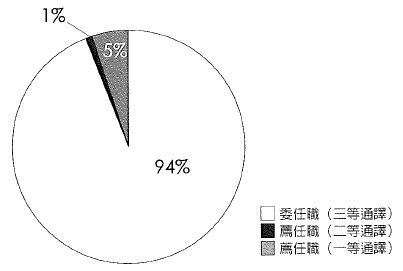
Chart 2: Statistics on the Number of Interpreters in Prosecutorial Agencies at All Levels
| Item | Current Number of Interpreters | Open Recruitment | Higher/Ordinary Civil Service Exam Assignment | Promotion Exam Self-Selection |
|---|---|---|---|---|
| Number | 49 | 16 | 4 | 29 |
| Percentage | 100% | 32% | 8% | 60% |
When non-Chinese speakers in Taiwan need legal assistance, they face a terrifying, incomprehensible scramble of sound. Yet, a series of proceedings through this language they cannot understand will determine the most important and fundamental matters concerning their lives, daily routines, freedom, and property. However, upon closer reflection, the suffering of the parties actually begins long before they appear in court: facing communication difficulties in daily life, unable to resolve conflicts or problems, and ultimately facing language barriers once again when they finally find legal professionals to resolve their disputes, which impacts their equal opportunity to assert their rights. The court interpreter system is at best merely one link in the judicial process. In criminal cases, when police and investigative-prosecutorial personnel begin investigating a case, language can already become a barrier to protecting one's rights. The same holds true for civil disputes; even if one finds a lawyer for assistance, discussing case facts and legal disputes with the lawyer prior to court may also require the assistance of interpreters.
The Linguistic Hegemony Dominating the Courtroom
When ordinary people do not understand the laws, all laws meant to protect them are utterly useless; when the common folk do not speak the ruler's language, they are bound to be oppressed; when ordinary people do not speak the language of judges and lawyers, they cannot voice their pain (usually triggered by the infringement of rights) and hopes (demands on how to resolve problems or seek compensation) in court. The social causes rooted in these texts and languages were originally key factors rendering vulnerable groups in society susceptible to oppression. Theoretically, the court is a good place to begin seeking remedies when rights are infringed; however, with the virtual non-existence of the court interpreter system in practice, these factors further deepen the vulnerable plight of these relatively disadvantaged groups. Compared to other criminal and civil litigation systems, the issue of an ineffective interpreter system may seem trivial. In reality, aside from involving people's most fundamental rights to litigation, it also touches upon the arrogant mentality of political, linguistic, and cultural hegemony behind the legal system. This special issue hopes to explore interpreter issues from multiple perspectives, awakening the Taiwanese people to confront the social reality of multiculturalism while demanding that our judicial system and legal professional community respond with greater sensitivity to the rights of "linguistic minorities," who have consistently been ignored.
Who are the "linguistic minorities"? "If a party to litigation, a witness, an appender, or any other relevant person is not fluent in the national language, an interpreter shall translate." Who is not fluent in the national language? The "national language" means the standard language used uniformly nationwide, currently stipulated as Chinese (also called Mandarin). Judging from Taiwan's long history of colonization, the national language has not always been Chinese; previously it was Japanese. In 1930, 22.7% of Taiwanese people could speak Japanese; by 1940, it was 51%; and by 1944, 71% of the people could use Japanese.
The Disadvantaged Language Group That Constitutes the Majority
Taiwan's official language changed from Japanese to Chinese under the Kuomintang government, whereas the language spoken by the majority of residents was actually non-Chinese, which could be Taiwan's Minnan [Hokkien], 14 indigenous languages, Hakka, or other different languages coming from various countries. "Taiwanese" (also called Taiwan's Min-Nan language) is the language actually used by about three-quarters of Taiwan's population. This historical origin can be used to explain why, under the Kuomintang government, when Chinese became the national language, the national language became the standard language used uniformly by the court system. Facing the reality that the majority of the population speaks Taiwanese, Taiwanese became the primary language in which most interpreters are proficient.
Although the Taiwanese-speaking population is in the majority in terms of actual numbers, they become a "linguistic minority" in court proceedings where Chinese is used. Compared to the Chinese commonly used by the courts, the disadvantaged status of Hakka, other indigenous languages, or the languages used by many emerging immigrants in recent years goes without saying.
It turns out that the first language of most Taiwan residents is not Chinese, so when the courts use Chinese as the sole common language, we should correctly understand that the interpreter system was not created solely for "new immigrants." The ineffectiveness of the interpreter system and the neglect of the rights of linguistic minority communities are pervasive problems that have existed since the inception of Taiwanese society. Regardless of race, language, or culture, it concerns the basic rights of all Taiwanese people participating in court proceedings. It is just that we have grown accustomed to the establishment of a unified standard language and the dominance of a single language in all political activities, failing to face this problem squarely.
Taiwan is an immigrant society, and this immigration process is still ongoing. Although it has a population of only 23 million, its languages are complex, each with its unique culture, history, and individual language usage habits. The diverse and pluralistic language and culture systems make life in Taiwan rich, diverse, chaotic, and extremely challenging. Legal norms and the judicial system ultimately exist for the people, and these people include all residents living in Taiwan, regardless of race, nationality, class, language, or culture. The immediate priority for courts and court proceedings is to first ensure that all people have an equal opportunity to be heard.
At the present stage, phenomena frequently occurring in court proceedings such as talking at cross-purposes, fragmented translation, and casually glossing things over cannot be ignored. In individual cases, the potential conflict of interests caused by foreign-affairs police handling disputes or translation being provided on behalf of a party by intermediary agencies and the opposing party must be confronted. In individual cases, the burden and anxiety placed on social workers themselves due to the role conflict caused by asking social workers to concurrently act as translators must be resolved. The aforementioned alternative solutions, constrained by reality, share a common concern: legal language is unlike ordinary everyday terminology; it possesses its own unique value system and linguistic norms. Without basic legal professional training, it will create immediate barriers to legal proceedings, and the biggest losers are naturally the disadvantaged parties who do not understand Chinese. The constitutional protection of the principle of due process cannot be realized, and the law becomes merely something for show.
Legal Professionals Must Possess Multilingual Capabilities
The recent focus of reform will be to urge the court system to implement and improve the interpreter system, and subsequently examine whether similar barriers exist in communication between linguistic minority parties and their lawyers. Furthermore, since all court proceeding records are documented in Chinese, are parties belonging to linguistic minorities more disadvantaged in securing their right of appeal compared to ordinary parties?
In the long run, the legal professional community cannot stand idly by; it must re-examine its professional ethics and strive to think about expanding its legal services to non-Chinese-speaking communities. One such approach can start with language. It is recommended that law schools in various universities begin cultivating legal professionals with different language specialties, starting from recognizing students' credits for taking various language courses—not limiting them to English, German, and Japanese. It is hoped that in the near future we will have lawyers who can speak various indigenous languages, Thai, Vietnamese, or other languages. Taiwan's legal professional communities, such as bar associations or legal educators, must think more critically about their public interest role in serving all people, actively expand the clientele of legal professionals, and start with their own language capabilities to cultivate sensitivity toward different languages and cultures.
In the brighter distant future, when the Taiwanese people are willing to face reality and become more confident, perhaps we can begin to consider the feasibility of "bilingual courts" or "trilingual courts." The interpreter system is a beginning. Let us "delve deep beneath the skin" to start exploring the neglect of linguistic minorities' rights hidden behind the interpreter system. Let us invite, agitate, and encourage all people concerned with the reform of Taiwan's judicial system to correct mistakes, and to point out laws that are merely for show, to point out the "emperor who loves his crown but is stark naked"!
This article is an AI-generated translation of the original Chinese text. In the event of any discrepancy, the Chinese version shall prevail.