
Amendment of Payment Order Creates a Win-Win Situation
Last edited: 2026-08-28
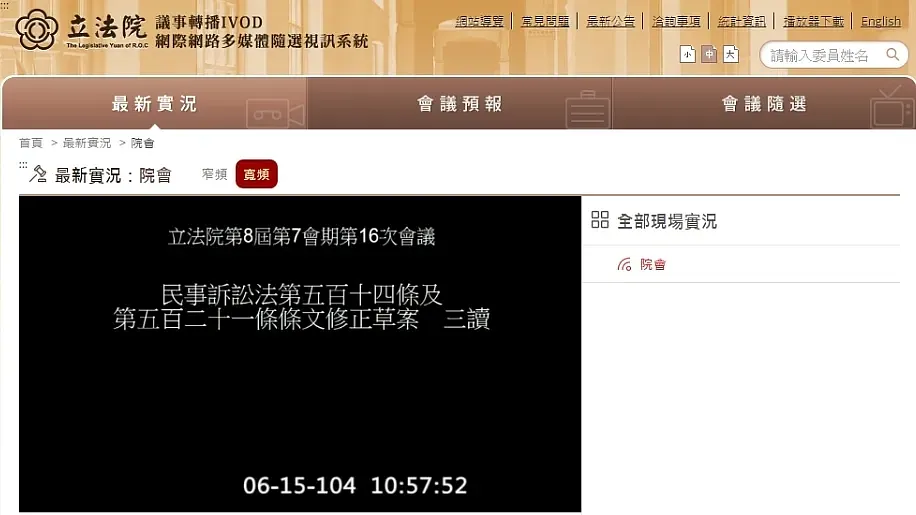
The Legislative Yuan has just passed the third reading of Article 521 of the Code of Civil Procedure and added Article 4-4 of its Enforcement Act. This amendment abolishes the res judicata effect of payment orders, granting them only enforcement power. It allows payment orders finalized before the amendment to be challenged through a retrial within two years of the new law's promulgation and enforcement, based on grounds such as "the evidence submitted by the creditor in the urging procedure was falsified or altered" or "the debtor submits evidence that could lead to a more favorable judgment." However, this does not apply to the scope of debts that the debtor has already repaid. If debtors have doubts about the claims stated in a payment order upon receiving it, they should still file an objection within 20 days to prevent their property from being subject to compulsory execution. If they miss the objection period, they may file an action for opposition before the execution procedure is concluded or file a separate action to confirm the non-existence of the claim. In particular, persons without legal capacity or with restricted legal capacity may file for a retrial from the date the new law comes into effect until two years after reaching the age of majority. We believe that this amendment will reduce fraud cases exploiting payment orders and provide substantial and effective relief to debtors who have suffered under the old legal system.
During the 1980s and 1990s, Japan experienced the economic bubble, and private unsecured small-loan companies (??kin) rose rapidly, leading to a massive wave of social problems. Creditors even used "payment orders," legal complaints, or seizure orders to force debtors to repay, causing immense distress to debtors. To prevent the situation from deteriorating and imposing heavy social costs, the Japanese Diet amended the Code of Civil Procedure and the Civil Execution Act in the 8th year of Heisei, with the new law taking effect on January 1, the 10th year of Heisei (1998). It changed "payment orders" to "payment urging" (shiharai sokushoku), to be issued by "court clerks" (in Taiwan, they are issued by "judicial affairs officers"), and abolished the res judicata effect of payment urging. The legislative background and national conditions of Japan are very similar to those of Taiwan.
Following the legal amendment, the Japanese government introduced effective supporting measures, such as: setting up web pages to actively promote the payment urging procedure; requiring "special service," meaning postal workers personally deliver the payment urging documents to the recipient; attaching a "statement of objection" form together with the payment urging envelope for the debtor; and reducing the fee for the payment urging procedure to half of the court fee for ordinary civil lawsuits. These measures kept the utilization rate of payment urging stable at an average of 27%-30% over the past five years (2009-2013), while the utilization rate of ordinary lawsuits remained at 41%-47%.
According to statistics from local courts, comparing the 138,752 newly accepted ordinary civil lawsuit cases in the 9th year of Heisei (1997) before the amendment with the average of 144,947 newly accepted cases per year from the 10th to the 12th year of Heisei (1998-2000) after the new law took effect, the increase was only 6,194 cases, accounting for 0.5% of the average total newly accepted cases over the 3-year period. Regarding summary courts, the average annual newly accepted cases in the 3 years following the new law's implementation (1998-2000) increased by only 25,920 cases compared to before the amendment, accounting for 1% of the average total newly accepted cases. This not only failed to cause judicial backlog, but rather reduced the overall litigation cost of society in combating crime, which can be described as a win-win for both the judiciary and the public.
Taiwan's amendment this time not only rectifies the injustices of abusing the payment order system, but also grants victims the right to file for a retrial within two years after the promulgation and implementation of the new law, making it more progressive legislation than Japan's. With the new law about to take effect, the Judicial Yuan should look to the practices of the Japanese government, actively propose proper supporting measures, create a win-win situation for both the judiciary and the public, and fulfill the Legislative Yuan's good intentions in reforming the payment order system.
This article is an AI-generated translation of the original Chinese text. In the event of any discrepancy, the Chinese version shall prevail.