
Can an Order for Payment Really Not Be Ignored Once Read?
Last edited: 2026-08-28
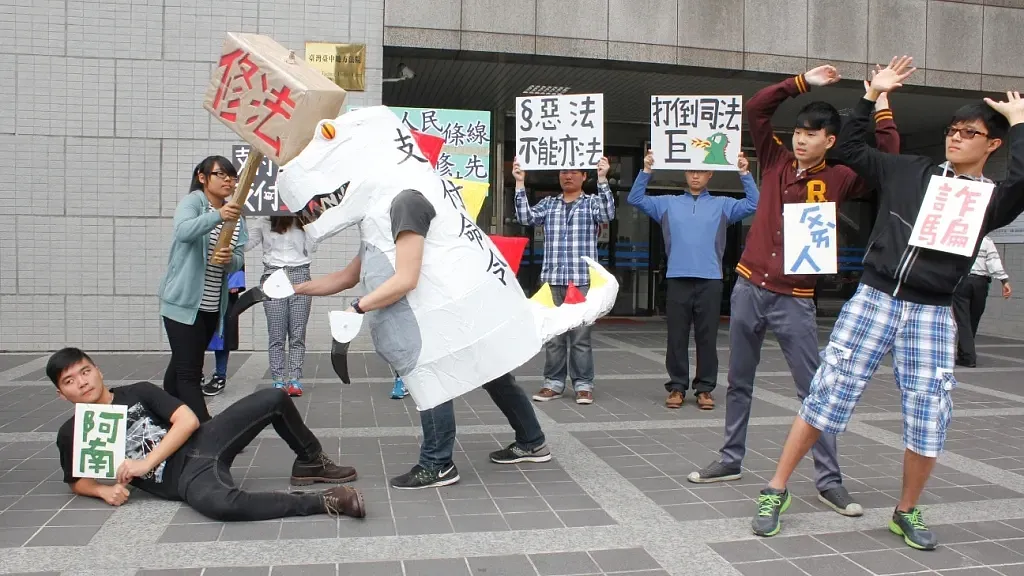
Judge Wang Chang-Kuo of the Chiayi District Court published an op-ed on the 30th of last month titled "Judicial Documents Must Be Unwrapped Promptly," arguing that the flaws exposed by the order for payment system cannot be ignored and require a thorough review—a perspective that commands respect. However, following a street advocacy campaign at the Megaport Festival, the National University of Kaohsiung Legal Aid Society discovered that the aspects concerning the general public differ drastically from the professional understanding of judicial personnel.
"Being ordered to repay money despite not owing any" is the issue people care about the most. Although the lenient application and issuance procedures of the order for payment facilitate the early settlement of private-law relations between parties, they also lead to rampant abuses. In recent years, orders for payment have even been reduced to tools for criminal fraud syndicates, with the number of victimized citizens increasing year by year.
Although judicial personnel frequently emphasize that "the law does not protect those who sleep on their rights"—meaning that if a debtor fails to file an objection to the order for payment within twenty days in accordance with the law, they must bear personal responsibility for the "debt" established by the order for payment—citizens at the advocacy site, even after face-to-face explanations, still found it difficult to fully comprehend the legal effect of "ignoring an order for payment once read." How then can one expect ordinary citizens to file objections within the statutory twenty-day period? Perhaps judicial personnel would argue that even if an order for payment becomes final, remedies still exist. However, the problem is that with the average revocation rate of orders for payment over the past five years sitting at a mere 5.3 per million, aside from a few cases that attract media attention, ordinary citizens have virtually no access to recourse and no avenue to redress their grievances.
Furthermore, judicial personnel worry that if orders for payment were to possess only executive force, financial institutions might resort to filing lawsuits to seek recovery, causing an explosion of undisputed cases flooding into the courts. This argument is specious. Taking promissory notes as an example, financial institutions have never abandoned applying for ruling on promissory notes—which possess only executive force and lack res judicata effect—in favor of filing lawsuits for recovery. Therefore, the claim of an "exponential surge in court litigation" is merely grounded in the "departmental chauvinism" of judicial personnel, while the numerous victims suffering under the current order for payment system continue to be ignored.
While we acknowledge that the order for payment system, originating in the 1970s, made a certain degree of contribution under the socio-economic background of that era, the abuses generated by orders for payment today far outweigh the original legislative expectations, creating an urgent necessity for amendment. Indeed, Japan and Germany successively amended their laws to patch these loopholes as early as 1992 and 1996, respectively. Therefore, we hereby call upon the judicial authorities to empathize with the suffering of unfortunate victims and respond to the public demand for legal reform, thereby enhancing public trust in the judiciary.
This article is an AI-generated translation of the original Chinese text. In the event of any discrepancy, the Chinese version shall prevail.