
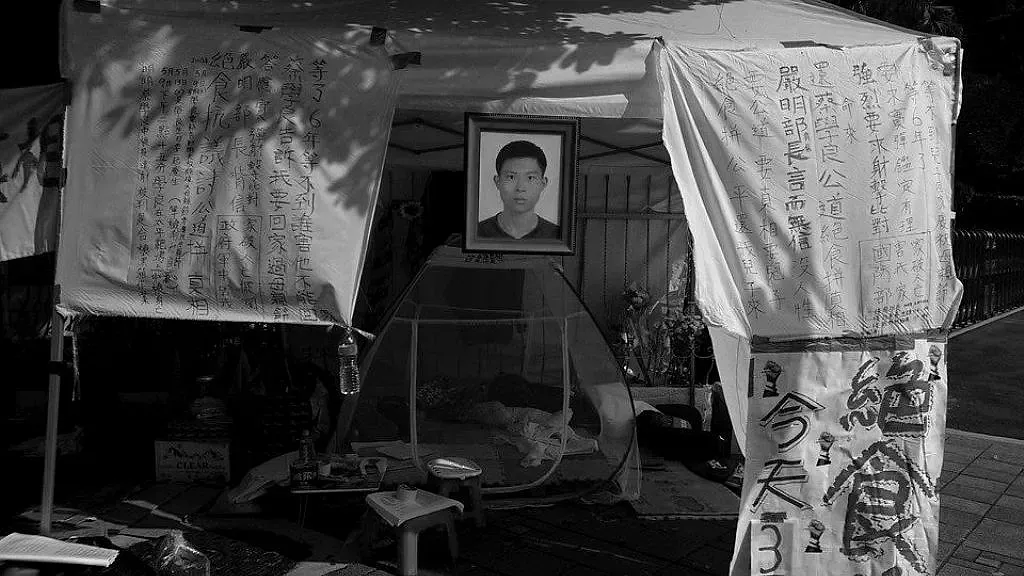
Court Observation on the Tsai Hsueh-Liang Case: Pistols, Rifles, and Expert Witnesses
Last edited: 2026-08-28
The term "expert witness" originates from Anglo-American law, referring to "a witness with specialized knowledge in a specific professional field who provides professional assistance to the court in court using their specialized knowledge and experience." A similar institutional design exists in our country as well, known as the "examiner" (鑑定人). However, compared to the term "examiner" (鑑定人), the author actually prefers the term "expert witness" (專家證人) translated from English, because it more prominently highlights the two characteristics of an expert witness: "specialized knowledge" and "testifying."
Usually in court, judges only understand the law, and lawyers are the same. The only ones with relatively closer ties to forensic science are probably prosecutors who more frequently come into contact with crime scenes. Even so, when law students prepare for the national examinations for lawyers or judicial officers (judges, prosecutors), they do not specifically study the subject of "forensic science." This is because national exams do not test it, and law departments do not list it as a required course, so naturally there is no need to study it. This also means that legal professionals who have passed the national examinations generally do not possess specialized knowledge in "forensic science."
However, in legal cases, especially in criminal cases and parentage testing in civil cases, the assistance of forensic science is often required to truly clarify legal liability. After all, the "truth" must first be reconstructed before any subsequent legal issues can be pursued. If the truth is unclear, how can legal professionals put their skills to use? Therefore, expert witnesses with a professional background in forensic science can be said to be indispensable and important roles in the courtroom.
During the last court hearing, the court summoned three witnesses in total: Forensic Pathologist Kao Ta-Cheng, Professor Meng Hsien-Hui, and Forensic Pathologist Wu Mu-Jung. Due to time constraints, however, only two witnesses were questioned: Forensic Pathologist Kao Ta-Cheng and Professor Meng Hsien-Hui. The main doubt the court sought to clarify was: Was Tsai Hsueh-Liang's gunshot wound caused by a "pistol" or a "rifle"?
Forensic Pathologist Kao opined that Tsai Hsueh-Liang's wound was caused by a pistol. The original autopsy report indicated that the muzzle was located very close to Tsai Hsueh-Liang, but Forensic Pathologist Kao believed that the firepower of a rifle is too great, and a wound caused at close range would inevitably be very large, whereas Tsai Hsueh-Liang's wound was only 1.2 x 0.5 centimeters, unlike the wound caused by a close-range rifle shot. In addition, snowflake-like fragments were visible on the X-ray of Tsai Hsueh-Liang's skull; those fragments were gray and white, with the gray presumably being bone fragments and the white being lead-copper fragments. At the scene, besides the T65 rifle, there was also a .45 caliber pistol. Pistol bullets are usually a lead-copper mixture, whereas the bullets of the T65K2 rifle are steel-jacketed. Therefore, Forensic Pathologist Kao believed that Tsai Hsueh-Liang's injuries were more likely caused by a .45 caliber pistol.
Professor Meng Hsien-Hui, on the other hand, believed that Tsai Hsueh-Liang had a tear at the corner of his mouth, which could only have been caused by a rifle with high pressure and a large amount of gunpowder creating greater gas pressure inside the mouth, tearing the corner of Tsai Hsueh-Liang's mouth. In addition, Professor Meng also pointed out that Tsai Hsueh-Liang's left hand had petal-shaped smoke smudges, indicating that the deceased's left hand had grasped the flash suppressor, and a flash suppressor is a characteristic possessed only by rifles, whereas pistols do not have a flash suppressor device. However, Professor Meng Hsien-Hui also stated that his specialty is internal and external ballistics rather than gunshot wounds. Therefore, the author believes that Professor Meng's judgment regarding the gunshot wound portion still awaits corroboration from other forensic pathologists or verification through experiments.
At the next hearing, the court will summon Forensic Pathologist Wu Mu-Jung holding a Master's degree from the National Taiwan University College of Medicine and Professor Li Chun-I from the Graduate Institute of Forensic Medicine at National Taiwan University to testify and help clarify the facts of the case. Forensic Pathologist Wu Mu-Jung has previously provided written expert opinions for this case during the litigation, and Professor Li Chun-I has also publicly published an article titled "An Evaluation and Analysis of the Forensic Evidence in the Tsai Hsueh-Liang Shooting Incident" to express his views on the matter.
The court's intention appears to be seeking a correct and more complete conclusion through the affirmative and negative arguments of multiple expert witnesses, an attitude of serious case investigation by the court that we should endorse. Expert witnesses possess knowledge that ordinary people do not have; possessing such knowledge naturally entails an added responsibility to uphold the truth. Upholding the truth is, in fact, simultaneously upholding justice. Although law differs from science, the responsibility to uphold truth and justice is equally incumbent upon both without dodging one's duty.
This article is an AI-generated translation of the original Chinese text. In the event of any discrepancy, the Chinese version shall prevail.