
JRF Newsletter
Reform Begins with Caring About the People's Aspirations for Justice
Last edited: 2026-07-27
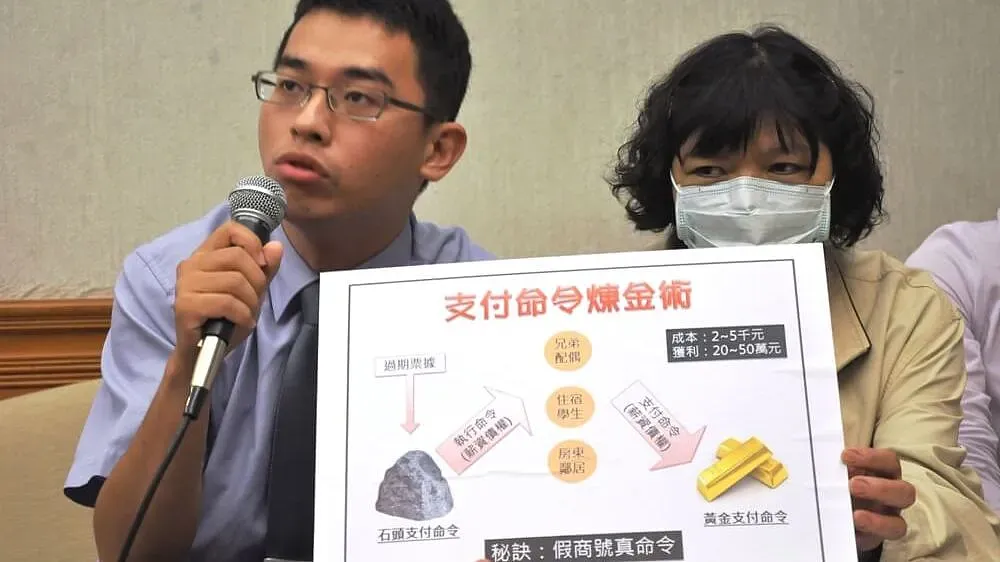
The "order for payment" is not a inherently bad system, but it was abused by fraud syndicates, victimizing people all across Taiwan. The Judicial Yuan dragged its feet in offering solutions because its primary concern was the fear of increasing caseloads, ultimately blaming the victims instead and disregarding their own rights and interests.
Therefore, we decided to "save ourselves from our own suffering" by forming a team of attorneys to push for legislative reform. This July, the amendments finally passed the third reading: orders for payment will only be subject to compulsory execution and will no longer carry the effect of a final and conclusive judgment.
Consequently, even if individuals are unaware or negligently fail to raise an objection, they still have a chance to seek relief and overturn the decision no later than when their assets are seized.
Reminder:
Citizens who suffered from "orders for payment" prior to the legislative amendment still have the opportunity to seek remedy within 2 years of the implementation of the new law! If you have not yet settled the debt, and the evidence was "forged or altered," or if you can "present more favorable evidence," you can file for a retrial!
Our work has not ended with the legislative amendment. We are currently assisting the "country chicken restaurant owner" featured in the video with a petition for retrial, and other cases are also underway. Welcome to join our ranks or support us with a donation!

『Anyone who makes a useful contribution to the building of the temple of justice,
such as cleaning its base, strengthening its pillars, decorating its capital,
or adding bricks and tiles to its solemn dome,
his name and reputation shall be closely linked with the framework of human society.』
The Successful Amendment of an Old Civil Litigation System
Under our Code of Civil Procedure, there existed a legal system viewed by the public as demonic—one that allowed others' assets to be directly seized "without passing through a judge's trial." This led to many citizens inexplicably having their wages garnished and bank accounts seized by the court. Only after inquiring through various channels would citizens discover that this demonic system had a professional legal term: the order for payment.
In early July 2015, the order for payment system underwent minor formal reforms that were nonetheless substantial in substance. In the past, the res judicata effect of orders for payment—criticized by numerous scholars and practitioners—no longer persists. If debtors have any dispute regarding the debtor-creditor relationship, they are no longer strictly bound by the requirements for civil retrials and can resolve the dispute through ordinary civil action proceedings.
My Affiliation with the Amendment of the Order for Payment
When I was serving as an alternative military service conscript in the Litigation Guidance Section of the Kaohsiung District Court, serving as a frontline window for the court, I directly and personally experienced the public's lack of clarity and trust regarding the judiciary. Various issues related to orders for payment were a daily occurrence at the Litigation Guidance Section.
From these frontline grievances of the citizens, I repeatedly asked myself: "At a time when the Judicial Yuan turns a blind eye to public grievances regarding the judiciary, what is the purpose of our country producing thousands of legal professionals each year through the legal education system, and then selecting hundreds of judicial practitioners through the national examination system? Is it merely to satisfy the formal necessity of the existence of judicial power under the Constitution?"
Under such a riddled judicial system, as long as the Judicial Yuan turns a blind eye to various legal loopholes, no matter how outstanding or passionate judicial personnel are, they are ultimately reduced to mere temporary gap-fillers for each loophole. This fundamentally fails to resolve public grievances and distrust toward the judiciary, and ruthlessly depletes our nation's outstanding judicial human resources.
In fact, promoting the patching of these common legal loopholes known to the public, such as reforming the order for payment system, is both simple and yields immediate results compared to other major judicial issues. Naturally, it should be the most effective and twice-the-result-with-half-the-effort first choice in judicial reform. However, the Judicial Yuan remained indifferent even to such "effortless" judicial reform issues, preferring to waste resources, delay time, and wear down the public's morale.
Recalling Trust in the Judiciary: We Will Do It
Members of the pro bono attorney team had discussed quite a few deficiencies in the current system and potential legislative reform issues. However, partners all coincidentally encountered citizens consulting on issues related to orders for payment, discovering that this system indeed had defects. Consequently, everyone reached a consensus to make the amendment of the order for payment the primary choice for this legislative reform project.
We believed: "A person's life is limited, but the existence of legal systems is infinite. As a legal professional, what one should ponder is how to use what one has learned and known, within a limited time, to make the infinite legal system more perfect."
The reform of the judicial system should not create an opposing deadlock on every issue. Many judges and prosecutors often excessively misunderstand and demonize the reform proposals put forward by civil society; perhaps this is the main reason why Taiwan's judicial system cannot be reformed.
There will always be legal professionals who, based on misunderstandings or departmentalism, distort every reform of the judicial system into successive power struggles among the bench, the bar, and the prosecution. In fact, only when judges, prosecutors, and attorneys all care about the people, base their actions on enhancing the public's trust and imagination regarding the judiciary, and take that as the goal of reform, can Taiwan's judiciary become even more perfect!
Hoping This Legislative Action Awakens Taiwan's Legal Professionals' Imagination for Judicial Reform
It is my fervent hope that the successful amendment of the order for payment this time can inspire a new generation of legal professionals, guiding the public, the courts, and legal professionals alike to rethink our country's future judicial system "from the heart." It can also allow everyone who holds expectations for society and the judiciary to jointly commit to the efforts of judicial reform, make useful contributions to the construction of the temple of justice, and take building a touching "Taiwanese Temple of Justice" as their own responsibility!

This article is an AI-generated translation of the original Chinese text. In the event of any discrepancy, the Chinese version shall prevail.