

The Conscience of Society, the Guardians of Human Rights: Discussing the Spirit and Direction of the Draft Amendments to the Attorney Regulation Act
Last edited: 2026-11-03
The Attorney Regulation Act has not undergone a comprehensive review and overhaul for 17 years. This amendment provides an excellent opportunity for all attorneys to reflect upon fundamental and vital issues: the positioning and significance of attorneys, the functions they can fulfill in society, how society expects them to be viewed, and their relationship with democracy, the rule of law, and human rights. In fact, the answers given to these questions will determine the future appearance of the revised Attorney Regulation Act.
Reflections on the reform of the Attorney Regulation Act by key figures in the legal profession have already formed a clear and definite direction. The issue lies in the fact that a consensus across the entire legal profession still requires time to gradually accumulate and cultivate. Consequently, we often observe that the self-criticism of reformers is extremely stern, carrying a sense of helplessness and heaviness born of the wish to see iron turned into steel.
Interestingly, however, from the perspective of consumers, social welfare organizations with long-term cooperative relationships offer a great deal of affirmation. On one hand, this indicates that the efforts made by reform pioneers over the past few decades have indeed yielded major results, which are reflected in the elevation of attorneys' social status; on the other hand, this also shows that the reformist tradition of the legal profession maintains an active and robust influence, and how to continue and expand this tradition in the future is the key.
Below, we have invited three individuals to freely discuss their observations and analyses regarding the direction of the amendments to the Attorney Regulation Act. Two of them speak from an insider's perspective, while the last speaks from the perspective of a consumer/user, each sharing their ideal image of an attorney.
Ku Li-hsiung, Attorney-at-Law, President of the Taiwan Bar Association

Q: What are the main spirit and key issues of the current draft amendments to the Attorney Regulation Act?
The last major amendment to the Attorney Regulation Act took place in 1992, 17 years ago. At that time, the most important provision incorporated was the mission of attorneys: attorneys have the mission to protect human rights, realize social justice, and promote democratic rule of law. In addition, attorneys were naturally required to abide by ethical standards and intensively study the law and legal affairs. Under the grand premise of Articles 1 and 2 of the Attorney Regulation Act regarding the mission and duties of attorneys, the regulations of the Attorney Regulation Act at that time were developed. However, even back then, there was already a debate regarding the organizational structure of the Taiwan Bar Association (TBA)—that is, the organizational structure of the TBA, which holds the leading position in the legal profession, faced a considerable degree of controversy at the time. To this day, a consensus has not been reached within the legal profession, and breakthrough reforms have been delayed until now. Consequently, this has resulted in the meager resources of today's TBA.
Due to the constitutional frailty of the TBA, for a long time, it could only rely on the Taipei Bar Association to a certain extent to shoulder the role and task of speaking out for the legal profession. Of course, over the past 10 years, the TBA has also spoken out to a certain extent, but this was done in the absence of resources through cooperation with local bar associations. Everyone recognizes that this is not enough. Compared with the national bar associations of South Korea and Japan, our association is clearly inadequate. Even compared with the All China Lawyers Association in China, we are clearly inadequate. Therefore, this is a major issue waiting to be resolved in this amendment to the Attorney Regulation Act.
Other important issues include pre-employment training for attorneys and the admission review system. For example, a situation has often occurred in the past where some individuals were suspended from office while serving as public servants, judges, or prosecutors, and subsequently transitioned to become attorneys, yet the bar association had no power to review their qualifications or refuse their admission. There are also continuing education for attorneys, certification in specialized legal fields, and law firm structures. We need to clearly distinguish whether a firm is a shared office, sole proprietorship, or partnership, and further discuss whether to plan for corporate law firms. The intention behind doing so is to clearly indicate the firm's structure to consumers/clients so that full accountability to clients can be maintained.
Furthermore, regarding the disciplinary system for attorneys, it currently adopts a committee format; should it be made more judicial? In addition, there is the strengthening of attorney ethics. Ethical standards for attorneys already exist, and we need to discuss whether they need to be further strengthened within the Attorney Regulation Act. Moreover, there is the attorneys' right to gather evidence so as to achieve equality of arms with prosecutors; this part also needs to be regulated within the Attorney Regulation Act. There is also the scope of practice for attorneys; people have constantly stated that attorneys' business is being encroached upon by others, such as scriveners and accountants. Finally, there is the explicit stipulation of prohibitions on attorneys participating in public interest affairs, as well as attorney liability insurance, further regulations on foreign legal consultant attorneys, and penalties for practicing law without attorney qualifications... and so on.
The organizational structure of the bar association involves how members can achieve the mission of attorneys and the promotion of attorneys' duties through participating in the association. In both regards, the bar association bears unshirkable responsibilities. This also involves how local bar associations and the TBA coordinate to achieve a reasonable distribution of resources.
Q: How does the current direction of the amendments implement the positioning and ideals of attorneys?
The development of the legal profession is a very important milestone in civil society, enabling the public to access fairness and justice, supervise those in power to prevent abuses of power, and resolve legal disputes in individual cases to safeguard people's rights and interests. Therefore, the profession of an attorney is of great value. To realize these goals, the primary requirement is the independence of attorneys. To achieve this goal, in addition to safeguarding the independent space for attorneys to exercise their duties, the effective assistance of the bar association is also crucial, giving individual attorneys the strength to resist government persecution or abuse of power against the people; this important mechanism also involves the independence of the bar association.
The "Basic Principles on the Role of Lawyers," adopted by the United Nations in Havana, Cuba in 1990, clearly states: "Adequately protecting human rights and fundamental freedoms to which all persons are entitled, be they economic, social and cultural, or civil and political, requires that all persons have effective access to legal services provided by an independent legal profession." Enabling the public to have access to attorneys is a very important foundation of a democratic state governed by the rule of law. To achieve this purpose, an independent legal profession and an independent bar association are extremely important.
Conversely, the United Nations also requires attorneys to comply with relatively high ethical standards. On one hand, attorneys enjoy a high degree of independence to ensure they can counter government abuse of power; on the other hand, attorneys are also required to maintain high standards of ethical responsibility.
If the independence of attorneys is not guaranteed, it will be like attorneys in China: when administrative agencies are unwilling to see certain defense attorneys appear, they suppress or even prosecute them. They will not talk to you about attorney ethics or attorney self-governance; they will directly use prosecutors or public security to deal with you, and even the lawyers association will join the suppression.
Recently, we saw newspaper reports that after the Xinjiang riot occurred, the Xinjiang Lawyers Association demanded that its members not casually take on cases of Uyghur dissidents and must report to the association. This is an example of a lawyers association that is not independent and is heavily constrained by administrative agencies. In a lawyers association and legal system without such independent space, the independence of attorneys becomes empty talk, and the public's demand for professional assistance from attorneys to ensure fair treatment in legal proceedings and a fair trial also becomes empty talk.
Q: How can the functions of the Taiwan Bar Association be strengthened?
The spirit of self-governance among attorneys lies in emphasizing that high standards of attorney ethics surpass criminal punishment, resisting external government interference through high standards of self-regulation. One essential element of high ethical demands is that the power of interpretation regarding ethical norms rests with the bar association, and the association's interpretations must be convincing. This requires strengthening the organizational structure of the bar association, its self-regulation, and its research capabilities. In addition, this is not entirely beyond judicial review; after completing a self-regulatory action, those disciplined are subsequently allowed to seek relief from judicial authorities. Self-governance and self-regulation come first, and if there is any dissatisfaction, judicial review follows. If the TBA has sufficient resources to handle all these matters, its members will develop vigilance. The primary requirement is that interpretations must be concrete and clear, capable of responding to members' needs at any time and making appropriate interpretations.
Q: The current draft amendments to the Attorney Regulation Act heavily emphasize the functions of the TBA, but the TBA's resources are severely deficient. Is there a contradiction here?
The annual budget of the Japan Federation of Bar Associations (Nichibenren) is many times larger than ours. The current budget scale of the TBA is only a little over NT$10 million a year, whereas Nichibenren has a scale of several hundred million New Taiwan Dollars. Naturally, this provides sufficient full-time personnel to achieve the functions we envision an ideal TBA should have. The current budget scale of the TBA is certainly insufficient to achieve this. Therefore, the budget scale of the TBA must be increased. Under the TBA's existing scale of 6,000 practicing members, referencing the average contributions of members in other advanced countries under the principle that our burden shall not be higher than theirs, and reallocating membership dues reasonably between the TBA and local bar associations, I believe the TBA's budget can be pushed up severalfold.
The problem lies in whether local bar associations are willing to release their resources; this is where everyone currently cannot reach a consensus. Taking a local bar association with 1,000 members as an example, there may only be a few dozen local members, while the rest are cross-jurisdictional members. The function of local bar associations in serving local members or bearing the responsibility of continuing education is actually very thin, yet the resources collected are substantial. If we adopt the approach of "joining a single bar association permits nationwide practice," most of the problem will be solved. For example, every attorney in Taiwan currently joins an average of 3 to 4 bar associations and pays 3 to 4 sets of membership dues. Under the premise of not increasing the financial burden of membership dues, as long as they join the Taipei Bar Association and pay the same amount as before, they can practice nationwide; we then calculate what the necessary budget is to maintain the functions of the Taipei Bar Association, and the remaining money is paid to the TBA. In this way, the TBA's annual budget can immediately triple.
In Japan, membership dues amount to tens of thousands of New Taiwan Dollars, which is unimaginable to us. The annual membership dues of the All China Lawyers Association also amount to around NT$21,000. If Taiwanese attorneys only joined a single bar association, their dues would be far below this figure. However, in reality, we join not just one bar association, but many, so the amount cannot be calculated based on joining a single bar association; doing so distributes too little resources to each bar association and does not match the actual situation.
Therefore, calculations should be based on the average amount paid across bar associations. If resources are reasonably allocated between the TBA and local bar associations as mentioned previously, the TBA's budget can be substantially increased, allowing it to hire specialized administrative staff. For instance, if the mission of attorneys is to protect human rights, the bar association must naturally express opinions in a timely manner on any events that may involve human rights violations. To promote democratic rule of law, legitimate legislative lobbying must also be conducted for bills, all of which require manpower. In addition, attorneys' professional rights and interests and attorney disciplinary actions require the input of human and material resources. Of course, we cannot say we must reach the level of Nichibenren, but as long as resources are reasonably allocated, the TBA can perform significant functions.
Q: Why is the organizational structure of Taiwan's bar associations fragmented and scattered, unlike the integrated structures in Japan and South Korea?
Japan underwent very substantial reforms after World War II, and that was under Allied occupation, not out of its own volition. South Korea basically modeled itself after Japan. The reason Taiwan has been unable to carry out effective reforms can be viewed from two aspects: historical factors and internal factors.
The historical factor is that early on, the TBA represented the bar association of "all of China," and therefore, for a very long time, it was not permitted to hold re-elections. There was no concept of bar association democratization or self-governance and self-regulation; for a long period, it was monopolized by a single secretary-general without any operations or speaking position. It was only after the lifting of martial law that the chairperson system began, and with great difficulty did it begin to elevate its status.
At this point, internal factors emerged. When the comprehensive promotion to revise the organizational structure of the bar association took place in 1992, the legal profession was unable to reach a consensus. Moreover, external society did not pay much attention to this matter; everyone was focused on judicial reform and the reform of the prosecutor and judge systems, with little external urging for the reform of the attorney system. Consequently, the only ones truly paying attention to this issue were attorneys, but attorneys could not reach a consensus, leading to arguments that persist to this day.
Q: How was the tradition of Taiwan's legal profession in valuing human rights and democratic participation formed?
Changes in the broader environment—the lifting of the ban on political parties and the lifting of martial law—created the conditions for attorneys' autonomy and social participation. Starting in 1992, led by the Taipei Bar Association, attorneys participated in the entire social reform movement. At that time, all seats on the board of directors and supervisors of the Taipei Bar Association were won by the Wen-hsueh-lien-tuan (Literary School Coalition).
The Wen-hsueh-lien-tuan was merely a loose organization participating in the Taipei Bar Association, but it fostered a cultural atmosphere, demanding that the bar association not only serve its members but also "take action internally and have a voice externally." This was the fundamental attitude.
The demand to "have a voice externally," established through exchange and communication among attorneys to build consensus, eventually branched out and produced profound influences from today's perspective. Some attorneys plunged into the women's rights movement, while others threw themselves into environmental issues, human rights issues, and so on. The Taipei Bar Association was very willing to ally with social movement groups; whenever invited, the Taipei Bar Association was eager to cooperate and participate, organizing many activities as well. Of course, the prerequisite conditions were the lifting of martial law and Taiwan's democratization, where people no longer feared being suppressed. Most of these developments voiced opinions from the perspective of disadvantaged groups, representing left-leaning voices demanding that the government pay attention to the plight of the underprivileged. The Taipei Bar Association established this style, which subsequently spread outward, carrying over to the TBA and local bar associations, allowing everyone to gradually recognize that attorneys stand on the side of the underprivileged to voice their concerns.
This may sound somewhat contradictory; in social stereotypes, attorneys often serve those in power and wealth. But in truth, this is not the role attorneys should truly play. Attorneys should voice concerns for the underprivileged and help disadvantaged groups across various fields. This also became the main axis of the Taipei Bar Association, forming a tradition. Over the past twenty-odd years, such beliefs and practices have indeed enhanced the social image and status of attorneys.
Huang Jui-ming, Attorney-at-Law, Chairperson of the Judicial Reform Foundation
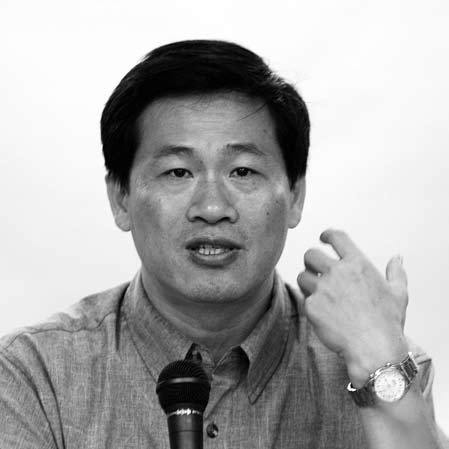
Q: What are your expectations and suggestions for this amendment to the Attorney Regulation Act?
I believe that unless we adopt the approach of "single bar association registration, nationwide practice," true change cannot happen. This is the only fair approach. If I participate in the amendment discussions, I will definitely insist on this point with nothing to compromise. I believe that modifications to other trivial details hold little significance.
Currently, the cross-jurisdictional member system is adopted only by the Taoyuan Bar Association, where members pay NT$100 less per month and NT$10,000 less in admission fees, but I think these are not the main points. The main point is that after becoming a cross-jurisdictional member, one still has to join a local bar association, still has to pay membership dues, and these are still centrally utilized by the local bar association. Precisely because of this, many local bar associations possess massive financial resources, whereas the TBA is relatively very weak, receiving very little money from members each year.
Therefore, the focus is not on whether it causes inconvenience to members in their practice—members can pay money to anyone without problem. The focus is on the necessity of having a strong TBA. Up to now, the social image and status of the entire legal profession, as well as the spirit of promoting the rule of law, have mostly been driven by the Taipei Bar Association. The TBA lacks both human and material resources, relying solely on a small number of enthusiastic individuals acting with a public-interest mindset, which prevents it from playing a significant role.
Even more frighteningly, this method of resource allocation reveals the mindset of attorneys who value short-term, immediate personal interests, failing to regard overall social progress as a responsibility attorneys ought to shoulder. Everyone wants to keep resources close at hand for their own people to use, with purposes limited to short-term, consumerist, and welfare-oriented satisfactions, such as outings; they rush to enjoy whatever benefits the current generation can access, without considering the elevation of society as a whole or the social status of the next generation of attorneys.
Compared with advanced countries, the social status of Taiwanese attorneys and the influence they can exert in political and social reforms are actually quite low. Currently, organizations with a stronger voice in society are instead the Judicial Reform Foundation (JRF) and the Taipei Bar Association, while the TBA remains voiceless. The JRF relies entirely on donations; we have no fixed members and no fixed funding source. Many issues promoted by the JRF should actually be handled by the TBA, as public speaking and participation in society by attorneys ought to be the duties of the TBA in the first place.
Q: How should attorneys set self-expectations, and are there practices in other countries worthy of emulation?
A while ago, the Taipei Bar Association specially invited the bar associations of South Korea and Japan to Taiwan to specifically discuss this issue, which left us with even deeper reflections. In those countries, registration at a single location also permits nationwide practice; no other country has a bar association organization as fragmented and scattered as ours, and both South Korea and Japan are much larger than us.
What particularly touched us was the breadth of vision and boldness demonstrated by the Korean Bar Association. The goal set by the Korean Bar Association is to comprehensively internationalize its attorneys, thereby specially strengthening attorneys' language proficiency to connect with the international community. I believe this is a remarkably bold move, both from the perspective of enhancing South Korea's national power and elevating the status of Korean attorneys. Most importantly, they demonstrated breadth of vision and ambition. In contrast, our mindset is how to prevent foreign attorneys from coming to Taiwan to practice, imposing restrictions and sealing off the front door. Conversely, others think about how to elevate their own capability standards to compete internationally.
I once wrote an article titled "Looking at 10 Years of Judicial Reform from the German Experience" for the Decade of Judicial Reform Symposium, in which I mentioned the German Lawyers' Day convention. The angle of their concern was: among human rights workers worldwide this year, who is worthy of commendation by the German legal profession? Their focus is: first, human rights; second, stepping out of Germany to care for human rights victims around the world and giving them support.
I specifically observed whom the German Bar Association commended that year: they commended the rights-defense attorney Cheng En-tsung from Shanghai, China! The entire horizon and altitude are completely different. This is the caring vision of the German legal profession. Our entire legal education, and the school teachers teaching law, possess no such concepts and altitudes, focusing their main attention solely on passing the attorney and judicial examinations.
Furthermore, the content of the examination leans heavily toward positive law, leading law students to believe that this is what law is all about—that knowing how to use legal provisions to solve problems is law. Yet their understanding of the legislative intent and spirit behind legal provisions is extremely narrow, and they have little awareness of the functions and roles attorneys can play in society. Even their understanding of attorneys' own history is meager.
Q: What other aspects of reform do you think need to be strengthened?
The self-governance and self-regulation of attorneys must naturally be strengthened, and should the bar association even have the power to review incoming members? In the past, whenever certain judges failed to perform well, everyone thought the best outlet was to step down after getting into trouble and become an attorney. This mindset treats the legal sector's garbage as material to become attorneys, reflecting an ingrained concept in the legal community that trash goes on to become attorneys, and that attorneys are where money is made. I believe the legal profession should have review powers to block unqualified individuals from entering.
In addition, attorney disciplinary actions are currently handled by the Attorney Disciplinary Committee of the High Court, composed of attorneys, scholars, and judges. I believe we should emulate the German approach by handing everything over to attorneys for handling, allowing attorneys to cherish their own reputation. Currently, official authorities still remain uneasy, but this also depends on whether attorneys themselves strive to do better. We often worry about officials protecting one another, and they similarly worry about attorneys shielding their own. They harbor distrust toward the existence of a genuinely upright force within civil society, clinging to an image of attorneys as people who socialize, scheme, and figure out ways to make money, lacking faith that a stronger force demanding justice exists within civil society. In fact, based on my experience at the JRF, civic associations are instead purer. A good Attorney Regulation Act should also guide and cultivate an upright social force; a spontaneously generated social force from civil society is actually more important than political power.
Q: In your opinion, what else can be strengthened regarding attorney self-regulation?
Human and material resources must be centralized in the TBA to unleash its functions. For example, the JRF previously drafted model attorney ethical norms, and the TBA could introduce and translate relevant foreign books. Under the leadership of current President Ku Li-hsiung, an overall revision of ethical norms is underway. However, I believe our theoretical-level exploration remains insufficiently deep; directly amending statutory provisions actually yields a very limited scope of actual modification.
The key lies in accumulating rich experience and wisdom through discussions of numerous cases, which first requires conducting extensive socio-legal explorations into the positioning of attorneys. This is currently the most lacking element in the entire legal academia, as well as the introduction of sociological analysis. Everyone only talks about legal provisions, without conducting in-depth research into the social background and social impact behind those provisions. Q: Looking back at the historical development and evolution of Taiwan's attorneys, can it give us some inspirations? A: During the Japanese colonial period, the governance of attorneys was identical to that under German Nazism and present-day China, treating attorneys as instruments of governance—just as in Germany during World War II, where attorneys had to swear allegiance to Hitler, and during the Japanese colonial period, where attorneys had to swear allegiance to the Greater East Asia War; all of these occurred under authoritarian systems. Therefore, what concerns us is whether attorneys stood up to resist totalitarian systems and safeguard human rights under such systems.
During the Japanese colonial period, such individuals were extremely rare. After the Japanese left and the Nationalist Government came to Taiwan, the attorneys cultivated early on in Taiwan merged with those cultivated in Shanghai, China, both belonging to the civil law system, making the merger uncomplicated. Subsequently, Taiwan enforced a martial law system; to make a living, attorneys communicated well with the authorities and cooperated with them, thereby securing opportunities to obtain government cases. The business sector also hoped to secure corporate benefits through attorneys. Consequently, no one wanted the attorney they hired to be someone who confronted the authorities. Caught in such entanglements of interest, those who dared to step forward and resist were even rarer.
However, as Taiwan's middle class gradually rose, the Tangwai movement and the Kaohsiung Incident occurred, prompting a group of attorneys to step forward, exert massive influence, and spearhead the development of the Tangwai movement. For a period, from the president and vice president down to various county and city magistrates, the vast majority originated from an attorney background. During that stage, like all emerging democratic countries, reform forces spearheaded by attorneys forged ahead, overthrew authoritarian regimes, and established new democratic nations, with attorneys playing the vanguard role. The United States is another similar example.
Yet later on, attorneys became presidents. Unfortunately, A-bien's actions caused the status of attorneys to plummet drastically. Why couldn't attorneys who successfully overthrew the old system and created a new landscape also serve as attorneys who governed the country well? This touches upon the fundamental issue of legal education. My personal view of A-bien is that he was also someone who merely rote-learned the law, clearly deficient in terms of Taiwan's broader historical background and humanistic literacy, yet he was a super honor student in the legal field, which also reveals that our legal education suffers from major problems.
An 18-year-old high school graduate who memorizes legal provisions mechanically can achieve success and prominence simply by memorizing them well. A-bien passed the bar examination as a junior in college, yet lacked understanding of society and politics; such individuals are regarded as top talents in the department of law. But when critical moments arrived, his weaknesses were exposed. Do not laugh at A-bien; Ma Ying-jeou is much the same.
Today, legal education has made some progress. Students have numerous opportunities to participate in extracurricular activities and student clubs, the JRF has also organized many judicial education activities, and young people possess broader international horizons than before. However, under greater economic competitive pressures, people have even less inclination to care about higher-level matters.
Q: Can the reform tradition established in the past by the legal profession of clashing with authoritarian systems and valuing human rights be sustained?
The establishment of the "Wen-hsueh-lien-tuan" (Literary School Coalition) and the re-election of the Taipei Bar Association constituted a highly significant reform event. In its early days, the Taipei Bar Association, much like bar associations everywhere at the time, was monopolized by old-school attorneys originating from military judge backgrounds—conservative attorneys who merely catered to authorities and favored political patronage.
Some attorneys graduated from civilian schools and felt deeply displeased with such practices, wishing to reclaim leadership of the bar association through association elections. Under the consolidation of Lin Min-sheng (林敏生), Fan Kuang-chun (范光群), and Chen Ch'uan-yueh (陳傳岳), the "Wen-hsueh-lien-tuan" was formed, a name referring to opposition against attorneys graduated from military schools and retired from the military judge system.
Under the authoritarian system, the admission quota for attorneys was extremely low, merely 1% or 2%. Yet the state opened a massive backdoor allowing retired military judges to become attorneys, resulting in a situation where despite the very small number of attorneys, the proportion of those transitioned from military judges was exceptionally high. This was a co-optation tactic of the authoritarian system, granting special protections to military personnel. This was also a lesson the Kuomintang learned in China, where many demobilized soldiers became unemployed without proper arrangements and were instead absorbed by the Communist Party. Therefore, if the authoritarian system wanted to secure the support of military personnel, it had to co-opt them.
In the 1989 elections, candidates of the Wen-hsueh-lien-tuan won all seats on the board of directors and supervisors of the Taipei Bar Association, with Lin Min-sheng serving as the first chairperson. This was a crucial turning point; ever since then, generation after generation succeeding in the Taipei Bar Association has consisted of individuals from the Wen-hsueh-lien-tuan.
I feel somewhat saddened that this relies entirely on the personal dedication of individual attorneys, while the bar association is unable to provide resources to nurture and care for those who make sacrifices. If the system could support idealistic individuals to persevere, things would progress even better, and the bar association ought to play such a role. Unfortunately, people's sights remain focused on investing resources into welfare-oriented matters.
Sun I-hsin, Deputy Secretary-General of the Parents' Association for Intellectual Development

Q: The Parents' Association for Intellectual Development frequently has opportunities to contact and cooperate with attorneys. What has been your experience and impression of cooperating with attorneys?
Parents of intellectually disabled individuals frequently encounter experiences handling legal cases, criminal cases, trust contract issues, and so on. All these problems require the assistance of attorneys, which is why we constantly interact with attorneys.
Based on my experience, the vast majority of attorneys whom we petition and who are willing to help give me the impression of being extremely enthusiastic, and the overall quality of service also earns our strong affirmation. Subsequently, we have frequently developed long-term cooperative relationships with these attorneys. They all assist on a pro bono basis.
I feel that the quality of Taiwan's attorneys and their ambition for social care are actually quite good. Viewed from the perspective of the social welfare sector, the entire judicial reform was initiated by attorneys. Recently, discussions assessing the achievements of the decade of judicial reform have also begun. In 1995, the Parents' Association for Intellectual Development also participated in the massive judicial reform protest march, during which it was clearly observed that the legal profession was very actively initiating and participating in the entire event.
Today, one can see that when intellectually disabled persons make statements at police stations, attorneys can accompany them; this represents a very high degree of goodwill from the legal profession. Because accompanying intellectually disabled individuals during interrogations is extremely time-consuming work, and the compensation paid is very low, attorneys receive less than NT$1,000 in travel allowances for accompanying interrogations. Meanwhile, when these attorneys discuss cases with clients, their hourly fees may reach several thousand dollars, making the two entirely disproportionate. Yet so many attorneys are still willing to assist, which I feel is a very positive outcome.
However, unfortunately, the cooperation and interactions I mentioned above are not institutionalized interactions, but rather interpersonal and social capital interactions, which must rely on the high enthusiasm and willingness of attorneys to sustain. These enthusiastic attorneys are not necessarily those holding power in the bar association. I feel that considering how to institutionalize the cooperation between attorneys and disadvantaged welfare groups, or even enabling the bar association to release resources to support attorneys in engaging in more social public interest undertakings, would represent an even more positive development.
Q: How can cooperation be institutionalized? Could you give some more concrete examples?
For instance, in the training curriculum of the attorney training institute, there used to be no seminars with disadvantaged groups; later, we fought for 3 class hours, which remains far from sufficient. This year, the curriculum was shortened further to 2 hours, managed by a single attorney in charge of coordination. I feel that attention to the disadvantaged has diminished within the training component. In reality, there should be more courses promoting understanding of disadvantaged individuals.
Continuing education courses for prosecutors and judges all invite us to teach classes, with the theme of how to communicate with intellectually disabled individuals during the questioning process. Yet continuing education for attorneys features comparatively fewer such courses. We are unclear whether attorneys require continuing education, or whether attorneys simply lack continuing education altogether; on that, we remain unsure.
I suggest that regarding curriculum planning at the attorney training institute, social organizations should be allowed to participate. The current situation is that if the person in charge is motivated, they will invite social organizations to bring in relevant issues; if the person in charge changes or deems the issue unimportant, these courses may fail to continue, becoming dependent upon specific individuals. I believe we can mirror the board of directors of the Legal Aid Foundation, where regulations mandate the inclusion of indigenous representatives and social welfare organization representatives; similar designs can be incorporated into the curriculum planning committee of the attorney training institute.
Currently, the Legal Aid Foundation and 50 police precincts nationwide are piloting a program for accompanying intellectually disabled persons during interrogation. According to the companionship experience spanning from the end of last year through the entirety of last year, cases involving intellectually disabled individuals reached as high as 20%, and this year cases involving intellectually disabled individuals reach as high as 30%, amounting to around 200 cases per year. This case volume is massive, but the number of attorneys is clearly insufficient.
In the past, an incident occurred where an intellectually disabled child was taken away by the police, and legal aid attorneys happened to be attending meetings that day; from Friday straight through to Monday, the child had no attorney accompanying them. Neither did the prosecutor proactively invite an attorney to accompany the child, family members could not contact any attorneys, and not a single attorney helped out. Today, the Legal Aid Foundation maintains a mechanism whereby whether someone is taken away by the police during the day, at night, or even in the middle of the night, phone numbers exist to contact Legal Aid attorneys for assistance. But if Legal Aid attorneys or relevant handlers are unavailable, these intellectually disabled persons do not know whom to turn to.
Therefore, planning for the rotation schedules of Legal Aid attorneys is quite important. But I feel that dumping everything entirely onto the Legal Aid Foundation to bear is seemingly less than ideal. If local bar associations establish social service programs enabling attorneys to possess their own sub-specialties beyond their professional fields—such as issues concerning debt bondage, environmental protection, physical and mental disabilities, indigenous peoples, and so on—they can contribute to society.
Many issues in this society require the assistance of attorneys. We hope that more attorneys can provide assistance. The intervention in these issues requires time to accumulate and deep understanding. Personally, I feel that not many attorneys truly invest long-term and care about a specific social issue; usually, people mobilize to do something, and once finished, everyone scatters like birds and beasts. But in reality, many matters require long-term management, and only after gaining depth will one understand how individuals in other professional fields accumulate their expertise.
This article is an AI-generated translation of the original Chinese text. In the event of any discrepancy, the Chinese version shall prevail.