
Comparative Legal Ethics
Last edited: 2026-07-27
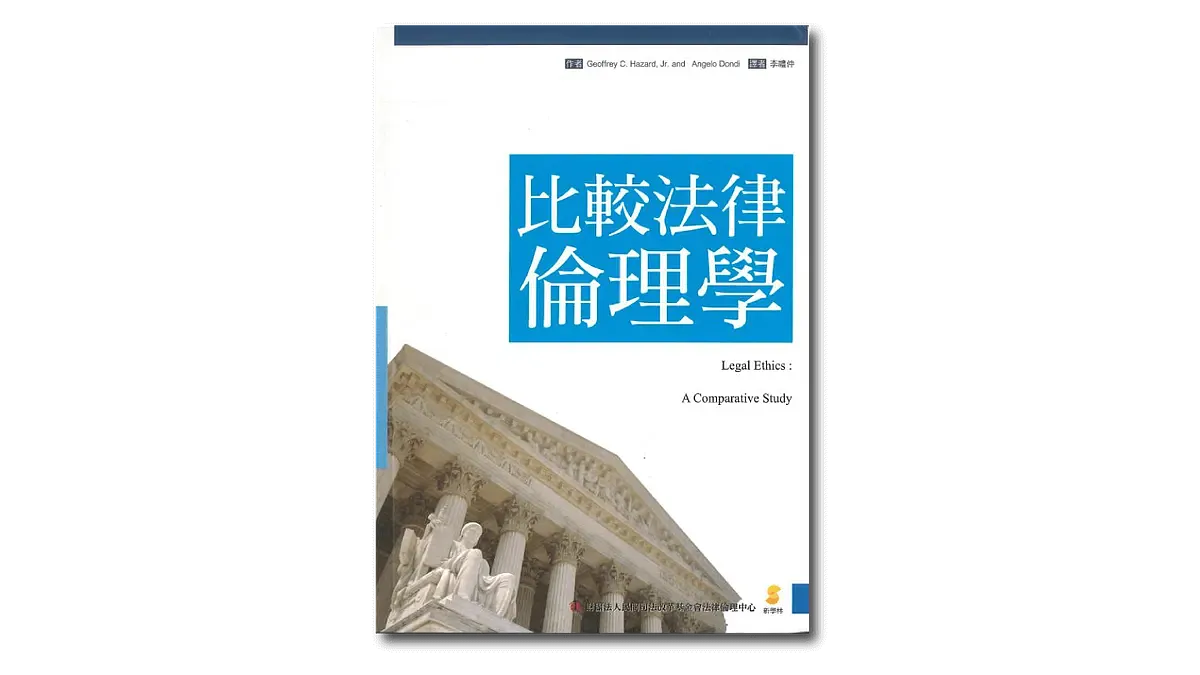
Authored by American professor Geoffrey C. Hazard, Jr. and Angelo Dondi, Legal Ethics: A Comparative Study primarily explores how legal ethics can be practiced in contemporary legal-practice settings... The book adopts a pioneering comparative research methodology to examine legal ethics, aiming to bridge the gap between the standards of legal ethics governing lawyer conduct in the common law and civil law traditions.
Translator's Preface
The core value of legal professionals lies in building a respected judicial system that enables the public to rely upon it in seeking justice.
Because lawyers, prosecutors, judges, and other legal professionals are deeply aware of the roles they play within the judicial system, and are bound externally by rigorous codes of professional ethics alongside public expectations and oversight, legal professionals have become the "defenders of judicial justice."
To ensure and sustain public confidence in a government with an integrity-driven judicial system, legal practitioners must adhere to high ethical standards. The duties of prosecutors and judges among legal professionals are to pursue the public interest; therefore, in addition to demonstrating professional competence, prosecutors and judges must also exhibit attitudes of "impartiality" and "courage and accountability." Lawyers, on the other hand, are on the front lines of public contact with the judiciary; hence, the quality of a lawyer's conduct heavily impacts the image of the judiciary, which is why legal ethics in various jurisdictions predominantly focus on lawyers.
Although there are a few bad apples within the American legal community, the majority of legal professionals maintain a high degree of compliance with professional codes of conduct. This is attributable to a legal education system that emphasizes professional ethics education for practitioners, combined with institutional design features of the judicial system—such as the jury system, the adversarial system, public trials, and cross-examination—which render the American legal sphere highly transparent, while the jury system prevents rogue legal professionals from acting with impunity.
In contrast, the cultivation of legal professionals in our country has largely focused on the teaching of examination subjects within schools. Regarding ethics education for related legal professionals, it was only this year (2011) that legal ethics became a subject in the first tier of the Special Examination for Judicial Personnel, prompting law departments across universities to begin teaching legal ethics. Previously, legal professionals only encountered legal ethics instruction after passing the judicial special examination or the high-level bar examination. Even then, the courses taught—such as the nine-credit ethics curriculum at the Judges and Prosecutors Training Institute—primarily focused on basic understandings of judicial work, magistrate recusal, and the duty of confidentiality, leaning heavily toward formalistic requirements on how to establish independence in adjudicative work.
Building a respected legal profession requires beginning with the "hearts" of legal practitioners, and can only be achieved through the consensus and adherence of all legal professionals. Therefore, the core focus of our country's overall legal ethics education moving forward should lie in cultivating concepts such as a sense of right and wrong, a sense of justice, and legitimacy, as well as rules of conduct both within and outside professional legal duties, alongside legal professionals' knowledge and practical capacity to protect human rights, realize substantive fairness and justice, uphold the dignity and honor of the legal profession, and address issues of morality and conscience.
Nevertheless, works concerning legal ethics are lacking in our country. To strengthen the theoretical foundation of legal ethics in Taiwan and draw upon external insights, I am honored to participate in the translation of foreign legal-ethics-related literature spearheaded by the Judicial Reform Foundation, thereby facilitating the citation of relevant theories and practical experiences in the establishment of our own legal ethics.
I was commissioned to translate the book Legal Ethics: A Comparative Study, written by American professors Geoffrey C. Hazard, Jr. and Angelo Dondi. This book primarily aims to explore how legal ethics can be practiced in contemporary legal practice. The book identifies two major legal ethics issues: the roles of lawyers and judges in the pursuit of justice, and the ethical conflicts when a lawyer's responsibilities to their clients clash with their duty to uphold the legal system. After addressing these issues, the book elucidates the professional duties of lawyers and the common dilemmas they face in practice across advanced legal systems worldwide today.
The book comprises nine chapters. The authors begin with the historical development of the legal profession in Chapter 1, analyzing how modern capitalist nations—including the United States, Japan, European countries, and Latin America—utilize constitutional systems to ensure the independence of the legal profession, as well as how legal professionals in emerging legal systems, such as China and the former Soviet bloc, develop the rule of law on a foundation connected to political systems. The book adopts a pioneering comparative research methodology to examine legal ethics, aiming to bridge the gap between the standards of legal ethics governing lawyer conduct in the common law and civil law traditions.
Amidst the differences across legal systems, the authors synthesize how various nations respond to similar legal ethics issues, enabling the presentation of the book to assist readers in understanding transnational legal systems and promote cross-border legal interoperability. Chapter 2 analyzes the roles of judges and lawyers; Chapter 3 discusses the importance of a lawyer's professional competence; Chapter 4 covers the independence of legal practice; Chapter 5 addresses the lawyer's duty of loyalty; and Chapter 6 examines the lawyer's duty of confidentiality, together outlining the essential components for establishing a sound legal system. Because laws cannot enforce themselves without a mechanism of survival, Chapter 7 emphasizes that professional responsibility rules must regulate the disciplinary procedures and contents applicable to legal professionals who fail to adhere to legal ethics; Chapter 8 explores the quid pro quo between attorney fees and access to justice; and finally, in the conclusion and reflections of Chapter 9, the authors observe that although legal ethics contain inherent internal tensions that frequently provoke controversy and resistance within legal practice circles worldwide, sound legal professionalism remains a vital factor in political stability.
The authors of this book are thoroughly acquainted with contemporary legal practice in the developed world. Through dialogues with lawyers, judges, and government officials, they provide a rich and deeply analytical contextual background for this book. It is hoped that readers in our country, much like legal scholars and professionals around the world, will discover the inspiration this book brings to the ethics of the legal profession.
Table of Contents
- Introduction
- Chapter 1
- Historical Development of the Legal Profession
- Chapter 2
- Roles of Judges and Lawyers
- Chapter 3
- Importance of Professional Competence in Legal Practice
- Chapter 4
- Independence of Legal Practice
- Chapter 5
- The Lawyer's Duty of Loyalty
- Chapter 6
- The Lawyer's Duty of Confidentiality
- Chapter 7
- Professional Responsibility of Lawyers
- Chapter 8
- Attorney Fees and the Quid Pro Quo of Justice
- Chapter 9
- Conclusion and Reflections
This article is an AI-generated translation of the original Chinese text. In the event of any discrepancy, the Chinese version shall prevail.