
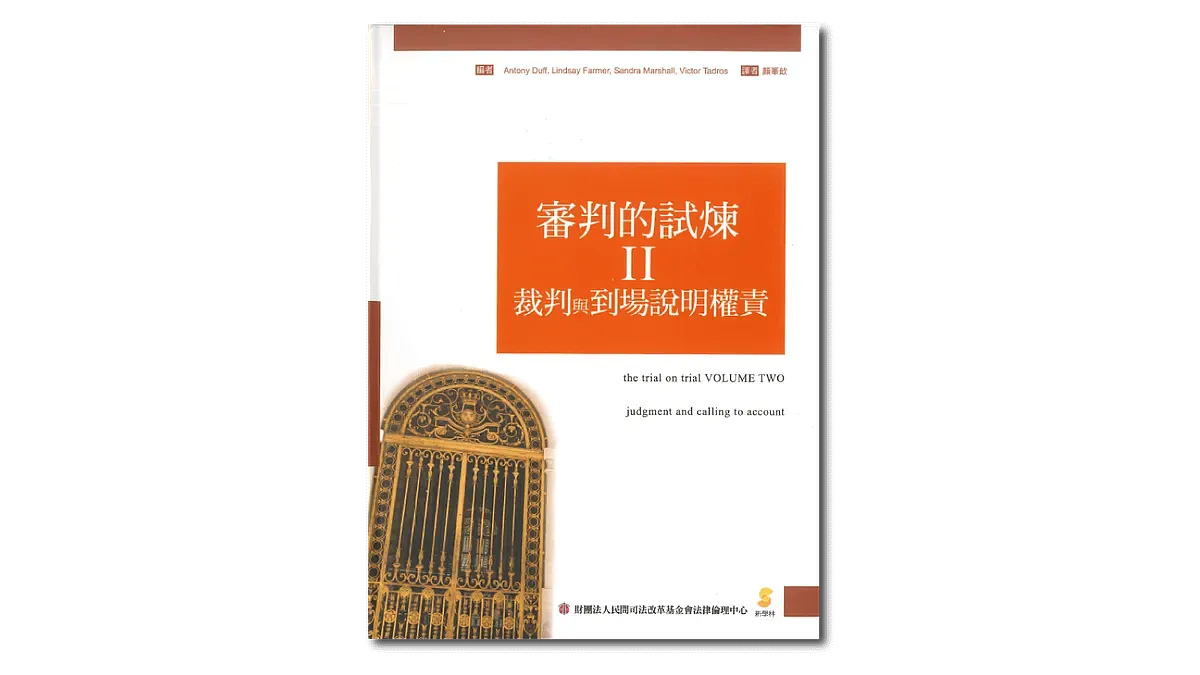
The Trial on Trial Ⅱ: Judgment and Calling to Account
Last edited: 2026-07-27
What is the purpose of the criminal trial procedure? What social function should it fulfill? In a democracy, what is the interactive relationship between the criminal trial procedure as a political institution and other institutions? Supposing we understand the criminal trial procedure as "requiring the defendant to offer an explanation regarding the unlawful acts for which the state accuses them, and if it is ultimately determined that they must be held responsible for the acts, the defendant should bear full responsibility," what comes next? A theory of the criminal trial system—that is, a set of theoretical foundations explaining how a trial should proceed and what goals the trial system should achieve—must seriously grapple with these core issues of the trial. Yet these are all difficult questions. These issues all point to the fact that a trial should be a process of communication: But what kind of content is it to communicate? Is the participation of the general public in the communication process appropriate or legitimate? What is the relationship between this communication process (and the rights generated within it) and the pursuit of truth? These questions further imply the issue of the political legitimacy of the trial system. Upon what political science theoretical foundation must this conceptually communicative trial system be established? Beyond the state's exercise of public authority over the defendant, does the trial hold a higher significance? In situations where a trial must address conflicts of power—that is, involving not merely individual criminal responsibility, but broader systemic wrongdoing, including violations committed in the name of the state—what role should the trial system play in the politics of the separation of powers?
The papers collected in this volume explore the aforementioned issues, which were presented at two conferences held in 2004. This book is the second of a three-volume series titled "The Trial on Trial". The primary objective of this series is to provide an appropriate normative theoretical foundation for criminal trials and to define their proper role in a democratic polity. The first volume of this series, "Truth and Due Process" (collecting papers presented at the 2003 conference), was published in 2004, and the third volume, in which the four editors of this book will each present their own normative theories, is projected for publication in 2007.
Table of Contents
- Preface
- Chapter 1
- Introduction: Judgment and Calling to Account
- Chapter 2
- Trials and "Fair Trials": From Peers, Objects to Citizens
- Chapter 3
- Theorizing the Criminal Process Tradition: Subjects, Objects, and Values in Criminal Justice
- Chapter 4
- The Speech Situation: Trials and Other Alternatives
- Chapter 5
- "Who Do You Think You Are?": Criminal Trials and Communal Identity
- Chapter 6
- Theorizing the Jury System
- Chapter 7
- It's Good to Talk—The Right to Speak and the Jury
- Chapter 8
- Democratic Accountability and Public Participation in Criminal Trials
- Chapter 9
- Sentencing and Calling to Account
- Chapter 10
- Political Trials and Reconciliation
- Chapter 11
- Offender Justice Procedures and Pedagogic Trials
- Chapter 12
- Why Trial When You Can Bargain for Justice?
- Chapter 13
- The Inquisitorial and Adversarial Conceptions of Trial
- Chapter 14
- Theorizing the Criminal Trial and the Criminal Appeals System: Finality, Truth, and Rights
This article is an AI-generated translation of the original Chinese text. In the event of any discrepancy, the Chinese version shall prevail.