
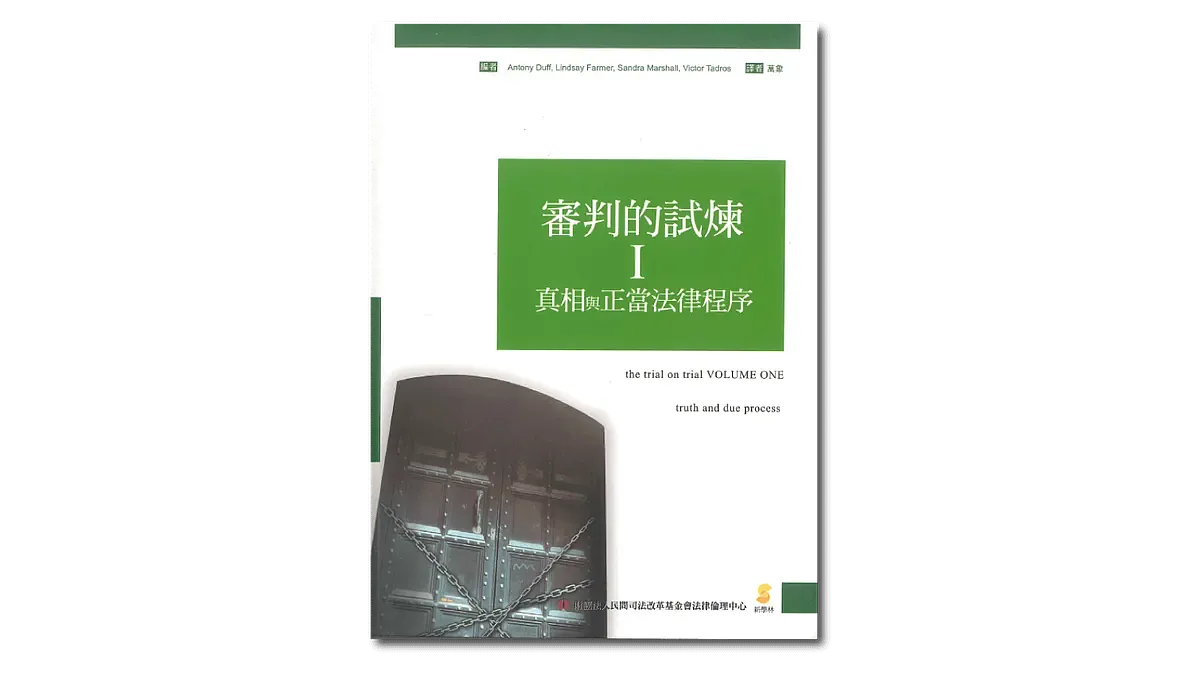
The Trial on Trial Ⅰ: Truth and Due Process
Last edited: 2026-07-27
The trial is the core of the criminal justice system's architecture. It is the procedure that links crime and punishment, as well as the venue for conviction and sentencing. Recently, the government proposed reform plans concerning criminal procedure and rules of evidence, intending to alter the status of trials within the criminal justice procedure and limit the role played by juries, which sparked intense controversy and demonstrated the enduring importance of trials. Even though trial by jury and the principle of protection for the right to a fair trial are extremely important, there is little theoretical discussion on the meaning of fair trials and criminal proceedings, the relationship between rules of evidence, procedure, and substantive law, or the functions and normative foundations of trial proceedings. In other words, it is necessary for us to construct the normative implications of criminal trials.
This book is based on two series of seminars held in 2003, focusing on the truth and due process of criminal trials. The chapters in this book explore whether procedures and rules of evidence, or criminal investigations and trials, all have the discovery of truth as their primary purpose. If so, what does that mean? The book analyzes various topics such as trial models, the meaning of due process and truth, the nature of evidence, and the legitimacy of trials. These topics are independent yet closely interrelated.
Table of Contents
- Preface
- Chapter 1
- Introduction: Constructing a Normative Theory of Criminal Trial
- Chapter 2
- Shifting Conceptions of Scottish Criminal Trial: The Duty to Agree – Uncontested Evidence
- Chapter 3
- Ritual, Fairness and Truth: Adversarial and Inquisitorial Models of Criminal Trial
- Chapter 4
- "Not Merely Illogical": Truth and Jury Nullification
- Chapter 5
- Criminal Trials and the Legitimacy of Punishment
- Chapter 6
- Testimony
- Chapter 7
- Managing Uncertainty and Finality: The Investigative Function of Criminal Trials
- Chapter 8
- Truth? Evidence, Impressions and Confessions of Truth in Criminal Procedure
- Chapter 9
- The Character of Trial Statements
- Chapter 10
- Objections That Cannot Be Heard: Communication and Legality in the Courtroom
This article is an AI-generated translation of the original Chinese text. In the event of any discrepancy, the Chinese version shall prevail.