

Distorted Judicial Statistics Destroy Prosecutors' Lives
Last edited: 2026-08-29
Photo / 2003 Judicial Reform Foundation Camp for Novice Legal Professionals. From left: Prosecutor Lai Ching-Hsiang, Attorney Chan Shun-Kuei, Prosecutor Ho Ke-Chang, Judge Chen Chin-Hsien
At the end of 1993, the author began serving at the Pingtung District Prosecutors Office, marking the beginning of an enduring bond with my senior colleague, Lai Ching-Hsiang. In fact, Lai Ching-Hsiang was only one cohort ahead of me and was of a similar age. Yet, as judicial officers who had studied modern Western jurisprudence, upon actually serving in judicial units, we discovered that Taiwan's judicial practice still retained China's traditional evaluation system for judicial cases. This created a profound dilemma when handling modern criminal cases: should we apply the modern legal principles taught by our professors at school, or should we comply with the administrative authorities' traditional Chinese evaluation system of "case closure"? Struggling between these conflicting ideals every day, after years of handling cases, one would either suffer from a split personality or lose half one's life if not die outright!
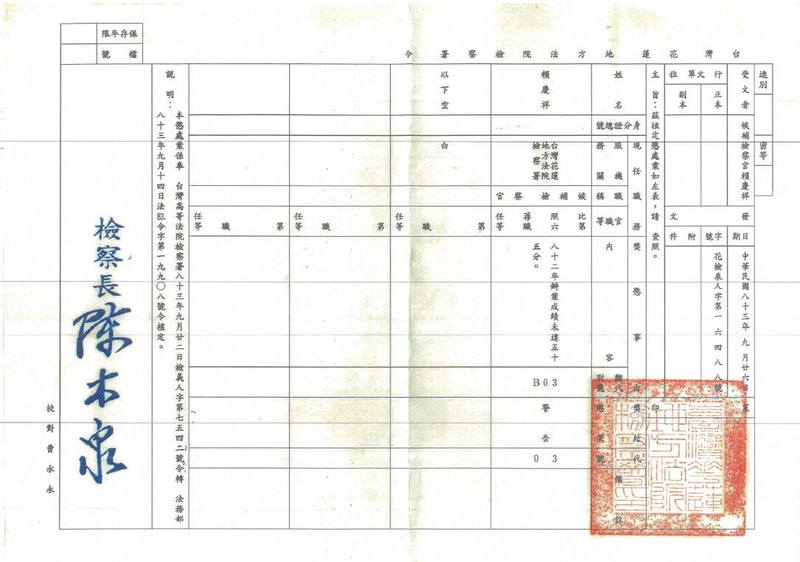 Figure 1: Order of the Taiwan Hualien District Court Prosecutors Office, 1993 (Click to enlarge)
In fact, in his second year as a prosecutor (1994), Lai Ching-hsiang received an official disciplinary order issuing a "warning" on the grounds that his "1993 case-handling performance failed to reach 55 points" (Figure 1). However, upon completing my first full year of service, I received an official reward and punishment order in 1996 granting "two merits" on the grounds of "no delayed cases throughout 1994 with excellent job performance." At the same time, however, Lai Ching-Hsiang received the very same reward and punishment order issuing "two demerits" on the grounds of "during his previous tenure at the Hualien District Prosecutors Office in 1994, there were 145 delayed cases for the entire year, constituting dereliction of duty" (Figure 2). At the end of the same year (1996), Lai received another official disciplinary order for "one demerit" on the grounds that "delayed cases throughout 1995 reached 27 cases, representing poor case-handling performance" (Figure 3). In other words, if prosecutors investigating criminal cases complied with the administrative authorities' internal rules and orders to close cases within the prescribed time limit, they could receive various rewards. Conversely, prosecutors who handled cases in compliance with modern criminal procedure jurisprudence were severely punished. Even more seriously, at the end of 1996, the Ministry of Justice directly transferred Lai Ching-Hsiang to Taitung without his consent. At that time, Lai's mother was in the terminal stage of cancer. Previously, it had been very convenient for Lai to visit his mother in Tsoying, Kaohsiung, after finishing work in Pingtung; but after being transferred to Taitung, he could only rush to Tsoying from Taitung after work, continuing this exhausting journey until his mother passed away. In fact, while serving in Pingtung, Lai Ching-Hsiang was one of our most outstanding colleagues. Working together with one heart and mind, his peers simply wanted to establish a peaceful society for the people of the Pingtung area, maintain legal order, and allow the public to live and work in peace. Practical experience indeed showed that criminal cases in the Pingtung area declined between 1996 and 1997, to the point where there were even periods with virtually no criminal cases to handle. From that moment on, I knew deep down what direction my life in this profession should take!
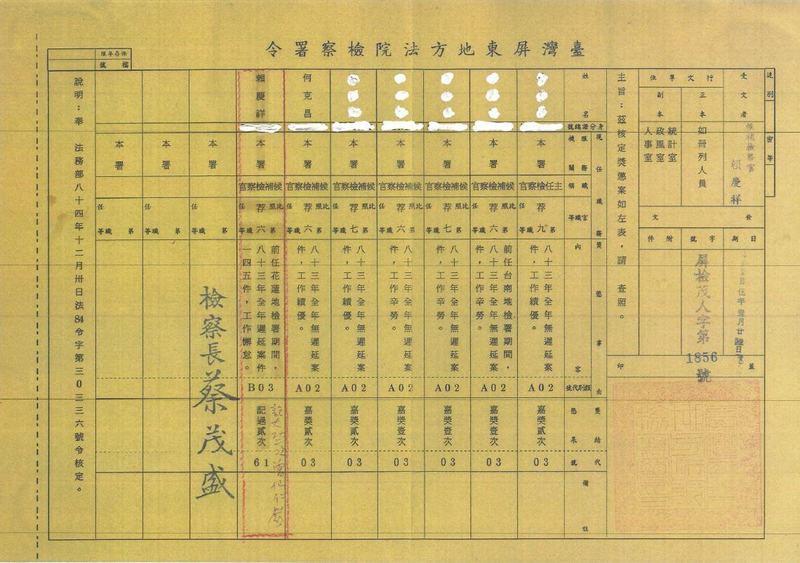 Figure 2: Order of the Taiwan Pingtung District Court Prosecutors Office, 1994 (Click to enlarge)
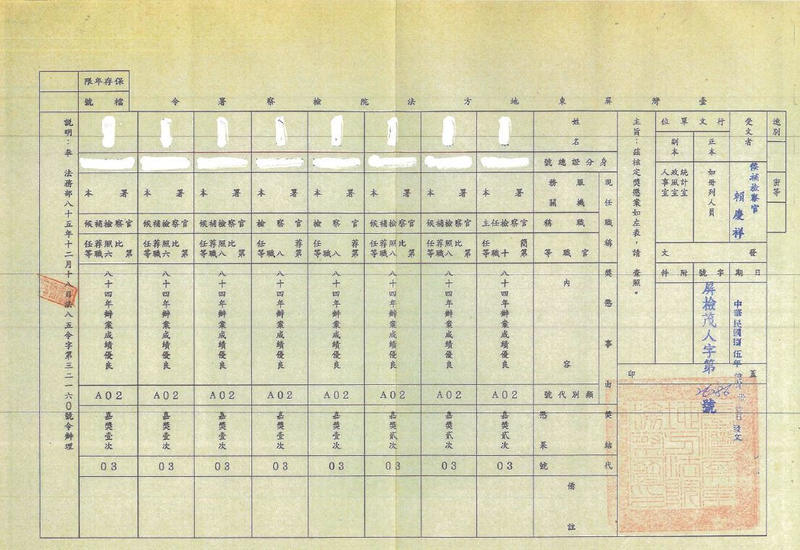 Figure 3: Order of the Taiwan Pingtung District Court Prosecutors Office, 1995 (Click to enlarge)
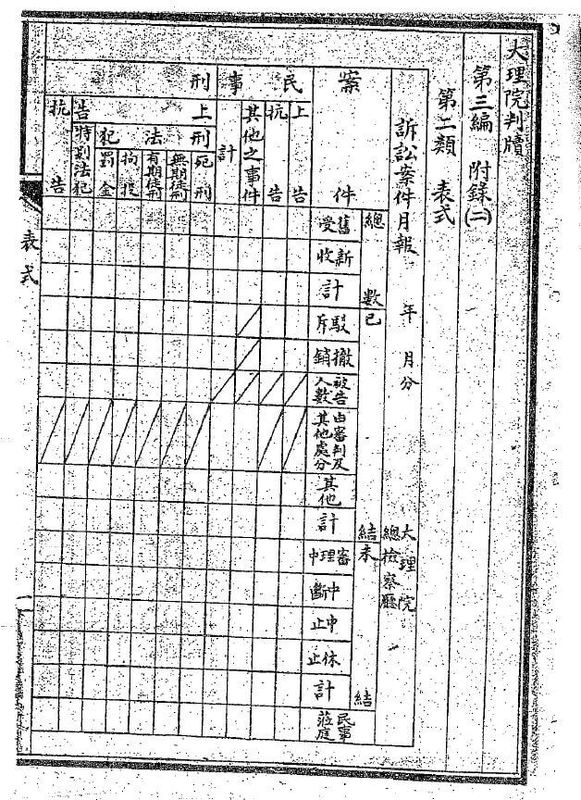 Figure 4: Judicial Statistics Table from the Ta-Li-Yuan Era (Click to enlarge)
Drawing on current judicial practice, the author provides further data for the reference of scholars and the public: comparing the early judicial statistics table from the Ta-Li-Yuan era (Figure 4) with the current judicial statistics table (Figure 5), apart from the fact that the earlier table was handwritten with a brush in a vertical format while the current table is typed on a computer in a horizontal format, there are no substantial differences in content. Previously, the Central News Agency published a statistical report on the number of cases received by prosecutors, indicating that prior to September 2004, each prosecutor handled an average of 190 cases per month. The author does not know how the "cases" in the aforementioned statistics were calculated, but anyone with a modicum of common sense knows that if every prosecutor in Taiwan truly handled 190 cases a month, our prosecutors' capacity for handling investigative cases would truly belong in the Guinness Book of World Records!
Assuming a monthly intake of 190 cases: out of 30 days in a month, subtracting eight days for four weekends, two days of official duty, and four days for holding court only one day a week, each prosecutor actually has only 16 working days per month. Averaging this out, each first-instance prosecutor would need to close 11.88 cases per working day just to balance the incoming caseload. Based on an eight-hour workday, each prosecutor would have to clear 1.5 cases every single hour. These 1.5 cases include conducting investigative actions and drafting legal documents, maintained continuously at a rate of 1.5 cases per hour in order to achieve the goal of clearing cases on the very same day they are received. Using a little common sense, is that even possible for our citizens to believe?
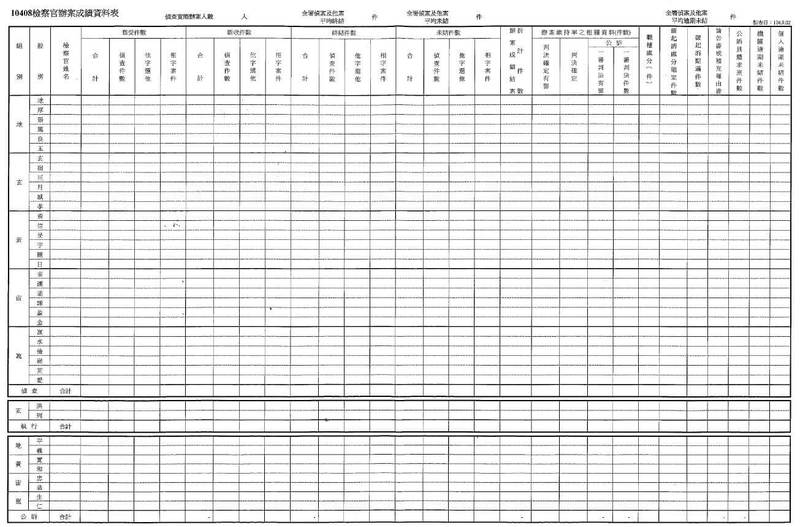 Figure 5: Current Judicial Statistics Table (Click to enlarge)
Even more absurdly, when the Court Organization Act was amended in 1980 to create the position of chief prosecutor, the Ministry of Justice reported to the Legislative Yuan that each prosecutor at the Taipei District Prosecutors Office "handled 30 cases per day." If that were true, wouldn't they receive 760 cases per month (given that the workweek at the time was five and a half days)? Comparing these figures, were prosecutors back then truly superhuman, or were these numbers simply manufactured?
In fact, Taiwan's judicial statistics have always lacked precision. Whenever administrative authorities demand higher accuracy in case data, the statistical figures for accuracy immediately rise; if they demand a reduction in pending cases, the pending case numbers immediately drop. Consequently, it is impossible to conduct proper evaluations based on true caseload volumes, and such figures even distort reality, preventing all sectors of society from understanding the core bottlenecks of the judicial system in order to seek improvement. Because statistical data is distorted, the real problems naturally remain obscured.
This not only severely undermines public trust in the judiciary, but also deters prosecutors from proactively investigating difficult cases.
Because the current judicial evaluation system judges the competence of a judicial officer based on the "number of pending cases," and because the calculation of case numbers is based entirely on "case serial numbers" (since administrative personnel only understand case serial numbers) rather than "actual cases" (whereas the concept taught by school professors is that "one defendant" and "one criminal fact" constitute "one case"—the most fundamental criminal "case" concept for law school students, as well as the basic criterion confirmed by judges, prosecutors, and defense counsel in court to determine whether a case has been concluded, and a frequent topic on judicial examinations to verify whether candidates understand the meaning of a modern criminal "case"), judicial officers are incentivized to believe that simply eliminating "case serial numbers" makes them outstanding judicial officers. For example: if a suspect under a single case serial number is implicated in both drug trafficking and drug use, since drug use is easier to investigate, the prosecutor might indict the drug-use portion alone to eliminate that case serial number while ignoring the more fundamental drug-trafficking portion. Because both allegations were filed under the same case serial number, the suspect's alleged drug trafficking is formally concluded as well. Over time, who would be willing to painstakingly investigate the truth of criminal cases? The crime-fighting function of judicial officers fails to materialize, and public trust in the judiciary is compromised along with it.
As the saying goes, numbers don't lie. However, lacking rigorous standards and categorization—and even worse, manipulating statistics through administrative directives to meet social expectations—such statistical figures will likely convey information that is the exact opposite of the truth. What is the point of publishing such statistics?
Administrative authorities often propagate to the public that "justice delayed is justice denied." In reality, under the current judicial statistical operational model, citizens not only fail to receive "justice delayed," but receive no "justice" at all.
The original design of the prosecutorial system placed its primary function on investigation. Due to the lack of rigor in judicial statistics—where statistical data even yields results contrary to investigative performance—the exercise of prosecutorial investigative powers is severely skewed. When prosecutors come to view investigation as a formidable chore, the severity of the problem mutilates the judicial character of prosecutors. Lai Ching-Hsiang insisted on investigating "cases" rather than "case serial numbers," and for this persistence sacrificed his lifelong reputation and life. Therefore, how can we not handle statistical data with the utmost care?
In fact, the problem of accumulated backlogs in the judiciary is not unique to the present day. The scholar Juan Yi-Cheng once recorded: As my late father stated, "In the busy prefectures and counties of the past, whenever the 3rd and 8th days of the petition period arrived, there were invariably over a hundred submissions. With six periods in a month, that amounted to some 600 submissions. Although follow-up reviews and reminders constituted the majority, even if new cases were conservatively estimated at twenty percent, there were still a hundred matters. As for how many could actually be tried and concluded, there has never been a clear statistic (daily reports were largely fabricated). However, as prescribed by the Jiangsu Provincial Regulations in the 7th year of Tung-Chih in the Ching dynasty (1868): where cases originally reported within three months exceeded twenty, a 100% trial completion rate was required (roughly 7 completions per month); where they exceeded thirty, a 90% completion rate (roughly 9 completions per month); where they exceeded fifty, a 60% or higher completion rate (roughly 10 completions per month); where they exceeded one hundred, a 50% or higher completion rate (roughly 17 completions per month): all merited a major recorded merit." Yet, "in the past, prefectures and counties receiving major merits for concluding cases were extremely rare. (There were occasional instances where legal aides fabricated trial-conclusion records for lawsuits simply to offset recorded demerits.) Thus, the backlog of cases can well be imagined." Taiwan's current evaluation methods are virtually identical to the evaluation system of the Ching dynasty described above. The only difference is that during the Ching dynasty, case closures could still be categorized based on the volume of cases received, whereas under the current evaluation system, regardless of the number of cases received, prosecutors are forced to "find a way" to clear them all. Otherwise, at year-end accounting, those with higher numbers of pending cases face disciplinary actions such as reprimands, demerits, and inferior performance ratings, which serve as the basis for future transfers, promotions, further education, and inspections. Whether a prosecutor's investigative substance is thorough is completely excluded from the evaluation. This drives prosecutors to compete in rapid case closures as their top priority, sometimes reaching over a hundred closed cases a month, or adopting a "same-day receipt, same-day clearance" approach where judicial "cases" are treated merely as administrative "official letters" in pursuit of speed—disregarding the fundamental essence of judicial cases in pursuing truth, fairness, and justice. Thus, the public's distrust of the judiciary has deep roots.
In fact, solving the problem of judicial case backlogs is not without modern judicial evaluation methods. Former Grand Justice Chang Te-Sheng, in his book "New Trends in Judicial Reform in America," mentioned the backlog problem in the American judiciary. However, the United States did not solve its backlog problem by adopting the Taiwan version of "case closure (eliminating case serial numbers)," but rather by strengthening administrative management and applying modern scientific technology and administrative management methods to the judicial system to cope with the ever-increasing volume of litigation. For instance, the Institute for Court Management was established at the University of Denver in the U.S. state of Colorado between 1969 and 1970 to train court administrators in administrative management techniques such as personnel management, financial management, and system analysis. In contrast, our country's judicial administrative management relies on bureaucratic staff from administrative agencies rather than functional, professional technical staff matched to judicial characteristics. Taking judicial statistics as an example, the counting of case numbers relies purely on "sequential numbers," which not only contradicts legal theory regarding litigation cases, but also fails to account for the varying complexity and difficulty of different cases, nor does it incorporate weighted values. This causes statistical information to become disconnected from reality, sometimes even yielding results that contradict actual facts. Moreover, low administrative efficiency interferes with the progress of investigations. Yet, to cater to society's demands for investigative performance, judicial administrative departments blindly pressure prosecutors to close cases as quickly as possible to give an account to the public, while the truth of the cases and the rights of the parties involved are naturally abandoned.
Furthermore, evaluating whether a judicial officer is fit for office is not without modern evaluation systems. Austria's Judges Appointment Act stipulates that judge evaluations must cover: (1) Professional knowledge. (2) Capability and perspective. (3) Diligence, perseverance, prudence, reliability, judgment, and the ability to pursue objectives. (4) Tests inside and outside of official duties. (5) German language expression skills, limited to what is necessary for official duties. (6) Interpersonal relationships with colleagues. Similarly, the Saxony judicial evaluation regulations in Germany divide evaluation items into: (1) Professional knowledge, (2) Comprehension ability, (3) Oral expression ability, (4) Written expression ability, (5) Processing capacity, (6) Interpersonal conduct, (7) Communication skills, and (8) Resilience. Yet 21st-century Taiwan still focuses its evaluations on "eliminating investigative case serial numbers." No wonder our judicial officers are unable to refine their reasoning abilities or cultivate a macro international perspective!
Reviewing the case-management and evaluation system dating back to the Tung-Chih era of the Ching dynasty, which has been carried over unchanged into Taiwan's modern prosecutorial system, is an international joke in the modern judiciary. Today, Lai Ching-Hsiang used his life to resist the administrative authorities' evaluation system. If this can awaken the conscience of the administrative authorities, then Lai Ching-Hsiang's passing holds epochal significance. If the administrative authorities remain ignorant and unenlightened, citizens encountering judicial cases can only pray for their own good fortune! May God bless Taiwan!
This article is an AI-generated translation of the original Chinese text. In the event of any discrepancy, the Chinese version shall prevail.