
Mainland China's Draft Amendment (Nine) to the Criminal Law Sparks Objections from Attorneys
Last edited: 2026-07-27
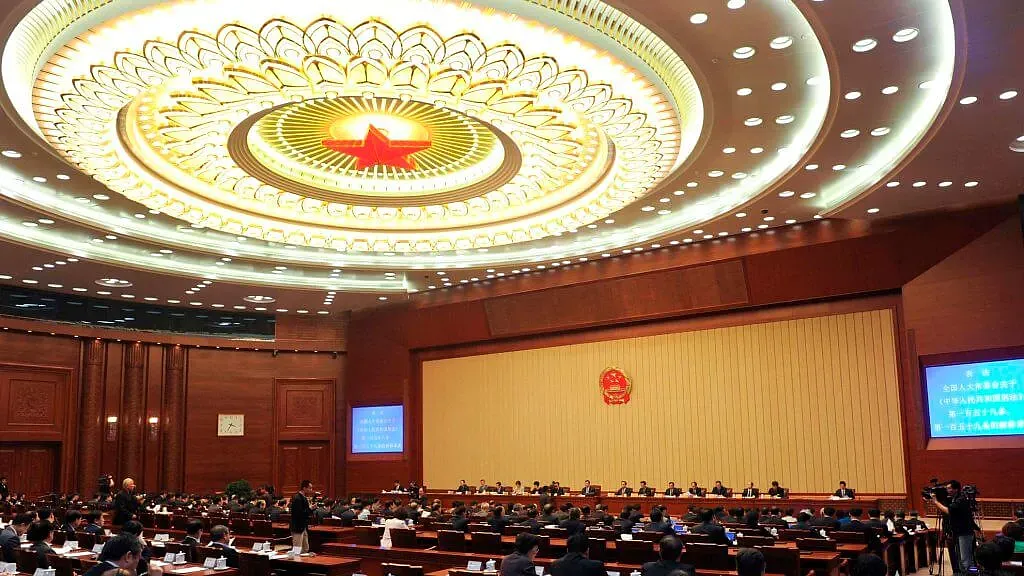
Recently, the Standing Committee of the National People's Congress in mainland China deliberated on the Draft Amendment (Nine) to the Criminal Law. The draft proposes extensive revisions across forty-six items, one of which targets attorneys and has drawn widespread opposition. Nearly six hundred attorneys have jointly signed a petition demanding the removal of this specific amendment.
The provision causing dissent among attorneys is the thirty-fifth item of the draft, which proposes amending Article 309 of the Criminal Law to read as follows:
Whoever commits any of the following acts, thereby seriously disrupting courtroom order, shall be sentenced to fixed-term imprisonment of not more than three years, criminal detention, public surveillance, or a fine:
- Gathering crowds to create a disturbance or storming the courtroom;
- Assaulting judicial personnel or participants in the proceedings;
- Insulting, slandering, or threatening judicial personnel or participants in the proceedings, and refusing to desist upon the court's orders; or
- Engaging in other acts that seriously disrupt courtroom order.
By contrast, the previous provision stated: "Whoever gathers crowds to create a disturbance, storms the courtroom, or assaults judicial personnel, thereby seriously disrupting courtroom order, shall be sentenced to fixed-term imprisonment of not more than three years, criminal detention, public surveillance, or a fine."
Compared to the original provision, this amendment criminalizes "insulting, slandering, or threatening judicial personnel or participants in the proceedings, and refusing to desist upon the court's orders," while also adding a catch-all clause: "engaging in other acts that seriously disrupt courtroom order."
There are profound practical reasons and complex judicial conditions behind the inclusion of such provisions in the draft amendment.
In recent years, with the development of internet technology, a group of highly principled "die-hard attorneys" (死磕律師) has emerged in mainland China—attorneys who openly say no to judicial injustice. These attorneys are meticulous about procedural rights, demanding that the procedural rights prescribed by law be strictly and thoroughly implemented in judicial practice. When they encounter law-bending officials infringing upon the statutory procedural rights of defendants in criminal cases, these attorneys resolutely resist while utilizing self-media for exposure and public opinion oversight. Such resistance occurs at every stage of criminal proceedings, starting from the right to meet with clients. When the right to meet is violated, they resort to complaints, accusations, lawsuits, holding up placards, and even hunger strikes to fight for the realization of their statutory rights. This resistance also frequently occurs inside the courtroom. When the court fails to fully guarantee the procedural rights of the defendant or when the court is manifestly unfair, these attorneys refuse to cooperate with the court in merely going through the motions. Instead, they firmly demand in court that procedural rights be guaranteed in accordance with the law, that the court conduct a fair trial, and they say no to the court's unlawful acts.
Meanwhile, "emphasizing substantive law while neglecting procedural law" is a prominent characteristic of mainland Chinese courts; that is, clear legal procedures are not taken seriously. (For instance, although the Criminal Procedure Law explicitly stipulates that the defendant must be notified three days prior to a scheduled trial date, courts rarely notify detained defendants three days in advance. The court's rationale is that since the defendant is already detained, they can simply be brought in whenever the trial is to be held, without considering the need to give the defendant time to prepare for trial.) Previously, almost no one and no attorney would seriously and forcefully fight for procedural rights for defendants in the courtroom. Consequently, when encountering attorneys who meticulously demand the implementation of procedural rights, the courts are deeply unaccustomed to it, giving rise to "bench-bar conflicts." At times, these conflicts become quite intense; in recent years, numerous incidents have occurred where attorneys were forcibly expelled from courtrooms for asserting procedural rights.
A normal courtroom should naturally enjoy supreme authority, and judicial personnel deserve the respect of the people, especially participants in proceedings—this is a fundamental common sense of justice. However, the authority of a court stems first from its fairness, and its fairness first requires it to be independent. Yet, mainland Chinese courts cannot fully achieve either of these points at present, particularly in major criminal cases and major "sensitive" political cases (encompassing both grand national politics and localized petty politics). "Bench-bar conflicts" often erupt under these circumstances. On one hand, the court needs to smoothly and swiftly rush through the formalities of the trial; on the other hand, defense counsel insists on fighting for the law—sometimes making desperate "courtroom disturbances." Currently, there is no prompt and effective solution to the contradiction between these two sides.
To a certain extent, the resistance of principled attorneys in the courtroom creates the appearance that defense counsel is refusing to obey court directives and challenging judicial authority, thereby further diminishing judicial authority. But this is merely an appearance; the real situation is far more complex. The "bench-bar conflict" is perhaps an extremely unique phenomenon in judicial practice worldwide. The most fundamental reason still lies in the lack of independence and fairness of courts and courtrooms. Sometimes, a trial is conducted merely to fulfill a "political task," in which case it has little to do with the law, yet it must maintain the appearance of being "tried in accordance with the law." When a principled attorney is encountered under such circumstances, the performance becomes difficult to enact smoothly, and the attorney's lawful insistence creates great inconvenience for the court in trying such cases. Of course, one cannot entirely rule out situations where certain attorneys abuse litigation rights to achieve personal goals, but such instances are rare after all.
In fact, the fundamental way out of this dilemma lies in enhancing judicial independence, strengthening judicial fairness, safeguarding the procedural rights of parties, and ensuring procedural justice. However, these issues are extremely difficult to resolve, especially judicial independence. Therefore, while evading the fundamental problem of judicial independence, and in order to resolve the current predicament faced by the courts, lawmakers—some of whom hail from judicial systems such as courts and procuratorates, or are heavily influenced by them—have chosen to start by cracking down on principled attorneys. They presumably believe that once these principled attorneys are suppressed, the courtroom will become quiet, and trials can proceed smoothly according to the court's design, thereby enabling the court to successfully complete its tasks.
This is roughly why I believe Mainland China's Amendment (Nine) to the Criminal Law incorporates such a revision.
Attorneys worry that once passed, such an amendment will become a Sword of Damocles perpetually hanging over their heads, preventing attorneys from daring or being able to resist the unlawful acts of the court in the courtroom. It will place attorneys who dare to stand on principle in the courtroom at constant risk of retaliatory strikes by the court. For criminal defense attorneys, especially human rights lawyers, this will be yet another tight hoop placed around their heads.
Furthermore, attorneys also worry that the language of such revisions is vague, overly subjective, and that the discretionary power of application remains in the hands of the vested-interest courts. If passed, it will become yet another catch-all offense used to crack down on attorneys, making them vulnerable to charges at any turn and risking imprisonment for simply doing their jobs. Should such a situation materialize, it would represent a massive regression for the rule of law.
Therefore, this particular amendment has provoked a joint petition of opposition from nearly six hundred attorneys nationwide. Whether this joint petition will be effective remains to be seen. What is certain is that the lives of criminal defense attorneys in mainland China, particularly human rights lawyers, have never been easy.
This article is an AI-generated translation of the original Chinese text. In the event of any discrepancy, the Chinese version shall prevail.