
Reflecting on the Structural Dilemma of the Judiciary through the Ting Hsin Case
Last edited: 2026-07-27
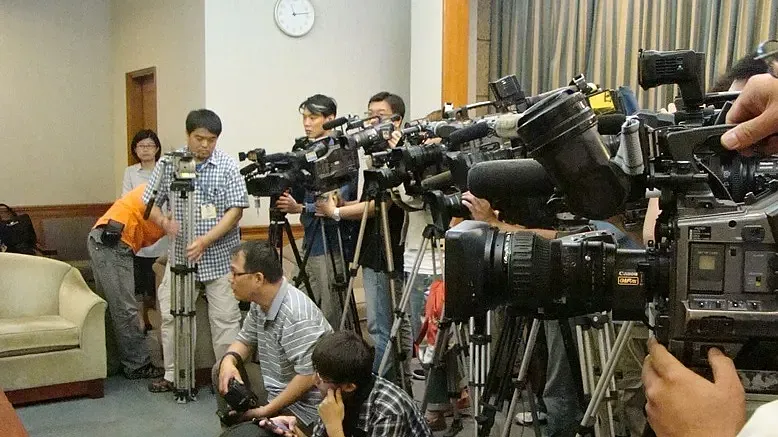
Following the first-instance judgment in the "Ting Hsin case," media coverage burned on for a full week. Once the judgment was published online, quite a few reporters printed out all 248 pages (not including attachments) and poured over them intensely. Coupled with endless analyses from various parties, there was momentarily an atmosphere of "the whole nation reading the judgment." This phenomenon felt moving; if courts are willing to "grasp the key points" of judgments, it should be even more helpful for everyone's understanding. Furthermore, as previously mentioned in the article
There have already been quite a few commentaries on the substantive content of the judgment, with the focus largely concentrated on accusing the judges of concluding that the Vietnamese oil company's product—which was obviously problematic (feed) oil—was deemed unproblematic. Conversely, some argue that the judges did not say this; rather, the prosecutor was simply unable to prove that the raw oil from Vietnam was problematic, unable to prove that the raw oil came from unhealthy pigs, and unable to prove that the raw oil contained toxic or harmful substances to the human body—attributing it merely to the prosecutor's inadequate evidence-gathering prior to indictment. Some criticisms even pointed out that the prosecutor continually changed the scope of the indictment and gathered evidence during the trial, which also violated procedural rules. Many of these commentaries are brilliant and each has its own focal point; I cannot hope to add a clumsy continuation. This article focuses solely on the structural dilemma behind why the judgment in the Ting Hsin case was unpalatable to the public.
Non-Disclosure of Investigations and Public Participation in Trials
There are numerous causes for the public's rejection of this acquittal. We perhaps cannot simply respond by saying "the people do not understand the law" or accusing this of being merely a "populist public trial." The entire populace has been angered, requiring a more nuanced dialogue; otherwise, it will only further manifest the arrogance of the legal strata.
First, an evaluation should be made as to whether the principle of "non-disclosure of investigations" was thoroughly implemented. When prosecutors indicted the defendants and sought a prison sentence of 30 years, public opinion cheered unanimously, and it seemingly became a victory for the "Whole People Exterminate Ting Hsin" movement. The court's acquittal was met with a chorus of condemnation, which was naturally related to this expectation "endorsed" by the prosecutors. During the investigation of this case by police and prosecutors, were there any violations of non-disclosure of investigations? And was seeking a "heavy sentence" specifically appropriate?
Non-disclosure of investigations has three main purposes. One is to ensure the smooth progress of the investigation, hence the need for secrecy and non-disclosure. Another is to protect the reputation of suspects; excessive disclosure causes damage to reputation and character that cannot be remedied even if an acquittal is ultimately finalized (think of Mr. Lü from "Mom's Touch"), which also violates the presumption of innocence. Additionally, it is necessary to maintain an environment for a "fair trial." If public opinion is already boiling, and police and prosecutors leak information based on their own "naive sense of justice," adding fuel to the fire and letting media coverage rage—or even "bidding high and seeking heavy sentences"—the court's acquittal will find itself in a difficult predicament. The result, as seen in the Ting Hsin case, is sacrificing the image of the judiciary and deepening public distrust.
Secondly, ordinary people naturally do not understand the law, which is forgivable, but precisely who has the responsibility to dialogue with people who do not understand the law? And how should that dialogue be conducted? Furthermore, among these "people," there is no shortage of numerous food science professionals who have raised criticisms of the judiciary; some were even appointed as expert witnesses. They possess a high degree of professional capability. Are the questions they raise toward legal professionals reasonable? Moreover, the criticisms of some individuals may merely stem from an inability to operate legal terminology with great precision, yet they still possess sound legal sentiments worthy of deep interpretation. Otherwise, if someone simply uses the wrong terminology, is it appropriate to dismiss their words entirely on that basis?
Amidst public distrust in the judiciary, advocacy for certain institutional reforms naturally arises, such as advocating for a jury system. To put it bluntly, a jury system allows jurors and judges to each share half of the adjudicative power, serving precisely as an institution through which the public expresses its distrust of professional judges. Judge KAO CHIEN-CHIH wrote an article titled
In other words, attempting to achieve a "heavy sentence" in the Ting Hsin case through the introduction of a jury system reflects a misunderstanding of the characteristics of a jury. Of course, some also believe that the quality of Taiwan's populace remains low and populism is relatively high, and that rashly adopting a jury system means importing populism into the judiciary. This concern is not entirely groundless, but without empirical evidence, practical implementation, and the formulation of supporting preventive measures, it is merely a hollow and intuitive guess.
If the Ting Hsin case had been tried before a jury, the argumentation and adversarial exchanges would have been more colloquial and intense. I believe that during the trial process, it would also have become the focal point of public attention and discussion day after day. Assuming the information received by the jurors and judges was identical, because a jury's evidence must be disclosed openly in court and presented bit by bit, even if the accumulated evidence ultimately failed to prove the facts of the indictment, the impact of such an acquittal might be somewhat less shocking than a sudden, one-time pronouncement of acquittal.
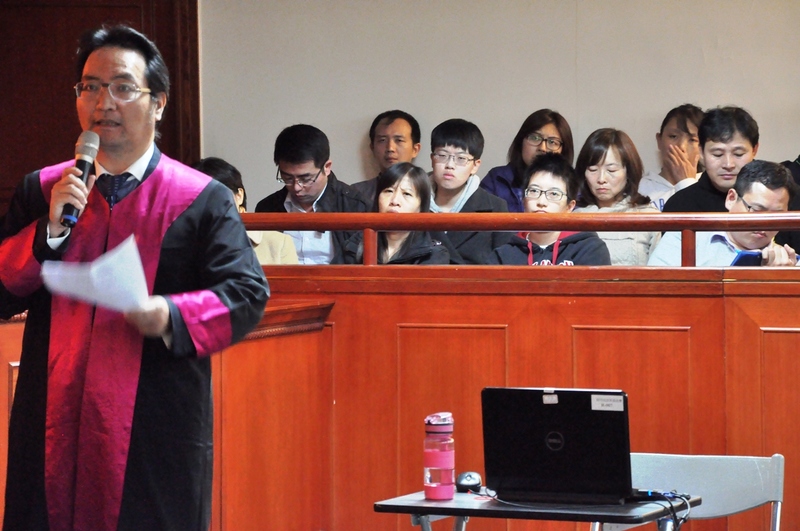
At the same time, the professional skepticism of food science experts would be more easily and precisely presented. Both prosecutors and defense counsel would have to pull out all the stops to explain matters until all jurors (meaning ordinary people) could understand, leaving the court with less need to bear criticisms of having "insufficient professional knowledge regarding food."
Meanwhile, during their deliberations, if a juror stated that "the source of food products should be governed by the principle of presumption of guilt," they probably were not arguing that the defendant should be presumed guilty, but rather that raw cooking oil ought to have a "birth certificate." Furthermore, this birth certificate should be jointly guaranteed, certified, and provided by upstream and downstream oil refineries. If they cannot provide and prove this, it should be regarded as having a "problematic source."
Of course, this kind of "problematic source" constituting a legal violation might not belong in the realm of criminal illegality, but should instead be handled as administrative illegality. Businessmen pursue profit at the expense of all else; if administrative regulation imposes heavy penalties whenever sources cannot be proven, this would surely be a more effective measure than criminal punishment. After all, what the public cares about is food safety; sending people to prison is still less important than consuming healthy food.
Judicial Courage Amidst Impotence
In fact, rather than saying judges provoked public outrage by letting Ting Hsin off, it is more accurate to say that judges rose up to resist the criminal ideology of "heavy sentencing," thereby sparking incomprehension. Such judicial power is indeed possessed of great responsibility and courage; it not only slapped the Legislative Yuan—which legislates for heavy sentencing (by narrowly interpreting food safety as a "concrete endangerment offense")—across the face, but also showed no regard for the executive branch (including the Ministry of Justice), which frequently endorses populist legislation. This is precisely the true character that judicial power ought to possess: countering the executive and legislative branches.
Regardless, the main focus of this article is not to argue that a jury system is necessarily superior to adjudication by professional judges, but rather to point out that collective judicial corruption occurred as recently as 2010, and the infighting between the Minister of Justice and the Prosecutor-General took place in 2013. The public's collective perception of the judiciary is poor, and its level of trust remains limited. Relying solely on a few individuals' adherence to legal principles is still insufficient to reverse the general public's impression of the judiciary; structural adjustments and reflection are needed. Strictly upholding the principle of non-disclosure of investigations is one such measure, and introducing public participation in trials may be another. Adopting public participation in trials, especially a jury system, is indeed costly. However, issues of economic efficiency cannot be evaluated merely through a single case; they involve the deeper and broader impacts of judicial image and rule of law education.
※ Originally published at: PNN PTS News Issues Center
This article is an AI-generated translation of the original Chinese text. In the event of any discrepancy, the Chinese version shall prevail.