
JRF Newsletter
When Citizens Step Into the Courtroom—An Exclusive Interview with Judge Tsai Chih-hung
Last edited: 2026-07-27
Dear Friends,
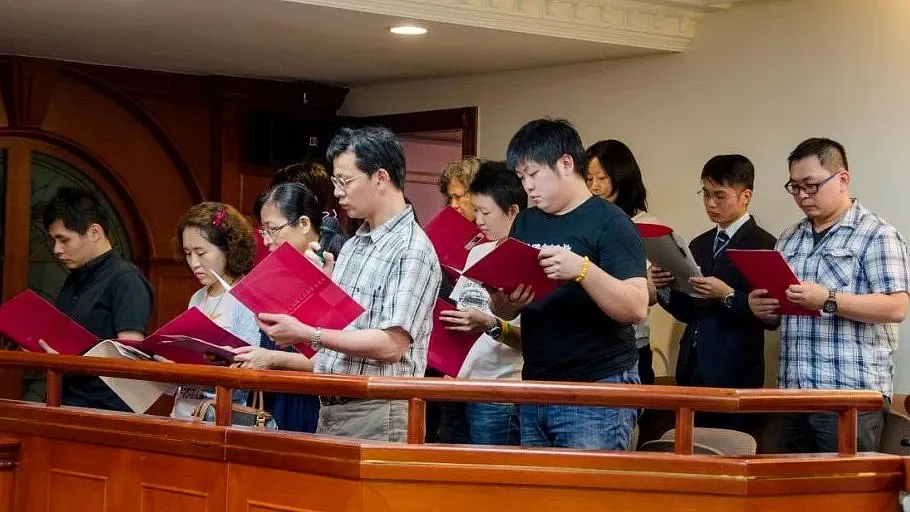
Merry Christmas! This year, the JRF held mock jury trial events in July and October, respectively. This issue of our e-newsletter features an interview with Judge Tsai Chih-hung, who presided as the judge in the first event. In addition to participating in the mock jury trials organized by civil society, Judge Tsai also took part in the mock trials for the participatory adjudication system organized by the Judicial Yuan. Let us listen to Judge Tsai share his insights on mock trials.
Furthermore, we will hold our third mock trial on January 31 and February 7, 2015. We cordially invite all our friends to participate.
Q: Why did you decide to participate in the mock jury trial?
I have always been curious about and drawn to the jury system, because the trial style of professional judges currently seems to be facing a dilemma. Even though judges may review cases diligently and write meticulous judgments—spending a great deal of time on them—there is always a disconnect with the people and no connection with society. Our sense of professional achievement is limited and low, and the effectiveness of communication between judges and society is poor. The jury system is different; it may even be at the complete opposite extreme. Most verdicts are generated based on the people's sense of substantive legal justice. Although their judgments do not require explicit reasoning, this may be a way of responding to public opinion, and the process is one that the parties can choose. You can choose to have a judge adjudicate your case; if you do not want that, you can choose to have a group of people arbitrate for you. Therefore, I believe the state can introduce the jury system in some form to resolve the current judicial dilemma.
In addition, I pursued advanced studies in the United States from 2009 to 2010, where I had the opportunity to intern at a U.S. court and witness firsthand how a jury operates. This sparked my interest in considering whether it is possible to try this on Taiwan's soil.
Q: What are your overall impressions of the mock jury trial on the day of the event?
First of all, the overall operation on the day did not encounter too many unexpected situations. It largely matched my imagination of how a jury system operates, and there were no phenomena that made me feel unable to control the proceedings or that deviated from the purpose of the procedure. Although there were some seemingly unexpected events, those were scenarios we specifically designed to serve as material or questions for subsequent research.
Observing the jurors' deliberation process, I found that the deliberations of citizens without legal professional backgrounds do not actually differ much from those of judges, and the issues they grasped were quite similar. Moreover, the problems that arise during the process of reaching a verdict are also very similar. Based on my personal internship observations and the opinions of my U.S. supervising instructor, the consistency between jury verdicts and a judge's own decisions is usually quite high, which is also a rather interesting phenomenon.
Q: During the mock trial, you specifically spent 15 minutes giving jury instructions. What was the purpose of doing this?
Many people asked me why it was necessary to read the jury instructions for so long on the day of the event—wouldn't it be enough just to hand them out to everyone! In fact, physical copies were indeed provided to every juror on the day, but I still specifically spent 15 minutes delivering the jury instructions. The key point is that jury trials do not come with written reasons for the verdict; therefore, the legitimacy of the entire verdict is embodied in the "procedure." If you know that these 15 minutes will affect a person's life—or even their survival—you will not feel that the time is too long. The cases simulated so far are not yet very complex, but in actual future operations, even longer periods of time might be necessary.
For the judge's instructions used in this simulation, I chose the version from the Canadian Judicial Council because it provides an explanation of "beyond a reasonable doubt." My past observations of mock participatory adjudication showed that defense attorneys in court tend to shake the quasi-judges' standards regarding "beyond a reasonable doubt," attempting to tell the jurors: "As long as you feel something is a bit strange about any part of the case, you must acquit." But in fact, this doubt must be a "reasonable" doubt; having "any" doubt does not allow one to deduce an acquittal.
I feel that even legal professionals may not necessarily have a clear understanding of "beyond a reasonable doubt," so it is necessary to provide a clear explanation of this part during the early stages of mock jury trials. Even if it is eventually decided not to adopt such jury instructions when the system officially launches, I believe that in the initial mock jury trials, I had an obligation to propose this approach for society to examine or discuss.
Q: In your opinion, what is the difference in the judge's role between the jury system and the current trial system?
Under the current trial system, judges often handle everything from start to finish—from identity interrogation and the presentation of evidence to ultimately writing the reasoning for the judgment. Even after the verdict is handed down, someone may still feel aggrieved and that the judgment is unfair. The jury system can more comprehensively implement public trials and complete substantive adjudication within the courtroom. To persuade non-legal professional jurors, prosecutors and defense attorneys must use language that the general public can understand, prepare more diligently for courtroom battles and arguments, and avoid relying on written documents. On the other hand, when I was interning in the United States, I also discovered that if jurors find themselves unable to reach a verdict, it is a huge blow to the prosecutor. Therefore, prosecutors will try their utmost to prepare sufficient evidence for the jurors to weigh in their judgment.
Furthermore, structurally, it can resolve many preexisting problems. Under a jury system, judges are better able to achieve true neutrality. The judge's role lies in ensuring the fairness and openness of the entire trial procedure; the focus is not on the outcome of the verdict, but on the completeness of procedural due process, leaving the verdict itself to the jury.
Q: The Judicial Yuan once argued that Taiwan is unsuited for the jury system on the grounds that "verdicts rendered by citizens lacking legal literacy are prone to misjudgments." Do you think ordinary people without a legal background face difficulties in making factual determinations and deciding the scope of sentencing in a verdict?
I must emphasize that the jury system does not mean judges do nothing and completely dump the trial onto the people. Judges must oversee whether the process of generating the verdict complies with "due process." Taking the mock trial on the day of the event as an example, when a certain witness's testimony included emotionally charged and aggressive language, the judge had to intervene at the appropriate time to remind the jurors not to be influenced by the witness's emotional language. The judge has an obligation from start to finish to ensure that the proceedings can be conducted normally. If there are no problems throughout the entire trial process, we then accept the final verdict.
As for laypeople finding it difficult to make decisions in a verdict, I believe that is the responsibility of legal professionals. We must speak a language that people can understand so that others can understand us; we cannot constantly use professional jargon that people cannot understand and then blame others for not understanding. We should ensure through procedures that jurors are able to understand and participate, rather than denying the ability of laypeople to make factual determinations. In fact, the core matter of making factual determinations is related to personal life experience, whether for a judge or a layperson. That is to say, factual determination has nothing to do with legal knowledge. Matters related to the law must be clearly explained by the judge during the trial process and the direction of litigation. These are precisely what society eagerly anticipates today.
Q: In your opinion, what is the most important purpose of introducing a system of citizen participation in trials?
I have been pondering the issue of judicial democratization. I believe judicial democratization has two dimensions. The first dimension is that the entire process and outcome of a verdict are no longer determined solely by judges, but rather through a division of labor between the people and judges, producing the verdict together. The second dimension is that the parties have the right to choose and autonomy, allowing them to truly decide whether their case is tried by professional judges or by a jury, enabling the defendant to use certain procedures to choose the people who will decide their fate. In the development and evolution of human civilization, I think the jury system should be considered the highest guarantee of procedural rights for defendants, allowing them to choose the people who decide their fate and elevating the protection of the defendant's procedural subjecthood to the highest standard. However, these are merely procedural aspects. In existing human civilized societies, there is no trial system devoid of miscarriages of justice and wrongful convictions. Even in the United States, they acknowledge that the jury system is not a perfect system. Therefore, introducing the jury system will not eradicate wrongful convictions; judges can make mistakes, and jurors certainly can too. Consequently, the value trade-off in whether to introduce citizen participation in trials is: is society willing to pay the cost to enable parties to have the highest degree of procedural autonomy?
In addition, although the participatory adjudication system currently sought to be promoted by Taiwan has the advantage of swift implementation, the barriers of professional walls and gaps in case comprehension that currently exist in courtrooms remain difficult to eliminate. Because the participatory adjudication system does not alter current trials' reliance on written dossiers and case files, for quasi-judges, aside from information gaps and barriers in understanding professional jargon, even ordinary phrasing may cause them to feel a considerable sense of alienation. Conversely, if a jury system is adopted, it can resolve problems regarding differences in factual information and comprehension barriers to a considerable extent, and this is precisely what can narrow the distance between courtroom trials and society.
This article is an AI-generated translation of the original Chinese text. In the event of any discrepancy, the Chinese version shall prevail.