
JRF Newsletter
Jury Trial is the Best Choice
Last edited: 2026-07-27
Dear friends,
The JRF Simulated Jury Trial is happening tomorrow!
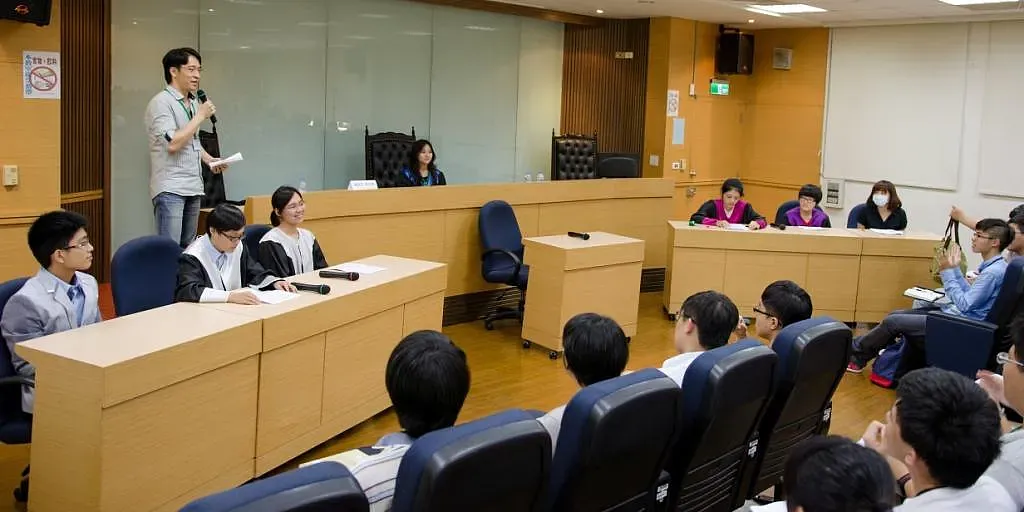
After half a year of preparation, our first civil-version simulated jury trial is about to debut. Don't miss it! Those interested in the jury system should come, and those who are skeptical of it should come even more! We welcome everyone to come and give us your feedback~
- Time: Saturday, July 26, 9:00 AM
- Location: Moot Court 1705, 7th Floor, Chung-Chi Building (Building 1), College of Law, Soochow University
When Judicial Yuan President Lai Hao-min and Vice President Su Yung-chin underwent review for their Grand Justice and leadership nominations at the Legislative Yuan on October 6, 2010, they mentioned for the first time the intention to establish a lay participation system. At that time, they did not clearly explain what was actually inside this "lay participation" Pandora's box. Everyone was curious: why not adopt the jury system or lay assessor system, which had long been established and scaled in other countries? What on earth was this lay participation system all about? After they took office, the mystery was solved: it turned out to be "expression without voting rights."
All sectors of society have consistently harbored doubts about this globally unique, self-created concept of "letting you only watch, not judge" and "letting you only speak, but your words don't count." Everyone hoped that the Judicial Yuan would plan under the premise of allowing the public to genuinely and substantially participate in trials, and fully research and evaluate the feasibility of implementing the jury and lay assessor systems in Taiwan through empirical methods, rather than stubbornly favoring only one option from the outset while dismissing the rest. Everyone feared that a well-intentioned initiative—one that could allow Taiwan's judiciary to truly bid farewell to authoritarian and corrupted systems of public participation in trials—would suffer a premature death right at launch due to the Judicial Yuan's inherently flawed planning.
Ironically, however, while lay participation brandished the banner of listening to the people's voices, not only did "expression without voting rights" run counter to this purpose (true listening—and thereby communication—requires equal footing between the speaker and the listener; otherwise, it is nothing more than government propaganda or lodging a petition. Lay participants have no voting rights, and judges can choose whether or not to listen at their whim, making the inequality of status self-evident), but even the decision-making process of the Judicial Yuan up to now has completely lacked the magnanimity to accept candid advice, remaining arbitrary and autocratic. From the establishment of the Research and Deliberation Committee on the Lay Participation System in January 2011, to the approval of the proposal to adopt the lay participation system by the Judicial Yuan's National Judicial Reform Promotion Committee at the end of July, and the formation of the "Research and Drafting Committee for the Draft Trial Statute for Lay Participation" in early August—the process moved swiftly with astonishing vigor. It resolutely promulgated the Draft Trial Statute for Lay Participation on Judicial Day, January 11, 2012, and promptly submitted it to the Legislative Yuan for deliberation, with trial implementation expected in 2013 at the Shilin and Chiayi District Courts.
Although the Judicial Yuan spent a large budget on placement marketing, public outcry denouncing this as a reenactment of the late Qing Dynasty constitutional movement grew increasingly loud, eventually becoming an irresistible wave of anger that legislators could not ignore. Not only were scholars supporting "expression without voting rights" as rare as morning stars, but heavyweight scholars such as Huang Kuo-chun and Chen Yun-tsai also repeatedly published papers in opposition. Control Yuan Member Li Fu-tien likewise questioned in his book Resisting Authority to Protect Human Rights and Reform the Judiciary: Is lay participation a right or an obligation of the defendant? If it is a right, how can waivers not be permitted? If it is an obligation, how can the deliberation of lay participants not be binding?
According to the Judicial Yuan's briefing papers, the purpose of lay participation essentially boils down to observing whether judges have thoroughly considered the intent of arguments, whether there is abuse of power, and whether judgments violate public opinion. If so, the trial work of professional judges is clearly interfered with by lay participants, which conversely violates Article 80 of the Constitution. On August 20, 2011, the Judicial Reform Foundation (hereinafter referred to as the JRF), together with the Constitutional Reform Research Committee of the Taiwan Bar Association and the Taipei, Hualien, Yilan, Keelung, Taoyuan, and Hsinchu Bar Associations, jointly issued a joint statement titled [Unveiling the Veil of the Lay Participation System], opposing lay participation with "expression without voting rights" and urging the Judicial Yuan to truly listen to the people's voices.
Subsequently, seeing that the Judicial Yuan was bent on having its own way, the JRF joined the aforementioned bar associations to initiate the "Alliance for the Research and Amendment of Laws on Public Participation in Trials," formulating a civil version of the draft "Criminal Trial Act with Citizen Participation." After the official Draft Trial Statute for Lay Participation was submitted to the Legislative Yuan, this civil-version draft was promptly introduced through a proposal by Legislator Ker Chien-ming and 26 other lawmakers. In addition, there was a draft "Criminal Trial Act with Citizen Participation" proposed by Legislator Wu Yi-chen and 20 others (although bearing the same name as the draft proposed by Legislator Ker Chien-ming, it was primarily modeled after Japan's saibanin system and thus adopted the lay assessor system), as well as a draft "Jury Act" proposed by Legislator Tien Chiu-chin and 21 others, and a draft "Trial Statute for Lay Participation" proposed by Legislator Hsieh Kuo-liang and 28 others. All of these were deliberated alongside the official draft lay participation statute in the Judiciary and Organic Laws and Statutes Committee, making for quite a lively scene. This demonstrates society's ardent expectations for public participation in trials and its profound anxieties regarding the lay participation system; the congress indeed could not and has not ignored this.
Although throughout the congressional deliberation of the lay participation system drafts, the Judicial Yuan has repeatedly been demanded not to shoot the arrow and paint the target afterwards—failing to analyze and evaluate the feasibility of the jury and lay assessor systems in Taiwan, and failing to conduct simulated trials for them—the policy remains set in stone, exclusively favoring lay participation to the exclusion of all else. However, while Congress has spoken earnestly, the Judicial Yuan has turned a deaf ear, and to this day simulated trials have only featured lay participation while omitting juries. A responsible government should naturally conduct exhaustive empirical investigations and research before formulating policies. In terms of the system of public participation in trials, this naturally includes the full implementation of simulated court trials for juries, lay assessors, and even lay participants, in order to understand which option best suits Taiwan's current conditions.
To let the public understand that lay participation is definitely not the only option when it comes to public participation in trials—and that the people of Taiwan can have a better choice—the JRF is willing to overcome extremely difficult constraints in manpower and material resources to shoulder this task, which should otherwise have been carried out by the Judicial Yuan using public resources. This is the reason why today's simulated trial, as well as many future ones, are taking place. Of course, we must express our gratitude here to all the volunteers who participated in the simulated trial performances, including the simulated jurors. They all hope that a genuine system of public participation in trials can take root and thrive on Taiwan's soil, and thus ungrisely and obligatorily dedicate their time and energy.
※ This article is an excerpt. For the complete text, please refer to the "Manual for the Simulated Jury Trial" published on the day of the event, July 26.
This article is an AI-generated translation of the original Chinese text. In the event of any discrepancy, the Chinese version shall prevail.