
The Warden Is Off the Hook, But What's Wrong With You, Kaohsiung Prosecutors Office?
Last edited: 2026-07-27
Photo Source / CNA
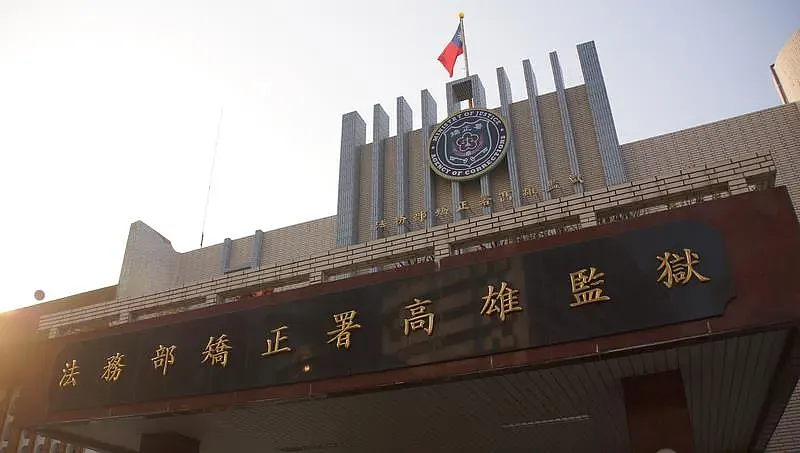
Regarding the Kaohsiung Prison hostage-taking incident, Warden Ch'en Shih-chih and Deputy Warden Lai Cheng-jung were investigated by the Kaohsiung District Prosecutors Office for suspected offenses of releasing or facilitating the escape of prisoners, as they indeed instructed subordinates to arrange vehicles and open gates. They were recently granted a non-prosecution disposition, meaning both faced no criminal liability—a result most people could probably accept. However, the reasoning provided by the Kaohsiung prosecutors was utterly absurd and frankly problematic.
Failure to Punish Attempted Crimes Defies Public Expectations
The person most at fault is likely the spokesperson. Scanning print and electronic media, almost all reports uniformly mentioned that "because the prisoners failed to escape successfully," the offense of releasing prisoners does not punish "attempted crimes," and thus no prosecution was brought. However, not only does Paragraph 3 of Article 163 of the Criminal Code explicitly state that "attempted crimes are punishable," but the prosecutors' own press release did not say this either. Unless media outlets simply copied one another and "all copied incorrectly," this statement must have originated from the spokesperson. If the spokesperson deliberately misled the public, it was exceptionally clumsy and warrants disciplinary action; if it was a slip of the tongue, they are clearly unsuited for the position. The prosecutors' office owes the public an explanation.
Furthermore, the grounds for non-prosecution given by the Kaohsiung prosecutors were that there was no "criminal intent" to "release or facilitate the escape" of prisoners. Of course, judicial practice interprets "criminal intent" quite casually. Sometimes it is broadened to the degree of, "he had no motive to do bad things" or "he didn't think that much about it." At other times, it is restricted. Taking this case as an example, if the warden and deputy warden indeed instructed that vehicles be arranged and passage granted, they certainly knew what they were doing: they were going to "let people go"! What else were they doing?
Knowing they were doing something to "let people go" means they had the criminal intent to "let people go." However, this does not necessarily mean the warden and deputy warden must bear criminal liability. Given that prisoners were pointing firearms at them, we might consider their actions to fall under "legitimate self-defense" or "necessity," and find it hard to hold them at fault. This would also be more aligned with ordinary public sentiment.
In fact, what the Kaohsiung prosecutors deliberately evaded and completely failed to address is that the offense of allowing prisoners to escape also penalizes "negligent offenses." The Kaohsiung prosecutors repeatedly emphasized that the warden and deputy warden had already received administrative disciplinary action from the Agency of Corrections under the Ministry of Justice, arguing that escaping criminal liability does not mean escaping administrative responsibility. This instead makes their defense look like a cover-up. If they received major demerits because they allowed prisoners to acquire firearms, opened gunfire, misjudged the situation, carelessly became trapped, and almost let the prisoners escape, this should certainly be considered severe negligence. It is difficult for the prosecutors to convince the public why this does not constitute a negligent offense criminally. Could this be the primary reason for their biased evasion?
Prison Break Forced Off the Air
Ultimately, we do not insist that criminal liability must be pursued against the warden and deputy warden. The performance of the Kaohsiung prosecutors was erratic and gave a strong impression of "shielding their own." They wanted everything to return to calm as quickly as possible, leaving no trace behind. The "five-point statement" issued by the prisoners before their suicide is no longer mentioned by anyone. In fact, these statements directly pointed to the key areas where correctional institutions need reform. The Kaohsiung prosecutors simply helped the Ministry of Justice and the Agency of Corrections clean up their final mess. This drama of "Prison Break" was "forced off the air" by the Kaohsiung prosecutors.
※ This article was published in the Apple Daily on Oct. 3, 2015
This article is an AI-generated translation of the original Chinese text. In the event of any discrepancy, the Chinese version shall prevail.