
Who is Shielding the "Rogue Judge"? The Ineffective Internal Controls of the Judge Elimination Mechanism
Last edited: 2026-07-27
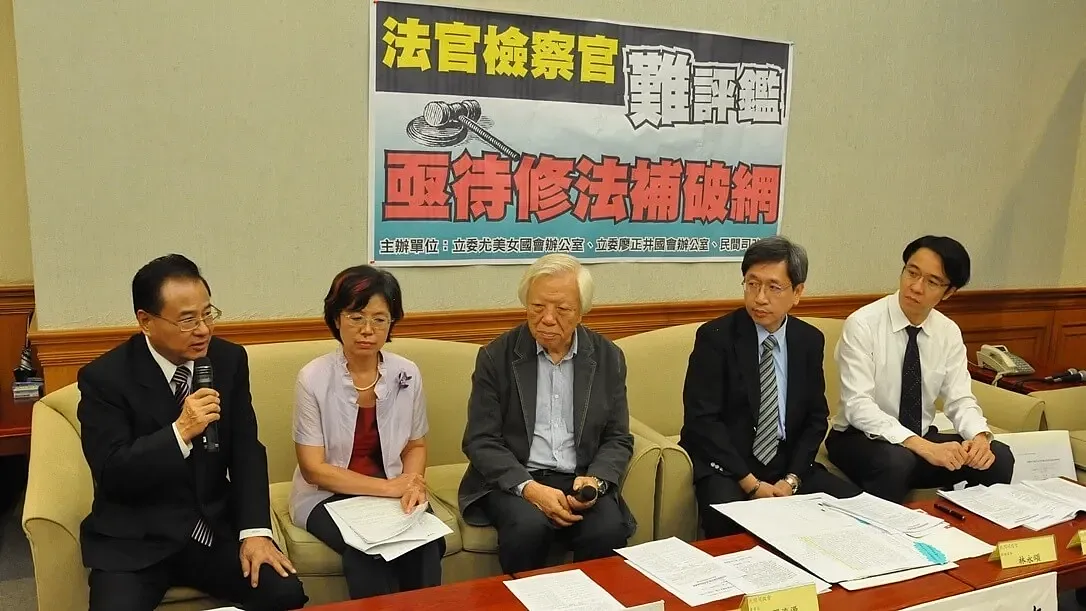
On September 24, the Judicial Yuan issued a press release stating that the Judges Evaluation Commission recommended the dismissal of Judge Tseng of the Taoyuan District Court and his referral to the Control Yuan for review. Tseng had served as the presiding judge in three cases where he excessively intervened in trial procedures, improperly restricted the examination rights of defendants and defense counsel, lost his temper during hearings, shouted, and intimidated defendants with threats of detention. The case was brought before the commission following a petition for individual case evaluation filed by the Judicial Reform Foundation (JRF). Consequently, the commission resolved early this month to recommend his removal from judicial office and referred him to the Control Yuan for review. Regarding this case, some media outlets described Judge Tseng as a "rogue judge." While the general tenor of the reporting followed a narrative of "punishing evil and promoting good" and affirmed the Judicial Yuan's active housekeeping, what remains unseen is the structural problem of ineffective internal controls within the judge elimination mechanism.
According to the Judges Act promulgated in 2011, the Judges Evaluation Commission was established under the Judicial Yuan to handle the evaluation of judges. Evaluations are divided into individual case evaluations and comprehensive assessments. The initiation of individual case evaluations—which holds a pivotal position—is strictly limited to "three or more judges from the evaluated judge's affiliated court," "the evaluated judge's affiliated court, higher court, or corresponding prosecutors office," "the bar association of the jurisdiction or the national bar association," and "permitted judicial-related foundations and associations." Based on empirical logic, a court and its corresponding prosecutors office must be well aware of an individual judge's working conditions, especially if a judge has accumulated numerous negative reputations. Colleagues and supervisors who interact with them daily have no room to feign ignorance. From this perspective, the first and most crucial line of defense for eliminating incompetent judges should rest upon the internal control and supervisory mechanisms of judicial colleagues and court supervisors.
Judge Tseng, 50 years old, graduated from the 35th class of the Judges and Prosecutors Training Institute and has served successively in the Keelung and Taoyuan district courts. According to the author's rough statistics, nearly 8,000 criminal judgments bear his name. Surely, among these cases, one can find many instances of Judge Tseng's procedural interference, restrictions on examination, emotional outbursts, shouting, poor attitude, and intimidation of defendants. If the Judicial Yuan had the courage to conduct carpet-bag precise scientific interviews regarding the cases handled by Judge Tseng to investigate how many parties suffered judicial injustices caused by this "rogue judge," the resulting statistics would likely be chilling.
Judge Tseng's outrageous behavior was actually long known within the local legal community. Regrettably, the judicial colleagues, affiliated court supervisors, and higher-level court supervisors who should have taken "decisive action" on the front lines to initiate individual case evaluations chose to shield and protect him, failing to initiate evaluations according to the law and turning a blind eye to an unfit judge who repeatedly and gravely "violated the preservation of human dignity, and the protection of personal freedom and fair procedures" (quoting the Judicial Yuan's press release) over the years. It was not until the JRF made external efforts to collect cases and initiate an evaluation that an opportunity to eliminate this incompetent judge was created. Coincidentally, a similar plot occurred in the case of Prosecutor Lin, the "Angry Birds Prosecutor," exposed in 2012 and 2013. Prosecutor colleagues, affiliated agency supervisors, and higher-level supervisors similarly failed to exercise internal supervisory functions due to a culture of shielding. The Ministry of Justice even responded passively when outsiders applied to disclose relevant documents. It was only through the JRF's multifaceted efforts and initiation of an individual case evaluation that the unprecedented disciplinary sanction against a prosecutor (suspension from office for 1 year and 6 months) by the Disciplinary Court of the Judicial Yuan was achieved in April 2014.
In short, whether in the cases of the "rogue judge" or the "angry birds prosecutor," a noteworthy phenomenon is that the judicial and prosecutorial bureaucracies—who are generously funded by taxpayers and are in the best position to discover and resolve problems on the front line—slacken in initiating individual case evaluations, resulting in poor internal control. Conversely, civil judicial reform groups funded by public donations and positioned outside the judicial system have become the main force requesting individual case evaluations. How to establish proper internal control and disciplinary systems to break the shielding structure of the judicial and prosecutorial bureaucracies, ensuring they no longer dare to sit back and watch incompetent judges and prosecutors run amok within the system, is surely an important and inescapable issue for the current phase of amendments to the Judges Act and the future legislation of the Prosecutors Act.
※ This article was published in Thinking Taiwan
This article is an AI-generated translation of the original Chinese text. In the event of any discrepancy, the Chinese version shall prevail.
