
Issues and Reform Directions of Summary Judgment Procedure
Last edited: 2026-08-30
Moderator Professor Ho, discussant Professor Tsai, Professor Hsu who organized this event, and distinguished guests, hello. When I looked at the agenda and saw that my presentation was scheduled for the very last session, I actually felt a lot of pressure, because around this time the atmosphere usually fills with, "I'm so tired! Let's just wrap it up quickly!" Therefore, I will try my best to manage my time, as there may still be quite a few guests or students in the audience who have questions they wish to raise for discussion.
Next, I would like to talk to you about some issues concerning summary judgment sentencing under Article 449 of the Code of Criminal Procedure. As mentioned earlier, regarding cases involving dummy accounts and aiding and abetting fraud, many are handled via summary judgment sentencing. In addition, the current scope of summary judgment sentencing in practice is actually quite broad. Professor Ho Lai-Chieh also provided a detailed introduction to these related issues in earlier years, but we can reflect on whether these problems have been properly addressed over the years.
Ever since the summary judgment procedure was amended in 1997, its general framework has remained largely settled, with subsequent modifications failing to alter its basic structure. First, I would like to discuss the current status of summary judgment sentencing in Taiwan, share the application and conditions of similar summary procedures in Japan and Germany, and finally address the existing problems within Taiwan's summary judgment system and potential directions for future improvement.
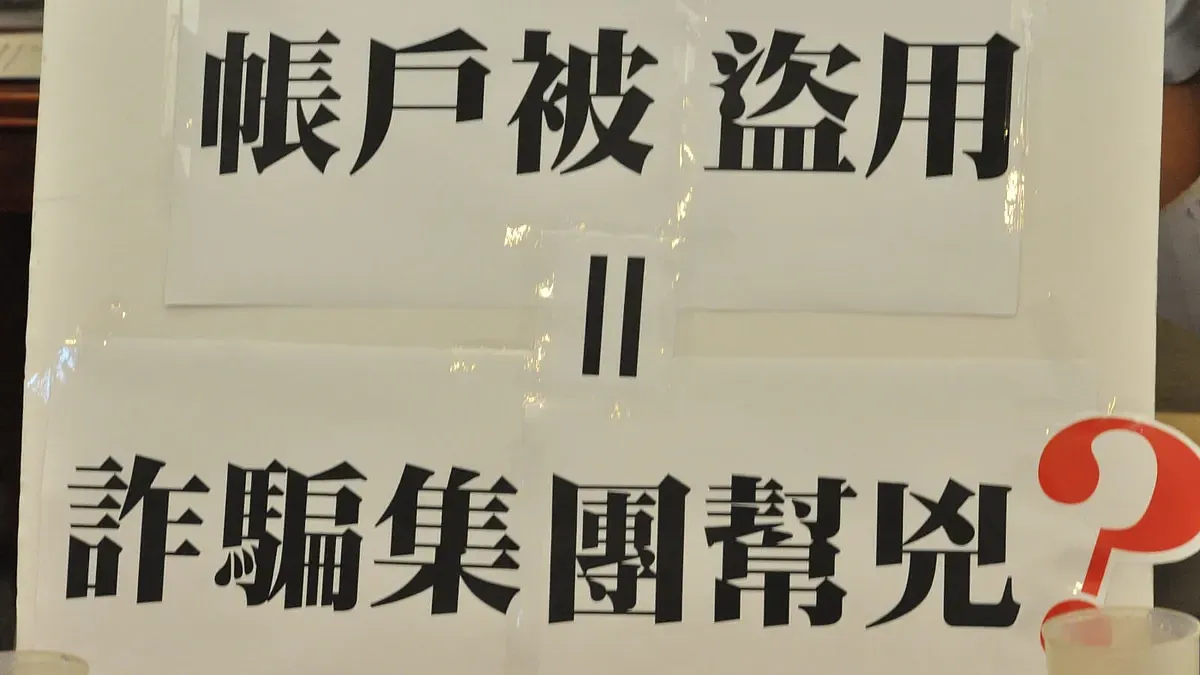
Here we can first look at Taiwan Taipei District Court Ruling No. 2436 (2012). Judging from the content of the ruling, it is actually not much different from the cases of aiding and abetting fraud discussed in the preceding sessions. The reason I brought up this ruling is because while searching for information online during the preparation of this report, I happened to see the defendant in this case asking a legal question online. The defendant stated that because he was looking for a job, he was tricked by the other party into giving away his bank account and password, which subsequently turned him into a dummy account holder. Afterwards, the prosecutor had him summoned to an investigative hearing, where the prosecutor asked: "Did you provide the account number and password to the other party?" The defendant replied: "Yes." According to the defendant's account online, the prosecutor then told him: "This will constitute aiding and abetting fraud, and you might be sentenced to imprisonment for six months or less, which can probably be commuted to a fine." The defendant expressed: "I was tricked because I was looking for a job, and I am also a victim, so I quickly went to the police to report it." The prosecutor then stated: "Then at most I can only grant you a suspension of prosecution."
A few days later, the defendant directly received the application for summary judgment sentencing. A question we can ponder here is: if we ourselves were prosecutors, would we grant a suspension of prosecution in this kind of case? It is hardly likely, right? Leaving aside whether the defendant's act truly constitutes a crime, if the defendant has not reached a settlement with the victims, even if I grant a suspension of prosecution, almost every victim will file a motion for re-examination. If I were the original disposition prosecutor, I certainly would not revoke my original disposition; otherwise, I would essentially be slapping myself in the face. Therefore, this motion for re-examination will definitely be sent to the chief prosecutor of the higher prosecutors office, and the chief prosecutor will inevitably revoke the suspension of prosecution on the grounds that "the defendant has not settled with the victims, how can a suspension of prosecution be granted," and then throw it back to the original disposition prosecutor. What should the original disposition prosecutor do then? The first choice is to quietly accept it, and then indict and dump it to the court. The second choice is to insist on issuing another suspension of prosecution, whereupon the victim goes for re-examination again, the chief prosecutor revokes it and throws it back, creating an endless loop.
Therefore, some prosecutors have remarked: "We are also helpless. Every time the complainant files a motion for re-examination, the higher authority revokes it and throws it back to us. Since the higher chief prosecutor feels that a suspension of prosecution should not be granted, he can conduct the investigation and indictment himself—he has such authority under the Code of Criminal Procedure! But in reality, they just throw it back to us."
In this case, the defendant later received a call from the court clerk, who asked whether the defendant was willing to settle with the victims. The defendant replied: "I was the one whose account was stolen, I am a victim too; can we quickly hold a hearing to clear my name, why are they asking me to pay compensation and settle?" As a result, a week later, the defendant received the summary judgment sentencing document, and then went online to ask what to do.
What we must consider is: in these types of cases, why would a judge issue a summary judgment sentence? The system itself is neutral; it all depends on how people use it. In other words, summary judgment sentencing is not intrinsically wrong; it is just a matter of how judicial personnel utilize it. There are two dimensions of problems here: First, why don't judicial personnel want to listen to the parties speak? Because the place with the most lies in the world is inside a courtroom. Defendants are naturally entitled to lie, and sometimes prosecutors and lawyers also exaggerate, yet judges are expected to discover the truth amidst a pile of lies. Come to think of it, judges are also quite pitiable. Therefore, it is true that after working for a long time, some judges feel they have been deceived too many times. Even if what a defendant says is true, at most it is only one or two percent, because past bad experiences tell me that after investigating for a long time, the defendant turns out to be entirely deceiving me. Consequently, they subconsciously disbelieve the defendant.
The other dimension of the problem is: if the judge still has doubts about the facts, will they convert the summary judgment back to the ordinary procedure? The current trend in Taiwan is to obsess over evaluations and figures. Aside from junior judicial officials being subject to written work reviews, one's judicial ruling persuasion rate and sustainment rate are scrutinized, along with case backlogs. Even if judges wish to act prudently, under such an environment, it is truly difficult to deliberate carefully on every case. Sometimes, in order to compromise with reality, they have no choice but to conclude the case as quickly as possible. Therefore, I say that the system is neutral; it all depends on how we use it.
The original design purpose of summary procedures: First, out of judicial economy considerations, for certain cases with clear facts, there is no need to expend massive judicial resources, and cases can be concluded quickly, allowing limited judicial resources to be reserved for cases that require more time to clarify the facts. Second, it spares defendants from the burden of litigation, because ordinary trial procedures inevitably take longer, and prolonged litigation procedures are actually disadvantageous to the defendant—in the end, the time spent on litigation might even exceed the prison sentence itself. Furthermore, summary judgment sentencing has an advantage: because it adopts written review rather than oral review as in ordinary trial procedures, it can reduce the exposure level of the defendant or related parties, causing lesser disruption to daily life.
However, as I just mentioned, the merit of a procedure actually depends on how it is operated. If used poorly, it may produce side effects. Over the past decade, we can clearly see that the scope of summary procedures has been continuously expanded. As the saying goes, "life finds a way." When judicial personnel are limited but case volumes increase, what should be done? With everyone staring at numbers like unsettled case counts, a viable path must be found for everyone to escape, so summary procedures become a channel to alleviate burdens. Of course, this does not mean that doing so is inherently wrong, because summary procedures were indeed originally intended to alleviate burdens. The problem here, however, is: will summary procedures conflict with the presumption of innocence, which is the most important principle in our Code of Criminal Procedure? Or does the pursuit of procedural promptness mean that discovering substantive truth can be sacrificed without consequence?
Summary judgment sentencing has two characteristics: First, it dispenses with oral proceedings. Since there is no need to hold hearings, a lot of time is saved. Second, it applies a simplified judgment format, which provides a huge incentive, much like what Professor Hsiao Hung-I mentioned earlier. Speaking of simplified judgments, I once told my students a joke that actually happened: a defendant received a summary judgment sentencing document and called the court clerk to ask, "I received the summary judgment sentencing document, and it says a fine can be commuted. May I ask if I can just go to a convenience store to pay?" The clerk was stunned, thinking how that could possibly be—how could payment be made at a convenience store? Of course it has to be at the prosecutors office. But the defendant said there was a barcode on it, and that barcode looked a lot like the one on a parking ticket. Upon hearing this, the clerk even thought it might be a new citizen-convenience measure; anyway, since even traffic tickets can be paid at convenience stores, maybe commuting fines can be paid at convenience stores now too. It turned out, after much ado, that in the simplified judgment, the judge had directly cited the content of the prosecutor's application, wrote "see attachment," and stapled the application to the back. Because the application had a barcode used for case management, it was mistaken for a payment barcode. Look at how convenient it is to produce a simplified judgment; sometimes you don't even need to copy and paste—you can just staple it directly as an attachment.
However, another issue discussed regarding summary judgment sentencing is whether dispensing with oral argument and trial hearings weakens the preventive effect we originally hoped to achieve for the defendant. On this point, some scholars in Germany believe: what is the difference between receiving a summary judgment sentencing document and receiving a traffic ticket? There may be no difference at all, because it feels like going to pay money either way. Because it bypasses the trial procedure, might it make defendants feel that they can just go pay some money and get away with it, thereby weakening its preventive function?
Regarding the characteristics of summary judgment sentencing in our country: First, it is handled by the summary court of the district court. In principle, it does not require oral argument like ordinary procedures; as long as the court acts upon the prosecutor's application based on written materials, it can render a disposition immediately, and the judgment document may be produced in a simplified format. Another very special feature is that our country also allows defendants and prosecutors to engage in sentencing bargaining within summary judgment sentencing. In addition, if one is dissatisfied with a summary judgment, under the single-tier, two-instance system, an appeal may be lodged with a collegiate panel of the district court. However, a problem that might be encountered here, as Professor Ho Lai-Chieh once mentioned in his writings, is that going through this full circle might ultimately take even longer than ordinary trial procedures.
Next, I would like to briefly share with you some data I came across during the preparation of this report. According to 2013 judicial statistics, in 2013, applications for summary judgment sentencing in our country totaled around 120,000 cases, while newly received cases—excluding previously pending ones—totaled about 110,000. As for appeals filed against summary judgments, there were over 7,000 cases, accounting for about six percent of concluded cases. Among those appealed, the original judgments were revoked in approximately seventeen percent of the appealed cases. However, whether the outcome after appeal and retrial was favorable or unfavorable to the defendant is data that is not available for further observation.
Regarding dummy accounts, according to statistical data provided by the JRF, cases concluded through summary judgment sentencing applications in 2013 numbered around 1,176, among which 601 cases—meaning just over half—involved defendants pleading not guilty. It is worth noting here that I have previously heard many prosecutors state that if a defendant pleads not guilty, they basically will not apply for summary judgment sentencing, because if the defendant pleads not guilty, they will end up appealing anyway. Therefore, I was quite surprised to see this statistical data, because in more than half of the cases, even when defendants pleaded not guilty, summary judgment sentencing applications were still filed just the same. By contrast, under ordinary trial procedures, the proportion of acquittals is approximately 9.6 percent, close to 10 percent. This means that if these dummy account cases do not go through summary procedure but instead go through ordinary trial procedures, roughly one out of every ten cases will result in an acquittal.
There is a provision in the Japanese Code of Criminal Procedure very close to ours, called a summary order or summary procedure, which is essentially identical to summary judgment sentencing. According to statistical data from the Supreme Court of Japan for 2014, applications for summary orders totaled about 310,000 cases for the entire year. Of course, we probably still need to compare data such as population size or crime rates between our country and Japan to know whether these proportions are high or low. The total number of cases concluded by Japan in the entire year of 2014 was a little over 310,000, which included pending cases from the previous year. Cases resulting in convictions in Japan totaled approximately 312,575, and only 46 of them involved procedural conversion due to being deemed inappropriate, which also roughly reflects the so-called "precise justice" that Japan has always taken pride in. Requests for formal adjudication due to dissatisfaction with summary orders—somewhat akin to our appeals—totaled about 93 cases in Japan, accounting for 0.1 percent of all conviction cases. Therefore, we can see that Japan's persuasion rate is actually extremely high.
As for Germany, because online data is not entirely complete, I can only explain based on a portion of judicial statistics from the German Federal Statistical Office for 2012. Germany's penal orders are also quite similar to our summary judgment sentencing; in 2011, over 538,000 penal orders were issued. Objections raised against penal orders—meaning those subsequently converted into ordinary procedures due to objections—totaled about 154,000 cases, representing an objection rate of about 28 percent. Compared with the statistical data presented by Professor Ho in earlier years, there is actually no significant change. When compared with Germany, our appeal rate does not seem that high; but when compared with Japan, ours seems high again.
In addition, there is data here for your reference regarding the choices made by German prosecutors in concluding investigative procedures. In recent years, the work of German prosecutors has gradually shifted from earlier times of "how to prosecute the defendant" to "how not to prosecute the defendant." Therefore, you will find that a very large proportion are concluded during the investigative procedure stage, without entering subsequent trial procedures. By contrast, applications for penal orders and indictments each account for 13 percent. The conclusion to be drawn here is that about half of the cases entering trial procedures go through penal orders. In other words, the application rate of summary judgment sentencing abroad is also quite high; it is not high in Taiwan alone.
Now, regarding several current issues in our country: First, our country currently allows summary judgment sentencing to be applied to juvenile criminal cases as well. This is a major point of difference from Germany and Japan. Germany has explicitly excluded juvenile cases from the application of penal orders in their Juvenile Courts Act, based on the belief that minors cannot understand the concept of objection and timely raise it to protect their own rights. In Japan, juvenile cases are handed over to the so-called family courts for adjudication, and unless it is a serious case—typically like intentional homicide—can it be referred to a prosecutor for handling. Therefore, substantively speaking, juvenile cases cannot possibly be subject to summary procedures.
The second issue is a system uniquely created by Taiwan. Whether in Germany or Japan, simplified procedures heavily emphasize the consistency of opinions between the judge and the prosecutor. In other words, if a prosecutor chooses the simplified trial procedure, they are still subject to judicial review, and Article 449, Paragraph 1 of our Code of Criminal Procedure provides similarly. However, Paragraph 2 of Article 449 opens a door, allowing the court to convert the procedure on its own. What has constantly been questioned here is: if the prosecutor believes it appropriate to enter ordinary trial procedures via indictment, why should the court be allowed to convert the procedure by itself? Could this be stretching the concept of judicial economy to an extreme? Looking at German and Japanese laws, only the prosecutor has the authority to request it; courts are not permitted to convert procedures on their own.
Furthermore, the scope of application for summary judgment sentencing in our country is very broad, allowing rulings to grant probation, commutation of sentences to fines, or commutation to social labor. Comparing this with German and Japanese laws, their scope of application is much narrower than ours. In Germany, a defendant can be sentenced to imprisonment of one year or less with probation granted concurrently only under certain special circumstances, and the defendant must have defense counsel. As mentioned in the first report earlier, let alone in summary procedures, the proportion of defendants having defense counsel in criminal cases in our country is already low to begin with. Needless to say, compared with Japan, cases where Japan can adopt summary orders are limited to defendants facing fines or minor fines of one million yen or less. That is to say, it is restricted exclusively to monetary penalty sentences. So-called minor fines are lighter monetary penalties ranging from 1,000 yen to under 10,000 yen. In other words, Japan divides monetary penalties into heavier fines and lighter minor fines, and summary orders can only be pursued under the premise of imposing a monetary penalty.
In addition, regarding the issue discussed earlier, our summary judgment sentencing procedure does not afford defendants an adequate opportunity to state objections and opinions. Here I must say that in practice, there are still some quite conscientious prosecutors and judges, and I hope current or future judicial personnel in the audience will not let your present passion be extinguished by cold winds after a few years. I still see quite a few judges handling summary judgment sentencing who, feeling that a case has problems, still summon the defendant for questioning. Although they know this might increase their processing time, they still choose to handle matters prudently.
What needs to be noted here is that if a defendant is unwilling to choose the summary judgment sentencing procedure, under current legal provisions, the defendant's view is merely for reference and the defendant holds no right of decision. However, under German or Japanese law, Germany permits defendants to file an objection within two weeks of the service of the penal order, causing it to be converted into a first-instance ordinary trial procedure. Japan is even more rigorous: when a prosecutor submits a request for a summary order to the court, they must attach a written record stating that the defendant has no objections. That is, the prosecutor must first inquire about the defendant's wishes before applying for summary orders, and this written record must be submitted to the court together with the application. If the court does not see the written statement of no objection from the defendant, the procedure is illegal. Furthermore, Japan also allows both the defendant and the prosecutor to request formal adjudication via ordinary trial procedures within fourteen days of receiving the summary order. Therefore, if a defendant is unwilling to adopt summary procedures in the first place, or pleads outright not guilty, yet you still force them through summary procedures, aren't you just looking for trouble? Because the defendant will inevitably appeal in the end.
Regarding all these issues above, we can reflect on them together, even if we may not be able to solve them immediately. First, concerning juvenile cases, it is best to exclude the application of summary judgment sentencing entirely. Second, the statutory language stating "sufficient to apply for summary judgment sentencing based on the defendant's confession during investigation or other existing evidence" is likely far too lenient in its requirements, a problem that legal academia has questioned for a long time. To achieve the purpose of judicial economy, we must still consider granting defendants the right to object in procedural selection. Of course, even if a defendant chooses ordinary trial procedures, the outcome might potentially be worse—such as receiving a heavier sentence—but at least they would have the opportunity to choose. Otherwise, it might end up coming full circle, superficially concluding the case quickly while actually consuming even more resources.
Third, before rendering a summary judgment, judges do not necessarily summon defendants for questioning every time. Personally, I believe that even if face-to-face questioning is impossible, defendants should at least be given the opportunity to state their opinions in writing, which can effectively reduce disputes by defendants or improprieties in judgments. Fourth, the current legal provision allowing courts to convert procedures on their own should preferably be deleted, because this is a highly unreasonable rule. Furthermore, regarding the plea-bargaining mechanism added through subsequent legal amendments, that mechanism, to a certain extent, actually erodes the objective of criminal procedure in discovering the truth and easily creates improper incentives for prosecutors to use tactics forcing defendants to accept summary judgment sentencing. If the bargaining system ultimately serves merely to avoid appeals, then parties should be made to willingly accept the outcome through the procedure rather than preventing dissatisfied parties from appealing. Therefore, incorporating a plea-bargaining mechanism into summary judgment sentencing actually does more harm than good.
This concludes my presentation. Thank you all.
This article is an AI-generated translation of the original Chinese text. In the event of any discrepancy, the Chinese version shall prevail.