
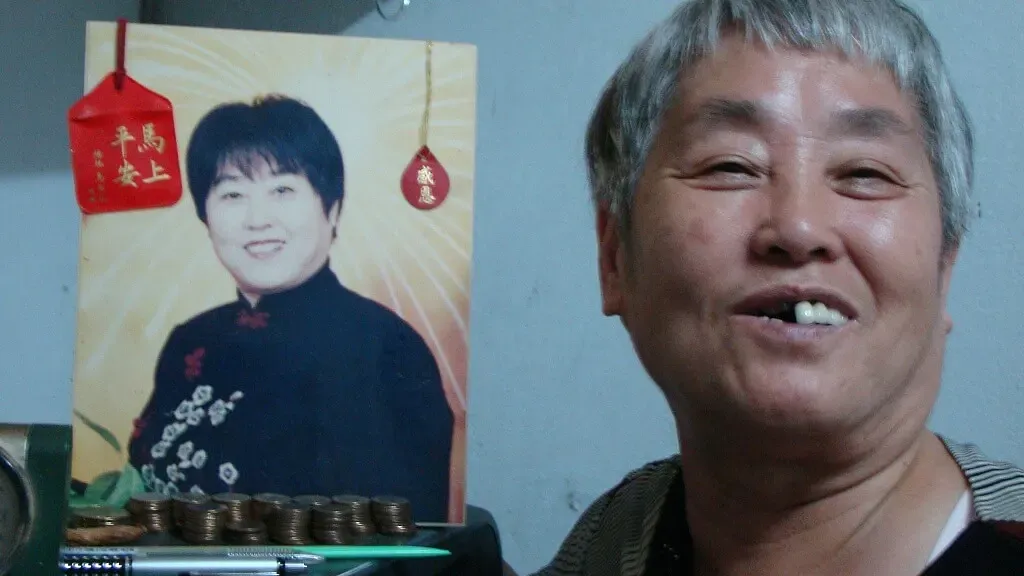
The Story of Grandma Mei
Last edited: 2026-07-27
She, Grandma Mei, is a spouse from Mainland China—a demographic that is hardly uncommon in Taiwan today. Yet, her 11 years in Taiwan have subjected her to twists and turns that neither ordinary people nor she herself could have ever imagined.
Now in her seventies, she is an elderly grandmother originally from Zhejiang, China. Widowed at a young age, she raised her three children on her own until they started their own families and careers. Her three children are all doing well now. Through a chance encounter, she met Lao Chang, a veteran from Taiwan, via a friend. Lao Chang told Grandma Mei that he was also living alone in Taiwan, utterly destitute and looking for a companion. Thus, Grandma Mei came to Taiwan.
Grandma Mei recalls that ever since she was a child reading books, she thought of Taiwan as a treasure island where everything was wonderful, and she had always wanted to find an opportunity to visit. Never did she expect that she would actually come to Taiwan and settle down here. But she also says that had she known she would encounter these hardships upon coming to Taiwan, nothing could have dragged her here.
Grandma Mei's story goes like this: She and Lao Chang spent six or seven years living as husband and wife in Jinguashi. Relying on a monthly allowance of a little over 10,000 NTD, they bought rice, grew some vegetables, and lived a simple, unpretentious life. Although not well-off, they were content. However, all this peacefulness vanished with the death of Lao Chang. A man named Ah-hong appeared, claiming to be Lao Chang's child and asserting that he also had a right of inheritance to the small house belonging to Grandma Mei and Lao Chang in Jinguashi. Every few days, Ah-hong would break into Grandma Mei's small home in Jinguashi, smashing remote controls, damaging property, and even driving Grandma Mei out. He locked the doors and windows from both inside and out, and threatened neighbors against providing any relief to Grandma Mei. In order to get by, Grandma Mei took a washing machine and a water heater from the home, for which she was accused of embezzlement by Ah-hong. For nearly four to five years, Grandma Mei has been embroiled in lawsuits with Ah-hong, exhausting all her savings. Moreover, in Taiwan, spouses from Mainland China are disadvantaged; the prosecutor spoke Taiwanese during the investigative hearing, which she could not understand at all, nor did she understand legal procedures. Along the way, she has suffered a great deal of unfair treatment.
Today, with the assistance of the village warden, the Social Welfare Department, and Tzu Chi, Grandma Mei lives in a tiny room of about 3 to 4 pings in Ruifang. The small room contains only a bed, an electric fan, a television occasionally used to check the weather forecast, an unplugged refrigerator piled with sundries, and an air conditioner that has never been turned on. The only decorations in the room are a photograph taken shortly after she arrived in Taiwan. Compared to the past, Grandma Mei has grown much thinner, her hair has turned white, and all her teeth have fallen out. The 3-to-4-ping small house in Ruifang costs 3,000 NTD a month in rent plus over 1,000 NTD in utilities. Without any source of income, Grandma Mei simply cannot afford this. Her rent must be paid with the help of Tzu Chi, while her utility bills—much like her National Health Insurance premiums—continually pile up in arrears. Whenever there is a charitable donation or subsidy, she uses it to pay off previously owed utility bills and rent; money comes in her left hand and goes out her right. As for meals, she relies on a 3-kilogram bag of rice given to her each month by the village warden. She cooks a daily portion of rice into a single bowl of porridge, eating just that every day. Occasionally, neighbor friends and kind-hearted individuals help supplement her meals with side dishes that last her several days. She frequently lives hand-to-mouth.
Grandma Mei still keeps in touch with her family in China, but she dares not tell them about everything she has experienced in Taiwan, nor does she dare ask them for help. Every time she calls, she only tells her family that everything is fine and not to worry about her, and that she cannot return yet simply because she still has some legal issues to resolve in Taiwan. She keeps the truth to herself not only out of fear that her family will worry on top of their busy lives, but also because of her own pride. She says that she must reap what she has sown, so she chooses to face it alone.
Without waiting for the civil court to determine whether a parent-child relationship existed between Lao Chang and Ah-hong, the criminal court convicted Grandma Mei of embezzlement. About a year later, the civil court ruled that Ah-hong was not Lao Chang's son and had no right of inheritance. Today, Grandma Mei is waiting for a retrial and an opportunity to clear her name. She does not want to return to China carrying a wrongful conviction, nor does she want to die with one. However, can Taiwan's courts deliver justice to Grandma Mei and restore the peaceful life to which she is entitled?
This article is an AI-generated translation of the original Chinese text. In the event of any discrepancy, the Chinese version shall prevail.