
Anyway, the Military Security Command is "One of Us"
Last edited: 2026-08-30
It turns out that the Ministry of National Defense's "Military Security Command" was the mastermind behind dragging citizens into van compartments and searching private homes. Its predecessor was the "Counter-Intelligence Unit," the very unit that tortured Chiang Kuo-ching (江國慶). Although these individuals are military personnel, they are not military judicial police, nor do they possess the status of judicial police.
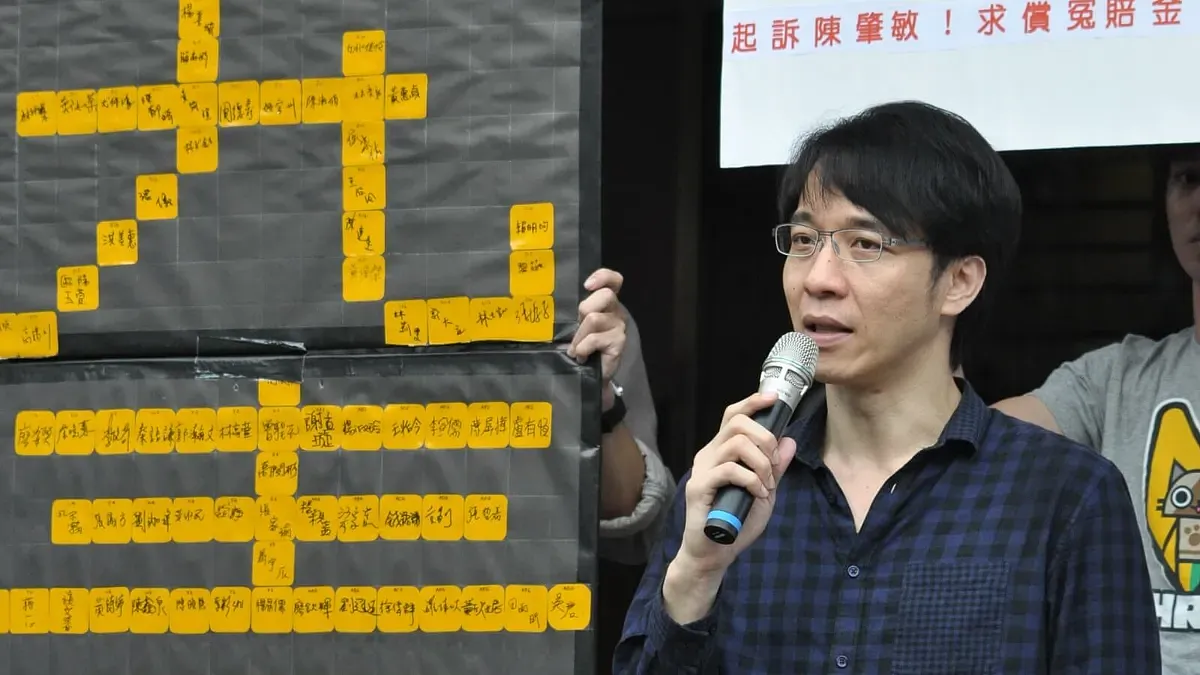
If history is not rigorously investigated and held accountable, it will continually repeat itself. At the time of the little girl's murder case, Ch'en Chao-min (陳肇敏) also convened a dedicated task force meeting and instructed that the matter be handed over entirely to the Counter-Intelligence Unit. They used the methods applied to "communist spies" to deal with a low-ranking private, and Chiang Kuo-ching broke down and confessed in no time. Kneeling, apologizing, acknowledging mistakes, self-incriminating, pleading guilty, and then pushing himself toward a dead end.
These illegal investigative methods were already harshly criticized in the investigation report of a Control Yuan correction case. Clearly, the Ministry of National Defense remains set in its old ways, which is why it has repeated the same old errors. Fundamentally, this is a structural problem stemming from the incomplete implementation of transitional justice and the failure of overall oversight mechanisms.
Initially, everyone thought it was an illegal search by the military police, and a significant amount of public anger was directed at the identity of the "military police." Some believed that the Statute Governing the Deployment of Judicial Police should be abolished, stripping military police of their status as judicial police so they can no longer investigate general criminal cases. Opinions on this issue are divided in theory, but in practice, the proportion of military police actively investigating general criminal cases has been steadily decreasing.
To prevent the abuse of power, the primary mechanism is to exert control through prosecutors and judges. As long as investigations do not deliberately bypass prosecutors, judges can also exercise rigorous gatekeeping before initiating compulsory measures and infringing upon rights. Whether military police continue to serve as judicial police is, by contrast, of little significance.
Judicial Police Are Accustomed to Abusing Power
In fact, the true core of the problem is that judicial police officers "all" abuse their power, regardless of whether they are military police or regular officers. During investigations, police officers frequently bypass procedures and take shortcuts, abusing the exception of "consent searches" to undermine the principle of obtaining a search warrant in advance. That being said, military police cannot justify their own conduct by pointing to others' misconduct.
Beyond ensuring that military and police personnel understand the commandment that "all judicial police must comply with the Code of Criminal Procedure," prosecutors and judges must also be held accountable upon deeper investigation. Prosecutors are originally supposed to keep the abuse of power by judicial police in check, but sometimes, driven by an eagerness to solve cases, they turn a blind eye. "Anyway, as long as evidence is found, you are not being wronged too badly." Judges harbor a similar mindset, reviewing "consent searches" with extreme leniency. No matter how the judicial police coerce, lure, or deceive, as long as citizens sign formally, everything magically becomes legal, and no one will pursue the liability of those who abused their power.
Such shielding over a long period fosters a mindset among judicial police of "rushing in first and asking questions later." "Anyway, if I rush in and search first, it's fine if I find (evidence). If I don't find any, as long as they (are pressured into) signing, nothing will happen." With judges persisting in their mindset of "taking shortcuts," illegal conduct will never see a day of being corrected and improved. When all is said and done, this is an authoritarian-era mindset of "the government is one big happy family." The Military Security Command is "one of us," so it can command the military police. Superiors grant a free hand, so the Counter-Intelligence Unit torturing a low-ranking private is deemed a sacrifice worth making. Because even if something goes wrong, prosecutors stall and delay, and once the public outcry blows over, Ch'en Chao-min is immediately let off the hook.
As long as the personnel in the entire state apparatus remain unchanged and the system remains unaltered, it will continue to automatically execute injustices. Therefore, we need thorough transitional justice.
※ This article was published in the Apple Daily
This article is an AI-generated translation of the original Chinese text. In the event of any discrepancy, the Chinese version shall prevail.