
So, What Did We Consent To After the Military Police Search?
Last edited: 2026-07-27
Introduction
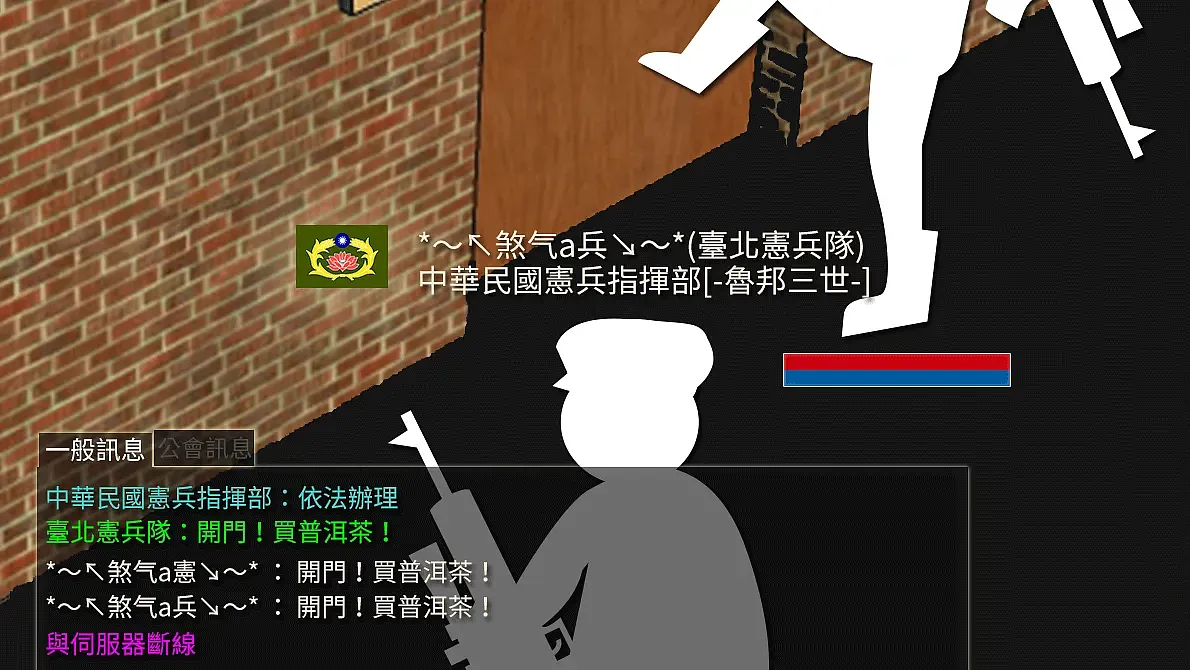
Last week's most sensational judicial event in Taiwan was undoubtedly the news that the Taipei Military Police Corps, without obtaining a search warrant from a court, used a "fishing" tactic to lure criminal suspect Mr. Wei out to meet them, and then "obtained" Mr. Wei's consent on the spot to search his home, seized three documents, and demanded that Mr. Wei report to the military police corps to give a statement.
Although the Taipei District Prosecutors Office immediately launched relevant investigations into the aforementioned facts, because the timing of these events coincided closely with the 228 Incident and involved elements such as arrests and searches conducted by the military, public opinion was instantly in an uproar, strongly denouncing the matter as the return of White Terror. Amidst the intense public discussion, legislators did not dare to neglect this pressure from public sentiment, successively questioning the Ministry of National Defense, the Ministry of Justice, and the Department of Criminal Affairs of the Judicial Yuan, and proposing relevant legislative amendment opinions.
However, much like the famous quote by a certain former official, "hang on for three days and it will blow over," after a few days of high-pressure discussion, this consensual military police search case was no longer fresh or hot, and public opinion and the media began to turn to other more interesting topics. Yet, precisely because the heat and storm have passed, doing a post-mortem now may actually be of practical benefit.
Therefore, regarding this military police search incident, this article very subjectively selects three articles for a post-mortem: Attorney Kao Jung-chih's "Starting from the Public's Dislike of Military Police", Judge Sun Chien-chih's "The Justice of Scum", and Professor Li Chia-wen's "Consensual Searches in Democratic Nations".
In the end, what did Taiwanese society consent to in this military police search case? Let us read on.
No Matter What the Weather Forecast Says, Taiwan is Currently Swept by the Wind of Transitional Justice!
Likely influenced by the complete political turnover between the executive and legislative branches following this year's general election, Taiwan has begun to experience a wave of "transitional justice". Whether it is judicial reform, referendums and amendments regarding the Assembly and Parade Act, the abolition of the Fourth Nuclear Power Plant, the recovery of party assets, the stepping down of the Ma administration, the rescue of wrongful convictions in the military, or food safety storms, almost any public issue recently can be branded with "transitional justice" by public opinion or netizens. It is as if only matters certified as related to transitional justice are worthy of attention.
However, not everything is necessarily related to transitional justice. At the very least, the consensual military police search case that occurred last week was not a 100% transitional justice event. The main reason why many public opinions or political commentators believed the case had the coloration of transitional justice is that the search was executed by the Taipei Military Police Corps, which, combined with being a warrantless consensual search, naturally caused Taiwanese society to instinctively react as if the White Terror of yesteryear had returned.
Just as Attorney Kao Jung-chih stated,
Obedience is not blind following; especially this kind of scenario where "military personnel deal with ordinary citizens" most easily stirs the sensitive nerves of the Taiwanese people, and the senior military officers who gave the orders seemed completely devoid of any "historical sense", living in a parallel universe.
However, if we were to slightly swap out certain elements in the military police consensual search case, would the news and public opinion still place such high importance on it?
For example, suppose the physical evidence found by the military police at Mr. Wei's home today were not three old official documents, but three packages of heroin, or three firearms, would the netizens on the internet be this angry? Moreover, if the execution of the consensual search today were done by the police rather than the military police, would public opinion consider this to be the return of the White Terror? Or, what if the military police indeed recorded audio and video when Mr. Wei signed the search consent form, but the content of the footage only showed the military police demanding Mr. Wei to sign the consent form while Mr. Wei signed with a blank expression, would everyone still consider this to be an illegal consensual search?
The true crux of this military police consensual search case is not entirely a matter of transitional justice. Rather, it is the crudeness of the consensual search system and the issue of the military police's role as judicial police officers. Or, to put it another way, precisely because public opinion and the media felt that this military police consensual search case—being both a military police fishing investigation and a warrantless search—was thoroughly unreasonable; yet they subconsciously grew accustomed to the general issue of (being) subjected to a consensual search and sensed no wrong in it, they had no choice but to categorize this "anomaly of the individual case" under the all-purpose issue category of "transitional justice".
This is why Judge Sun Chien-chih stated,
Consensual search (or rather, "being consented to" search) is a general issue, not an individual case, and a comprehensive review can achieve transitional justice. You cannot on one hand slap the military police with the label of illegal search while on the other hand fail to examine the established views of the courts. Elevating the issue too quickly and infinitely to the White Terror instead obscures the general issue of consensual searches.
What Kind of Consent is the Consent in the Consensual Search System?
Former US President William Clinton once had a famous quote, "It's the economy, stupid!", which is still widely quoted today.
By the same token, since we are criticizing the current consensual search system for having problems, the primary point of contention is: where exactly does the problem lie? In fact, the answer is very simple: the problem with the consensual search system is consent. Because, although the literal interpretation of consent is simple and clear-cut, its connotation is as complex as a sausage.
In Taiwanese society, the sausage is a very common folk delicacy. From small street vendors to five-star grand hotels, sausage dishes can be found everywhere. People's imagination of a sausage is also very simple: a food item consisting of a casing stuffed with a bunch of minced meat, presenting a rod-like shape. However, sausages can be divided into many types. For example, pork sausages stuffed with pork and chicken sausages stuffed with chicken are different sausages. German sausages and Taiwanese sausages, although both rod-like objects, are completely different preparation methods and textures.
The same situation occurs when interpreting the term "consent". Beyond typical genuine consent, consent actually includes being subjected to external pressure, human relations, or entangled interests resulting in coerced consent, as well as consent given under the persuasion of various rhetoric and deceptive practices.
Although, as shown above, both sausages and consent are concepts with diverse categories, their treatments in the culinary world and the legal world differ. For example, when a gourmet walks into a restaurant today and opens a menu, they usually see a special note preceding or following the name of a sausage dish, such as "Hong Kong-style Sausage Fried Rice" or "OOXX Supreme Pizza, Contents: German Sausage". Such annotations are meant to let consumers understand what kind of sausage dish they are ordering. In other words, if there is no such annotation today and only the two characters "sausage" are written, it easily leads to unnecessary consumer disputes. For example, a consumer might think the sausage fried rice they ordered is Taiwanese-style sausage fried rice, but German-style sausage fried rice is served at the table instead. At that point, a major misunderstanding naturally arises.
However, the legal sector handles "consent" nowhere near as meticulously as the culinary world handles "sausages". Opening up a legal code, one can see the legal term "consent" appearing not only in the Code of Criminal Procedure, but also in the Criminal Code, Civil Code, and Code of Civil Procedure. Yet, which kind of consent this frequently appearing term in the legal code actually refers to cannot be seen at a glance. Nevertheless, anyone with a sense of law would believe that the consent in the legal code should specifically refer to circumstances of **genuine consent**, and other types of consent are not the consent referred to in legal provisions.
Although this explanation is easy to understand, it gives rise to another question: "What on earth is genuine consent?" Or conversely, "What kind of consent is truly genuine consent?" One must realize that nowadays, people who speak irresponsibly and possess silver tongues are as numerous as the sands of the Ganges and the stars in the sky. How many people say with their mouths that they agree to do something, only to renege on their debt later and, when sued in court, claim that they did not truly consent? Furthermore, some people not only say they consent verbally, but also sign a written document in black and white, yet in court tell the judge that when they signed, it was not out of genuine consent, but rather "consented" under external pressure. This situation is not uncommon; it is not only a legal issue, but also a major crux of our country's current consensual search system.
Consent, or Being Consented To—That is the Question!
Article 131-1 of our country's Code of Criminal Procedure stipulates that, in principle, state investigative authorities—whether prosecutors or judicial police officers—must apply to a court for a search warrant whenever they conduct a search. However, if the consent of the person to be searched is obtained, applying for a search warrant is unnecessary; they only need to make a record of the consensual search and have the person being searched sign the record to show accountability.
Why did our country's legislators design the aforementioned consensual search system? Just as Professor Li Chia-wen stated,
A consensual search is not inherently evil. Searches involve a person's privacy, residential tranquility, and property rights, which legally are rights that the parties concerned may dispose of and waive. Because a party voluntarily waiving their interests does not constitute a crime within the legal order, it is really not a very rare occurrence.
This piece of consent form that plunges the party in this case into a predicament was formulated by legislators to eliminate subsequent disputes. After all, whether the party truly consented to a search easily falls into a he-said-she-said situation afterward. To eliminate disputes, legislators therefore require investigative authorities to have the person being searched sign a consent form before conducting a consensual search.
Although the legislator's institutional design is well-intentioned, it may not necessarily be properly applied by adjudicators, especially given that our country's judiciary is overly lenient in determining the genuineness of a consensual search. As Judge Sun Chien-chih stated,
(Because) a consensual search has only one requirement, which is the written consent of the person to be searched. **According to the mainstream view of current judicial practice, unless it can be proven that the police, investigation bureaus, or military police engaged in intimidation or coercion, as long as the "voluntary search consent form" is signed, the search is legal. Merely stating one's identity as a military or police officer does not count as intimidation or coercion (they are supposed to state their identity in the first place); there must be active words or actions that cause fear in the person being searched for it to count.**
Perhaps some judicial practitioners would argue that if the person to be searched is under duress or coercion, they can simply choose to refuse to sign the consent form; conversely, since they are signing the consent form with their own hands, they should not go back on their word afterward and claim they were forced. This logic might sound reasonable at first hearing, but it is extremely contrary to common sense.
Just imagine, if this were a situation where debt collectors force someone to sign a promissory note, with seven or eight men in black surrounding a debtor holding a blank promissory note and saying, "Although we know the money was borrowed by your father, a father's debts must be paid by his son; don't make it ugly by waiting to go to court and litigate," even if the debtor signs the promissory note on the spot, under current practice they can still invoke the right of revocation under Article 92 of the Civil Code by quickly reporting to the police and mailing a certified letter, thereby rendering the issuing act void. And when investigative authorities conduct a consensual search, it is very similar to this situation of being forced to sign a promissory note.
The investigative authorities are also roughly seven or eight people holding a blank voluntary search consent form, surrounding the person to be searched and saying, "Although we know we don't have a search warrant, we suggest you do us a favor and cooperate, don't add to our trouble, otherwise once we apply for and get a search warrant, we won't show you any courtesy." But unlike signing a promissory note, at this point as long as the person to be searched signs the consent form, all possibilities of relief are gone, let alone invoking the right of revocation under Article 92 of the Civil Code.
If I were to describe how lenient our courts' determination of consent in consensual searches is, the author might feel that the court is so lenient that as long as a consent form is signed, it swallows hook, line, and sinker whatever evidence is found. It is akin to a junior lawyer running around all day rushing to court hearings who, having no time to eat lunch, wolfs down a few sausages bought directly from a roadside stall without caring whether they are hygienic or tasty.
However, it must be emphasized repeatedly that the author has absolutely no intention of ridiculing the judges of our country as a certain type of trash can that unconditionally accepts everything. After all, many defendants who sign search consent forms in practice are mostly serious criminals such as drug offenders or gun traffickers. Whether they were truly forced into a consensual search will not be what everyone cares about, because they are a group of people who deserve what's coming to them. No one cares whether people who deserve it have human rights, or whether they were forced to do anything, because this is what Judge Sun Chien-chih calls "the justice of scum".
Of course, as someone who used to spend an entire day professionally engaged in stating "embellished facts," I can certainly understand why judges are reluctant to actively believe a search subject's defense of coercion and instead demand that the search subject bear the burden of proof themselves; just as I, to this day, would not easily believe any defense from a serious criminal without supporting evidence. I feel this mindset is wrong, but it is an occupational hazard. However, an occupational hazard is after all a subjective psychological reaction of oneself, not an objective legal value or logical judgment. Therefore, to prevent my occupational hazard from acting up, I have set a rule for myself: when facing questions asked by clients, all judgments and trust must be built upon the client's evidence.
By the same token, the consensual search system should also have a similar rule. It should not broadly determine that all search subjects who sign consent forms have given genuine consent; nor should it completely dismiss those who lament that they were actually "consented" as merely making a fuss over nothing. And what is this rule? Put bluntly, it is still evidence. Not simply evidence like signing a piece of paper, but evidence sufficient to corroborate that before obtaining the people's consent, the prosecutorial authorities fulfilled their prior notification obligation and that the people gave their consent sincerely and willingly. What is this evidence? In fact, it is recording audio and video throughout the entire process.
In the early days of legal practice, it was rumored that police would extract confessions through torture upon catching defendants. To this accusation, the police naturally denied it flatly, yet there were also many defendants, such as the three individuals in the Su Chien-ho case, who came forward to accuse various torture methods used at the time. The main reason why a certain number of torture incidents or rumors leaked out back then was still that the Code of Criminal Procedure at the time focused on obtaining confessions from defendants for the sake of future adjudication and conviction, so extracting confessions through torture was naturally turned a blind eye to intentionally or unintentionally to some extent.
Since the goal is to eradicate police torture, the most fundamental approach is to make the motive for torture disappear. Therefore, legislators amended Article 156 of the Code of Criminal Procedure: besides explicitly stipulating that a defendant's confession cannot serve as the sole evidence of a defendant's guilt, they also added a provision requiring audio and video recording throughout the interrogation of a defendant, and that a defendant's confession obtained through improper interrogation cannot be used as evidence. Once the motive is gone, the police naturally will no longer engage in the various explicit forms of torture against defendants as they did before (though scoundrels still use other methods to harass criminal suspects; the 318 Sunflower Student Movement is a classic example...).
The same solution can also be applied to the amendment of the consensual search system. By imposing an obligation on searchers to inform search subjects beforehand that they have the right to refuse consent, and simultaneously, to guarantee that consent stems from genuine circumstances, searchers must—in addition to making a record—record audio and video throughout the entire process. Finally, if it is subsequently discovered that searchers obtained consent through improper means, or violated obligations such as prior notification and continuous audio and video recording, it should be deemed illegally obtained evidence, and the physical evidence obtained from the search cannot be used as evidence. Such institutional amendments are, to a certain extent, an institutional guarantee for all three parties: searchers, search subjects, and adjudicators. For searchers, they no longer need to constantly face accusations from search subjects about what improper methods they used to obtain consent; for search subjects, if they truly suffered duress or coercion, they only need to pull up the audio and video recordings from back then to prove the truth; for adjudicators, whether improper methods were used or not can be determined by letting the audio and video recordings speak for themselves—if the police fail to record audio and video, then no evidence counts at all, which also lightens the burden of forming judicial conviction.
Therefore, the solution to fixing the consensual search system is not to delete the consensual search system, but to make the legal requirements for a consensual search as rigorous as possible. As Professor Li Chia-wen stated,
In fact, requiring consent to exist before or during a search, and requiring that consent be well-informed, genuine, and possess the authority to consent, is practically a legal necessity and should not even have to await statutory provisions. However, if there are concerns that prosecutors and judges might lack clear understanding and fail to exercise strict gatekeeping, allowing consensual searches to be abused by investigative authorities, there is no harm in explicitly stipulating the aforementioned requirements in the provisions to eradicate the problem of "voluntarily requested searches" in a democratic nation.
Conclusion: When the Wind Blows, Flaws are Exposed, and Everyone Attacks and Pursues; When the Storm Passes, the Scenery Remains the Same, Who Will Roll Up Their Sleeves to Repair It?
Last week, Taiwan's public opinion and media spent a full week discussing the search case day and night; many legislators held news reports or public petition materials, questioning officials of relevant ministries in the Legislative Yuan almost every day. But after a week passed and the heat dissipated, apart from relevant online materials and the Ministry of National Defense's list of disciplinary punishments available for you and me to search online, it seems not a single legal system has changed, nor has anyone been heard wishing to change anything.
Ultimately, what did Taiwanese society consent to from this consensual military police search case? Perhaps even we do not know. Because amending the consensual search rule actually has nothing to do with the currently hottest trend of transitional justice, nor does it catch the wind of any trend, nor is it a primary imagination in the Taiwanese legal sector's blueprint for judicial reform.
"If you don't want a consensual search, don't sign; if you dare to sign, don't claim it was involuntary afterward." This sentence is perhaps Taiwanese society's final conclusion after a week of discussion on this issue—passive though it may be, it is pragmatic, because this is the only correct answer under the unamended current law.
This article is an AI-generated translation of the original Chinese text. In the event of any discrepancy, the Chinese version shall prevail.