
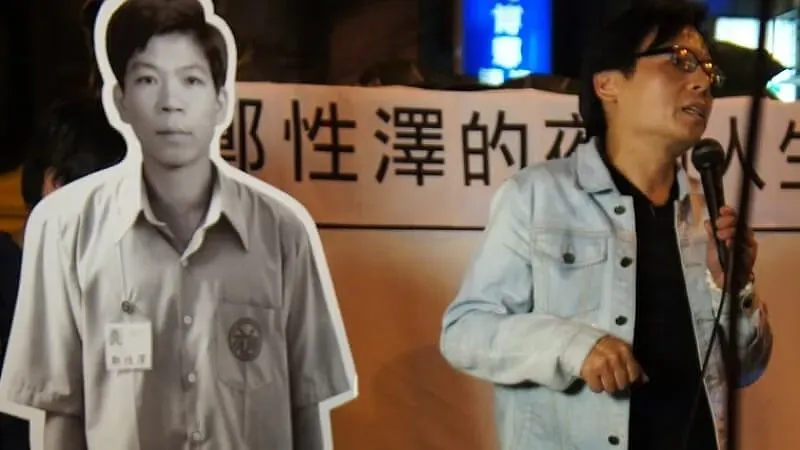
Hsu Tzu-chiang and Cheng Hsing-tse
Last edited: 2026-08-30
Hsu Tzu-chiang, the protagonist of Judicial Yuan Interpretation No. 582, was embroiled in a twenty-year trial over charges of joint kidnapping for ransom and murder, and more than ten years have passed since the announcement of Interpretation No. 582, yet he was recently acquitted for the first time by the Taiwan High Court. Anticipating that the prosecutor is unlikely to admit to a wrongful prosecution, an appeal is bound to be filed, and the attitude of the judges at the Supreme Court will ultimately decide the outcome.
Not long ago, however, there was a finalized death penalty judgment in the 'Cheng Hsing-tse police-killing case' where the Prosecutor-General admitted fault on behalf of the investigative system and filed an extraordinary appeal with the Supreme Court. The Prosecutor-General pointed out that the final judgment unlawfully adopted the record of confession made by Cheng Hsing-tse before the prosecutor shortly after he was tortured by the police, and hoped that the judicial system would reconsider the legality of the judgment. Regrettably, the Supreme Court was unwilling to admit its mistake and dismissed the Prosecutor-General's appeal.
Many say that the Hsu Tzu-chiang case represents self-reflection within the judicial system. If that is truly the case, it is limited at best to the lower courts of the High Court. As can be seen from the dismissal of Cheng Hsing-tse's extraordinary appeal, the Supreme Court remains bogged down in a battle of face packaged as 'judicial prestige.' What occupies the minds of Supreme Court judges is not the life or liberty of a criminal defendant who might be wrongfully accused, but rather how they could possibly have the nerve to overturn a final guilty verdict rendered by their seniors or colleagues. Would not initiating an extraordinary appeal be an admission that the original judges judged wrongly—especially since the judge-rapporteur and presiding judge who previously participated in the factual trial of the Cheng case now respectively serve as presidents of first- and second-instance courts?
Therefore, the finalized death penalty judgment against Hsu Tzu-chiang was overturned thanks to a Judicial Yuan Interpretation. Even though a retrial was thus reopened, the judges still upheld the death penalty judgment at one point. Although it was later commuted to life imprisonment, upon appeal, the Supreme Court judges actually reprimanded the fact-finding court for how it could possibly overturn the criminal facts concerning the previously convicted co-defendant accomplices (Huang Chun-chi and Chen I-lung). Using this as a reason, they revoked the judgment and remanded the case—not questioning whether the evidence of the fact-finding court was insufficient or unlawful, and even less possessing the courage to render an acquittal themselves.
Faced with the Prosecutor-General's challenge to the unlawful judgment in the Cheng Hsing-tse case—particularly concerning the continuing effect of a confession obtained through improper interrogation: the police tortured Cheng Hsing-tse to extract a confession, and over an hour later, a prosecutor came to question Cheng at the hospital where he was under guard. The police who inflicted the torture were all present, and Cheng Hsing-tse did not dare to retract his confession, leading him to confess once again. The Prosecutor-General questioned why, since the judge excluded the police interrogation confession record, the court permitted this confession record made before the prosecutor—which was the sole confession record used to convict Cheng Hsing-tse. For a few hours later, when Cheng Hsing-tse was wheeled in a wheelchair to the crime scene simulation, he finally mustered the courage to cry out his grievance to the prosecutor present, stating that he had not fired any shots. From that moment on, Cheng Hsing-tse consistently denied shooting a police officer, while Lo Wu-hsiung, who actually shot the officer, had already been shot and killed during a gunfight with the police at the scene.
According to media reports regarding the grounds for dismissal, the Supreme Court did not discuss whether the prosecutor, when producing the first record, inherited the atmosphere of violence, coercion, and other improper interrogation tactics created by the police, nor whether Cheng's psychological coercion and oppression still persisted to affect the freedom of his will in making statements. Instead, it reversed the logic, using Cheng's second interrogation record before the prosecutor—which occurred further away from the torture—to reason that since Cheng had already retracted his confession and denied killing the police officer, it showed he had the capacity to make free statements, which in turn proved that the first record at the hospital did not violate his will. What kind of logic and legal reasoning is this? The doctrine of continuing effect discusses how long the impact of improper police interrogation extends into the future, yet the Supreme Court used the defendant's later retraction to retroactively infer that the earlier confession was voluntary! Under this logic, would not the prior confession records of all defendants who later retract their confessions and deny the crime be valid? Not to mention, is this not mocking the defendant for lacking firm willpower? Either you must not fear police retaliation and should retract your confession the very first time you see a prosecutor; if you hold out until the second interrogation to retract it, is it your own fault for having weak willpower and thus serving you right?
Implicated by Wang Wen-hsiao's untruthful 'implication of another,' Su Chien-ho and two others were eventually acquitted upon retrial more than a decade later (and this was certainly not a guilty-verdict-turned-acquittal finalized by the Supreme Court). Su Chien-ho did not admit to the crime even under torture and coercion at the Hsichih Precinct back then, but when transferred to the prosecutor for questioning, he confessed to the murder because he could no longer hold out and suffered a breakdown. He thought the so-called prosecutor was merely a police officer of higher rank, and if he continued to deny the charges, he did not know what further abuse and torment he would be subjected to.
Recognizing the Human Rights Protection Function of Courts
This is perhaps what the public perceives prosecutors to be, and I fear this is also the role many prosecutors aspire to. Can the public clearly distinguish the difference between the roles of prosecutors and police officers? And is the impression of prosecutors in the minds of the general public simply that they stand entirely on the side of the police? Do prosecutors truly have the courage, at a time when everyone is crying out for blood, to instead investigate whether their fellow police officers subjected the defendant to vicious and abusive treatment? Let alone prosecutors—even judges, do they truly dare to examine whether the investigation of cases by police and prosecutors complies with due process of law?
Looking at the final judgment in the Cheng Hsing-tse case, the court did not even dare to explicitly state that the police had engaged in torture, which violated Paragraph 1 of Article 156 of the Code of Criminal Procedure. Instead, it skirted around the issue, stating: 'As this case involves the killing of a police officer, the handling officers and the victimized officers share a relatively close emotional bond. This court holds a reasonable doubt as to whether the police interrogation confession originated from the defendant's free will, and thus it shall not be used as the basis for establishing the defendant's guilt.' After all, (fortunately?) there was still the prosecutor's first record of confession that could be adopted, right? This way, they could avoid offending the police while still convicting the defendant.
Look again at the Hsu Tzu-chiang case: it took twenty years and nine remands before a judge finally dared to disbelieve the co-defendant's 'implication of another' made before police and prosecutors, and to reject the evidence gathered by police collection and prosecuted by prosecutors. If the adjudication culture shaped by the Supreme Court consistently leans toward the police and prosecutors, taking maintaining public order as its vocation, how can you expect a defendant who has suffered state violence and torture to dare muster the courage to seek redress of grievances from prosecutors and judges? Who knows whether the prosecutors and judges will side with the police and make the defendant's life even more unbearable than death?
For decades, the 'judicial prestige' pursued by the adjudicatory system headed by the Supreme Court based solely on confessions has merely been the Emperor's New Clothes used to consolidate the public authority of the police and prosecutors, rather than being built upon the protection of human rights. Only by understanding this can one comprehend why Hsu Tzu-chiang had to drag out twenty years to exchange for an acquittal, and why Cheng Hsing-tse did not dare to cry out his grievance to the prosecutor at the very first opportunity.
This article is an AI-generated translation of the original Chinese text. In the event of any discrepancy, the Chinese version shall prevail.