
Judges, Please Stop Asking About Your Senior Colleagues' Opinions!
Last edited: 2026-08-30
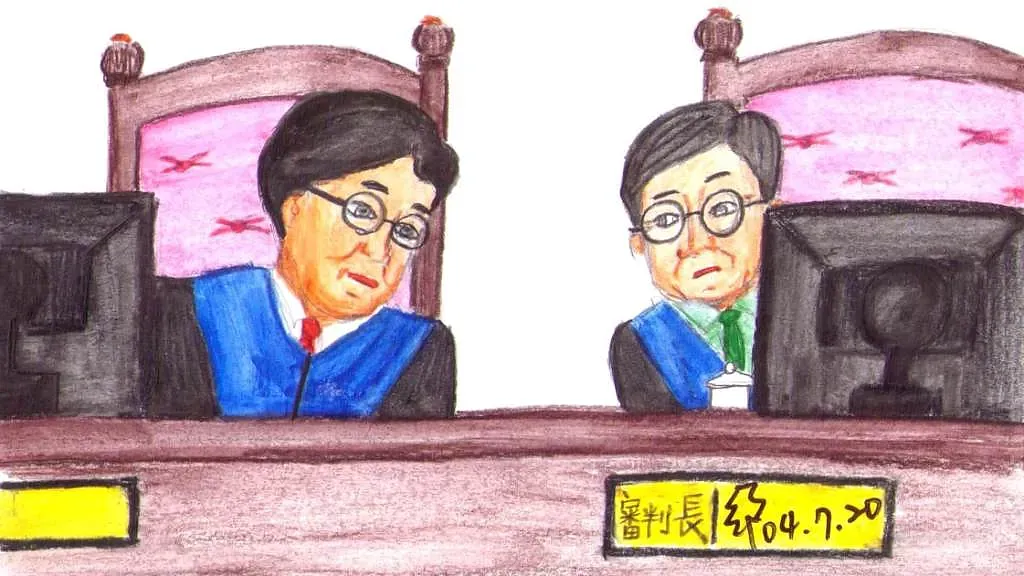
During my summer internship at the Judicial Reform Foundation, I attended several sessions of the Hsu Tzu-chiang retrial (the 9th remand). Oral arguments concluded on August 6, and the judges scheduled the verdict for September 1 at 11:00 AM—marking the exact 20th anniversary of this kidnapping and extortion case. Throughout its protracted litigation, the Hsu case has consistently highlighted two major issues: a culture of presuming guilt and the bad practice of seniority dominance within the judiciary!
The origins of Hsu's case lie in judges identifying him as an accomplice based solely on a co-defendant's confession. Even though Hsu provided an alibi, the court still found him guilty as an accomplice—resembling a plot straight out of "The Groper's Chronicle." "For twenty years, I have been doing the exact same thing: constantly proving my innocence." I once thought that the "presumption of innocence" emphasized in law classes was a matter of course, but hearing these words from Hsu Tzu-chiang himself, I realized they are enough to highlight that Taiwan remains a nation where guilt is presumed!
Behind Hsu Tzu-chiang's twenty years of litigation lies another critical problem: judges have always answered to their senior colleagues in higher appellate courts! In his closing statement during oral arguments, Attorney Yu Po-hsiang painfully pointed out, "Judges have never answered to their senior colleagues in higher courts!" As a law student yet to graduate, this left an indelible mark on me. It turns out that judges' fear of overturning higher court rulings is one of the reasons why Hsu was sentenced to death eight times and life imprisonment twice across previous trials without ever securing an acquittal! Past discussions on factors influencing judicial decisions have tended to focus on political interference, but the closed system of the court is also a source of pressure affecting judges' inner convictions. Judicial officers are all produced through the same examination system and training institute, with judicial training placing heavy emphasis on respecting the "ethics" of senior colleagues. Furthermore, future promotions depend on the evaluations of higher-court judges, and combined with judges' reluctance to admit misjudgments—forming a dynamic of mutual protection to safeguard themselves—these are all serious problems currently undermining judicial independence! However, because judicial officers possess a high degree of professionalism and society grants them a certain status, it is difficult for outsiders to monitor and prevent abuses within such a relatively closed and lofty behemoth of an organization.
After being sentenced to death, Hsu Tzu-chiang wrote in a farewell letter to his mother: "I naively believed that justice was fair, but now I have been bitten so viciously that I am utterly defenseless. My honesty and trust in it ended up being fatal to me, and there is no turning back now." The Hsu Tzu-chiang case is not merely an individual case; it is a budding flower on the early branches of judicial reform. We hope that the judges presiding over this 9th remand will no longer be influenced by higher court judgments, and will have the courage to overturn the guilty verdicts of previous instances to let justice bloom. May September 1 at 11:00 AM become the starting point for Taiwan's judicial transition!

This article is an AI-generated translation of the original Chinese text. In the event of any discrepancy, the Chinese version shall prevail.
