
Judicial Computerization Keeps Judges and Prosecutors from Slacking Off
Last edited: 2026-07-27
Having read Judge Lin Chen-hsien's article "Who Does Criminal Procedure Computerization Make Transparent?", I offer a different observation on how the public views the computerization of trials, submitted here for reference by all sectors of society.
In the legal profession, there is a secret trick to test whether judges are seriously reviewing a case: applying a bit of glue to lightly seal the crucial parts of a legal brief, especially important evidence. After submitting the brief, lawyers later check the case file to see if the glued sections have been torn open, revealing whether the judge actually read the brief and examined the evidence. Experienced lawyers maintain a mental blacklist of judges who neglect case files and evidence.
Judges are not the only ones who fail to review case files and evidence; the problem is even more severe among public prosecutors responsible for prosecuting crimes in court. Public prosecutors often jokingly refer to attending court hearings as "accompanying young masters to study," with the "young masters" referring to the judges. Since they are merely accompanying the study, how much they actually read themselves becomes irrelevant. Consequently, it is extremely common for public prosecutors to ask irrelevant questions in court and improvise stories on the spot. While court-of-first-instance prosecutors at least bring case files to hearings, second-instance prosecutors arrive empty-handed and leave empty-handed, hollowing out the most fundamental adversarial principle of criminal procedure.
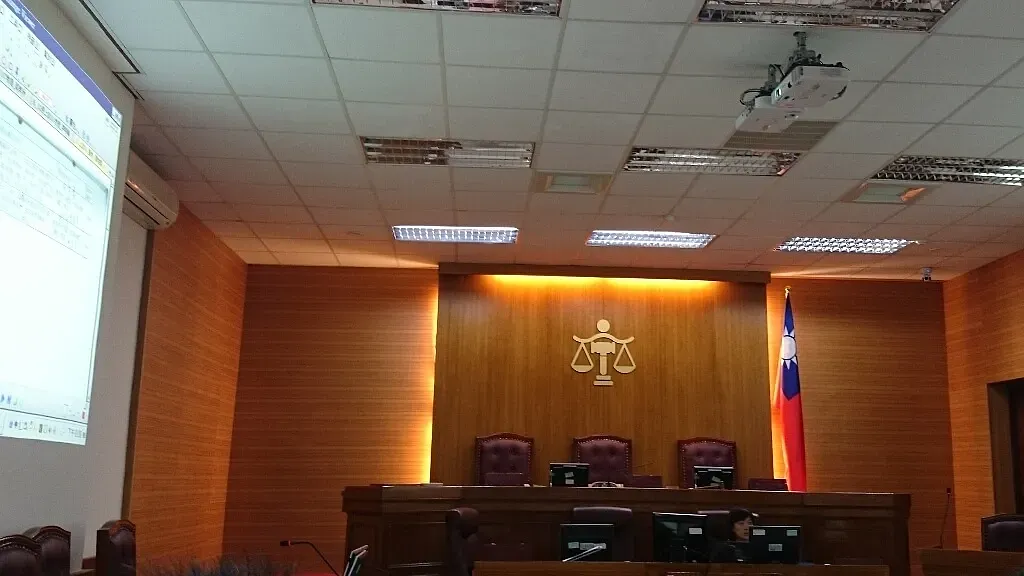
When encountering judges and prosecutors who do not review case files and evidence, lawyers must waste their breath in court trying to make them understand on the spot, otherwise the case is certain to be lost. The question is: while the lawyers are speaking, are the judges and prosecutors even listening? The tech-savvy courtrooms currently being vigorously promoted by the Judicial Yuan are of immense help in solving the problem of judges and prosecutors failing to review case files. Taking the case of Hsü Tzu-chiang as an example, there were a total of 152 transcripts prior to the eighth remand retrial, among which 54 were the most critical police and investigative interrogation transcripts. Judges in previous retrials had only a superficial understanding of the complex and contradictory transcripts of co-defendants and failed to conduct cross-examination, instead piecing together portions of the transcripts unfavorable to the defendant on their own—which was precisely what led to this wrongful conviction of Hsü Tzu-chiang. Currently, the collegiate bench for the ninth remand retrial has computerized all case files and evidence, using tech-enabled courtroom equipment to present them one by one, allowing both prosecutors and defense attorneys to debate the probative value of the evidence. By meticulously examining the co-defendants' transcripts, various errors and suspicious points were thoroughly exposed right there in the courtroom, and the truth of the Hsü Tzu-chiang case became readily apparent.
When citizens go to court, their greatest fear is that clear evidence exists yet the judges and prosecutors simply refuse to look at it, ultimately ruling against them. Judicial computerization utilizes technology sharing to allow judges, prosecutors, and participants to view case files simultaneously in the courtroom, making it the best way to prevent judges and prosecutors from slacking off and being derelict in their duties. Judge Lin's mention of the issue of party privacy in her article is quite reasonable, but the public cares even more about fairness and justice in trials. Furthermore, with technological refinement, we can surely find ways to properly protect privacy while simultaneously making disclosures in the courtroom. Judicial computerization is judicial transparency. The Judicial Yuan should invest more resources into fully implementing tech-enabled courtrooms so that the public can have greater trust in the impartiality of court judgments.
This article is an AI-generated translation of the original Chinese text. In the event of any discrepancy, the Chinese version shall prevail.