
Do Not Say the Public Has No Vision for the Judiciary
Last edited: 2026-07-27
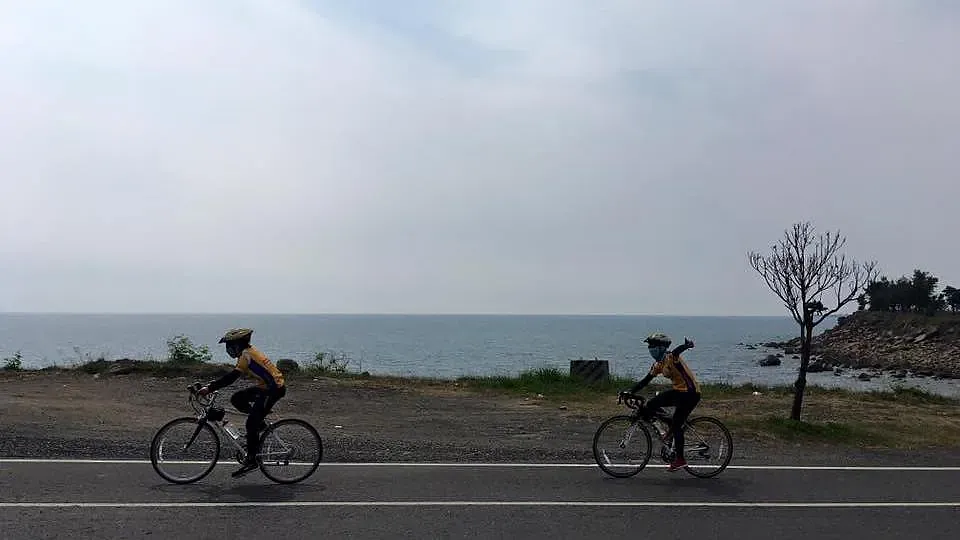
On May 20, the day of President Tsai Ing-wen's inauguration, the "Cycling Around the Island: Delivering Local Judicial Reform Opinions" team was heading toward Shoukaka, tackling the ultimate boss of cycling routes. Enduring temperatures over 30 degrees Celsius, steep slopes, and sudden afternoon mountain rain, we took a break halfway and watched our Facebook feeds get flooded with posts about the oath-taking and inauguration. Among them was the speech stating, "Judicial reform is not merely the internal family affair of legal professionals, but a reform requiring universal public participation." This deeply moved our fellow companions, boosting our morale and strengthening our conviction to deliver the public's opinions to the Presidential Office.
Along the way, we met people from all walks of life, and everyone had insightful views on the judiciary. In Yunlin, while getting our bikes serviced at a repair shop, the owner mentioned that while he is not a legal expert, he was very willing to share his perspectives. He said, "When there are controversial cases in society, the government has the responsibility to give everyone a clear account and help us distinguish between pros and cons. People shouldn't be forced to split into two opposing factions whenever an issue arises, not knowing what to do, and losing faith in judicial judgments!" In Houbi District, an elderly man in slippers shared how he compares various news channels, talk shows, and newspapers to conclude that judicial reform is an absolute must, and that a mechanism for weeding out incompetent judicial officials must be established.
Aside from chance encounters on the streets and at temple squares, we also visited local courts. A judge expressed a wish that before they retire, the public will be able to trust judges. Representatives from courts and prosecutors' offices pointed out that judicial physical infrastructure must be improved before corresponding reforms—such as public participation in trials or technologically advanced courtrooms—can be implemented. Even more citizens wrote down "A sentence for Taiwan's judiciary" on postcards: "I love this island of Taiwan, I hope you all keep it up," "I don't want the judiciary to turn into a TV drama," "Judges should not be constrained by performance evaluations," and "I hope trusting the judiciary becomes an attitude for daily life." There was encouragement, and there was skepticism.
It is not that the public lacks imagination about the judiciary, nor that they are incapable of offering suggestions for reform; rather, past models have made people feel that saying anything is useless and that their voices will not be heard or valued. This is also the significance of our face-to-face cycling tour around the island. In fact, public opinion across various regions is like "the finger pointing at the moon"—as long as we calmly follow where it points, we can see the direction for reform. The 1999 National Judicial Reform Conference, led by legal elites, now looks like merely grinding a tile into a mirror through meditation. The upcoming National Guoshi Conference on Judicial Reform in October must not repeat the same mistake.
Carrying the public's expectations for reform from all over, our cycling team is now heading from the Northeast Coast toward the Presidential Office. The toughest part of the island-wide journey was the straight, endless headwind stretches. Thinking about how judicial reform is much the same—facing obstacles along the way, yet enduring the hardship to keep pedating forward precisely because we know our goal—we sincerely hope the new president sees the scenery we have seen and builds a trustworthy Taiwanese judiciary.
※ This article was published in the Liberty Plaza on 2016-05-24
This article is an AI-generated translation of the original Chinese text. In the event of any discrepancy, the Chinese version shall prevail.