
Good Grief, Such a Prosecutor
Last edited: 2026-07-27
Last year, a bizarre judgment circulated within the legal community. It revealed that a prosecutor had threatened a defendant by saying, "(The deceased) appeared in my dream and told me that he will go after dishonest people... If you are dishonest, his ghost will come back to settle scores with you." The judge ruled that the interrogation record lacked evidentiary value. The case number for this judgment is 103-Shang-Su-196 by the Taiwan High Court Kaohsiung Branch Court, which is publicly available on the Judicial Yuan's Judgment Search website. Because court judgments do not disclose the names of investigating prosecutors, everyone was extremely curious about the identity of this prosecutor who not only receives revelations from ghosts through dreams, but can seemingly perform spiritual visitation as well.
After being informed by a helpful member of the public, the JRF discovered that the prosecutor's issues went far beyond ghostly dreams; the entire investigative procedure seriously violated the provisions of the Code of Criminal Procedure. First, the prosecutor began the interrogation without informing the defendant of his rights. During that interrogation, the defendant did not know he had the right to remain silent, to retain counsel, and to request the investigation of evidence—he only knew that if he did not confess, he would be detained. The helpless defendant confessed, but the prosecutor wanted more and demanded that the defendant implicate other co-defendants. During that same interrogation, the prosecutor similarly failed to administer an oath in accordance with the law, and failed to inform the defendant of the legal requirement to testify truthfully as a witness. The defendant told everything he knew, but the prosecutor was still unsatisfied, believing things were being concealed, and therefore unjustly detained the defendant. While in detention, the defendant was checked out by the police at the prosecutor's behest, and finally, a statement that the prosecutor wanted to obtain was produced. As for whether the contents of that statement were true, heaven only knows.
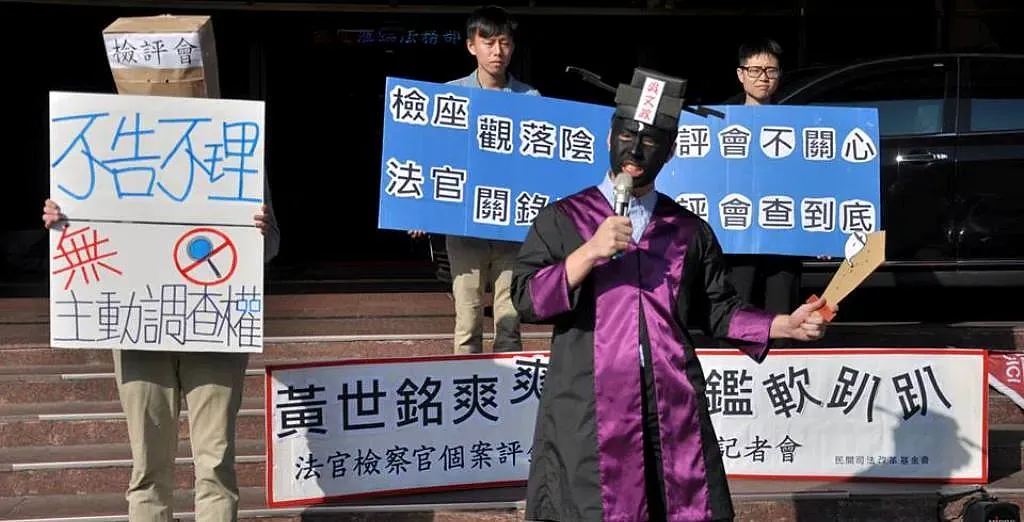
Yesterday (the 6th) marked the third anniversary of the implementation of the Judges Act individual case evaluation system. The JRF announced its investigative findings, pointing out that Wu Wen-cheng of the Pingtung District Prosecutors Office was this ghost-seeing prosecutor. In response, the Pingtung District Prosecutors Office publicly stated that they affirm Wu Wen-cheng's case-investigating ability and integrity. Backed by his superiors, Wu Wen-cheng also responded: "During the homicide case I took over back then, the collective perpetrators colluded on their stories, making it difficult to break their psychological defenses. Sensing that one of them was trembling while being questioned, I used notions of ghosts and deities to crack the case. Although it did not comply with the provisions of the Code of Criminal Procedure, and this part was not included as evidence, it successfully solved a long-pending cold case, and the perpetrator was sentenced to seven and a half years in prison by the court." He showed not a shred of shame for breaking the law, nor did he feel any remorse over the possibility of wrongfully accusing an innocent person.
Law enforcers must abide by the law themselves; otherwise, how can they enforce the law upon others? When prosecutors disregard the provisions of the Code of Criminal Procedure while investigating cases, they have already lost the qualifications to prosecute crimes. Former Prosecutor-General Huang Shih-ming is the most painful lesson in this regard. In Taiwan, how many prosecutors like Wu Wen-cheng, who are utterly obsessed with solving cases and gaining promotions, are still out there? It is hardly a wonder that public trust in the judiciary remains chronically low!
This article is an AI-generated translation of the original Chinese text. In the event of any discrepancy, the Chinese version shall prevail.
