
The Withering of South Korea's Citizens' Participation in Trials: Has the Judicial Yuan Not Noticed?
Last edited: 2026-07-27
Photo/PNN Public Television News Issue Center
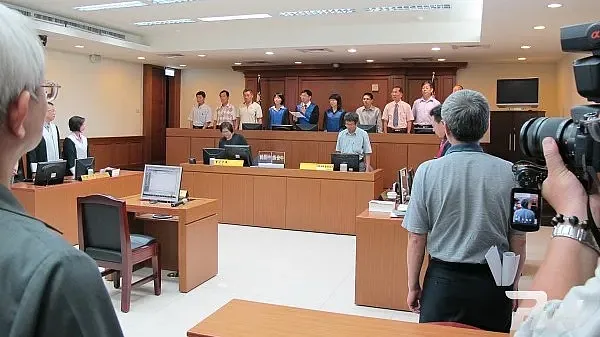
On October 29, 2013, a lawsuit in the Jeonju District Court in South Korea sparked a heated debate on the system of citizens' participation in trials. An Do-hyun, a professor at Woosuk University and an intimate confidant of opposition presidential candidate Moon Jae-in, was indicted during the 2012 presidential election for posting critical remarks on Twitter about candidate Park Geun-hye and her father Park Chung-hee, under charges of spreading false rumors and defaming a candidate.
On the eve of the trial, Moon Jae-in made a personal appearance to show his support, drawing even more attention to the proceedings. While seven jurors unanimously reached a verdict of not guilty, the court decided to postpone the sentencing. Ten days later, it delivered a partially not-guilty verdict, convicting him of defaming a candidate and issuing a fine of 1 million South Korean won (approximately NT$30,000). In a South Korea deeply fractured by regional antagonism, this lawsuit was like adding fuel to the fire, igniting the citizens' participation in trials system that had been piloted for years.
"Political cases must never be subjected to citizens' participation in trials!"
Kim Chin, a commentating commissioner for the JoongAng Ilbo, expressed indignation on a JTBC program, arguing that the An Do-hyun case should not have been opened to citizens' participation in trials. The conservative camp also launched fierce attacks on the qualifications of the jurors, arguing that the political leanings of jurors in the Jeolla region were far too obvious and that Moon Jae-in's sudden appearance on the day of the trial severely influenced the jurors' mental impressions. Under such circumstances, facing Park Geun-hye, who hailed from the Gyeongsang region, a fair and rational verdict was simply impossible.
On December 31 of the same year, the Ministry of Justice of South Korea proposed a partial amendment draft to the Act on Criminal Trials with Citizens' Participation (hereinafter referred to as the "Citizens' Participation Act"), which explicitly stated that "cases subject to the citizens' participation in trials shall exclude those regulated by Article 32, Paragraph 1, Item 6 of the Court Organization Act." As soon as this news broke, it caused a public uproar and was criticized as the "An Do-hyun Provision." The reason was that Article 32 of South Korea's Court Organization Act clearly stipulates the jurisdiction of collegiate panels of district courts and their branch courts. Item 6 of Paragraph 1 of the same article encompasses cases under the jurisdiction of district court collegiate panels as prescribed by "other laws." Meanwhile, Article 269 of the Public Official Election Act stipulates that criminal suspects and their accomplices shall undergo the first instance trial before collegiate panels of district courts and their branch courts in accordance with Article 32 of the Court Organization Act. In other words, if this amendment passes, similar political cases in the future will no longer be eligible for citizens' participation in trials.
Professor Suh Bok-hyeok, head of the Judicial Watch Center at the People's Solidarity for Participatory Democracy (PSPD) in South Korea, stated that this amendment not only excludes political cases, but also severs individual cases that other laws mandate to be tried by district court collegiate panels. Because these have consistently been major cases drawing significant societal attention, the Ministry of Justice smuggled this through via such circuitous methods, running counter to the original intent of enhancing judicial transparency and public trust, while further pushing the citizens' participation in trials toward becoming an empty shell, bringing the crisis of the system's withering back to the surface [1].
There are reasons why South Korea's citizens' participation in trials has repeatedly faced difficulties. Aside from granting courts the power of exclusion, parties' rights to motion and withdrawal (the Ministry of Justice's current amendment even proposes granting prosecutors the right to petition the court for case exclusion), ever since the system was piloted in 2008 and its final form established in March 2013, it has never been able to extricate itself from the quagmire of unconstitutionality. Jurors' verdicts still hold no binding force over the courts and fail to act as a check on judicial power. Even though Article 49, Paragraph 2 of the Citizens' Participation Act stipulates that if judges render a judgment different from the jurors' opinions, they must state the reasons in the written judgment—leading some optimistic scholars to believe that jurors still exert a certain degree of influence—apart from clear violations of the constitution, laws, or related regulations, there has always been a lack of concrete and clear principles regarding the criteria judges use to determine that a juror's verdict is inapplicable. If merely writing the reasons for non-adoption into the judgment is considered reigning in judicial power, such judicial reform is petty and self-congratulatory indeed.
The background and current predicament of South Korea's formulation of the citizens' participation in trials system thoroughly illustrate a fundamental problem: viewing legal laypersons through an attitude of judicial authoritarianism and elitism, and continuously narrowing the space for public participation, ultimately departs from the original aspiration of judicial democratization.
Coincidentally, the lay participation system recently introduced by the Judicial Yuan of the Republic of China similarly plays the false proposition of unconstitutionality concerns. The opinions of lay participants serve merely as references. Facing criticisms such as "you are only allowed to watch, not to judge; you are only given a voice, but your voice counts for nothing," it surprisingly invoked the South Korean experience as a solution, arguing that adopting a model of expressing opinions without voting can yield the same results. Yet, it has never reflected on why South Korea handed in impressive scores on juror satisfaction surveys yet walked its entire system into a dead end.
Drawing on the experiences of foreign legal systems is meant precisely to avoid detours and allow the implementation of a system to achieve its original intent. The Judicial Yuan has clearly witnessed a painful farce of judicial reform, yet chooses to feign blindness. This is perhaps unsurprising, because a script that requires no sharing of power can be performed with the same solemn gravity, and hollow applause will still ring out.
Notes
- Regarding the Ministry of Justice's current amendment in South Korea, the PSPD Judicial Watch Center submitted an opinion paper on January 20, 2014, opposing the continuous narrowing of the scope of application for citizens' participation in trials, as well as the provision allowing prosecutors to petition the court for case exclusion. For the full text of the opinion paper, please see: http://www.peoplepower21.org/Judiciary/1125070
This article is an AI-generated translation of the original Chinese text. In the event of any discrepancy, the Chinese version shall prevail.