
Regarding President Tsai Ing-wen's Nomination of Hsieh Wen-ting and Lin Chin-fang as Grand Justices and respectively President and Vice President of the Judicial Yuan – A Letter to the President from the Judicial Observer Coalition
Last edited: 2026-11-03
Post-Meeting Statement
- The President expressed understanding of the Coalition's demands and stated that she would carefully consider the matter as a whole following the meeting.
- In terms of procedure, the President in principle agreed to the rigorous parliamentary review procedure proposed by the Coalition, and will take the political schedule into consideration while urging the legislature to amend the Act Governing the Legislative Yuan's Power.
- While the National Judicial Reform Conference is certainly urgent, a rigorous review of personnel appointments is even more important; even if the National Judicial Reform Conference is delayed as a result, it is entirely acceptable.
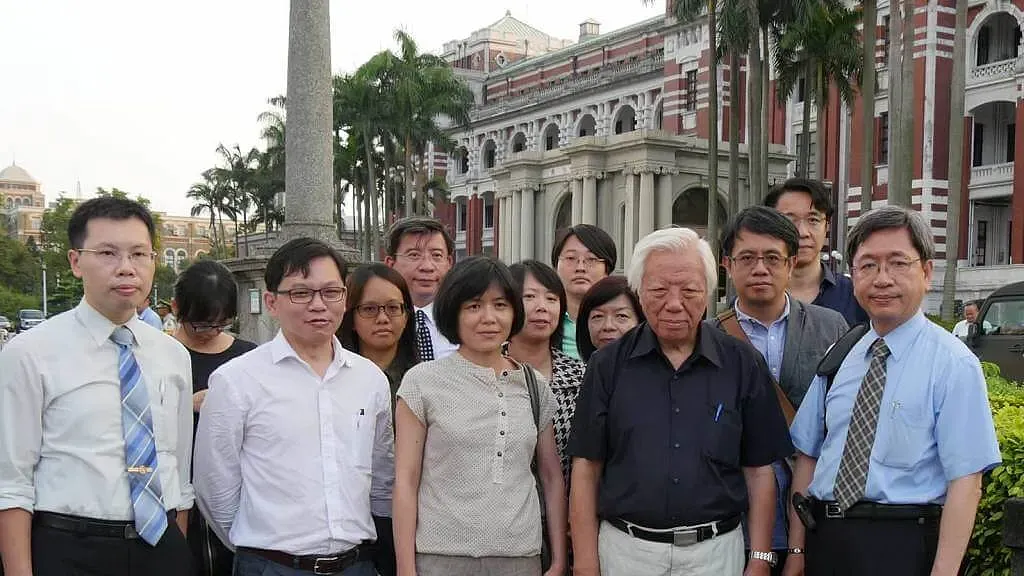
Regarding President Tsai Ing-wen's nomination of Hsieh Wen-ting and Lin Chin-fang as Grand Justices and respectively President and Vice President of the Judicial Yuan, the Judicial Observer Coalition visited the President at 4:00 PM today (July 21). The following is the letter presented to the President during today's visit:
-
The Presidential Office's advisory and vetting process should be prompt, public, and transparent to ensure nominees are subject to public scrutiny
To implement substantive review of Grand Justice candidates, the Legislative Yuan must have sufficient time to schedule the review process while also allowing society the opportunity for scrutiny. Therefore, the nomination of Grand Justice candidates should afford the Legislative Yuan a preliminary review period of one to two months or more, giving society adequate time for scrutiny. Meanwhile, the Coalition calls on the advisory committee to publish the list of self-recommended and recommended candidates, explain the vetting criteria used by the committee, and provide the reasons for selection of the candidates ultimately submitted to the President. Furthermore, following the President's nomination, in addition to explaining the nomination criteria for nominees across various fields to the public, relevant information on the nominees—including their educational background, work experience, property, tax records, and legal publications—should be promptly disclosed online to the entire citizenry in the interest of public credibility.
-
Flawed decision-making mindset will ultimately doom judicial reform to failure
Prior to the election, the President proposed nine major judicial reform policies, and recently promulgated the "Key Points for the Establishment of the Preparatory Committee for the National Judicial Reform Conference," demonstrating the President's determination to implement judicial reform. However, in order to catch up with the National Judicial Reform Conference scheduled to be promoted in October, the President hastily and carelessly nominated candidates for the President and Vice President of the Judicial Yuan, firmly believing and proclaiming that reform can only succeed if led by senior administrative bureaucrats within the system—this is truly a fallacy in personnel selection thinking. Long-standing and deep-seated systemic illnesses in the judiciary require bold and decisive vision to be transformed; administrative bureaucrats have always been set in their ways and lacking in fresh perspectives, so how can they change overnight? The two nominees have served as high-ranking officials in the prosecutorial and judicial systems for many years, and have successively served as Secretary-General of the Judicial Yuan for many years, during which time they made no shortage of specific remarks and actions resisting reform, repeatedly triggering public outrage. How can they possibly be promoted to President and Vice President? Given the nominees' obsolete pasts, they are unfit even to serve as Grand Justices, let alone as President and Vice President of the Grand Justices! The public holds deep expectations for the President; should the President's flawed mindset in personnel selection lead to a failure to advance judicial reform, it will ultimately provoke a strong backlash from public opinion that held such high expectations!
Controversial matters concerning the nominees:
- Convenor Hsieh Wen-ting handled many cases concerning transitional justice during the martial law period, yet failed to make this public at the very first instance after his nomination, showing an intent to deliberately conceal it; during his tenure as Secretary-General of the Judicial Yuan, he left office as Secretary-General due to the High Court judges' corruption scandal, only to be promoted instead as President of the Commission on the Disciplinary Sanctions of Functionaries; during his tenure at the Commission, his handling of the sexual assault case at a special education school in southern Germany [Note: Southern Taiwan] appeared overly lenient.
- During her tenure as Secretary-General of the Judicial Yuan, Secretary-General Lin Chin-fang not only vigorously promoted the "lay participation system" but also advocated in 2012 for strict restrictions on lawyers and parties accessing courtroom audio and video recordings. Furthermore, during the 2014 amendments to the Court Organization Act, she argued that "publicly disclosing courtroom audio recordings shall be unconditionally deemed a criminal act," demonstrating a lack of commitment to human rights protection. In the Meihwa SHI Constitutional Interpretation case, she publicly defended Vice President Su's unconstitutional comments, disregarding the norms of the constitutional system; her public opposition to gender quota legislation further demonstrates a lack of gender awareness.
-
Controversies over the constitutional roles of the President and Vice President of the Judicial Yuan should be resolved through constitutional amendment
The President and Vice President shoulder the implementation of judicial policy and must bear responsibility for its success or failure. Therefore, in the past upon the inauguration of a new president, the President and Vice President of the Judicial Yuan would resign following precedent to take responsibility for previous judicial policies. However, Grand Justices, as the ultimate guardians of the judicial constitution, ought to uphold the principle of the separation of powers among the executive, legislative, and judicial branches, and should not overlap with the executive power. The design of judicial power under the current Constitution makes the President and Vice President of the Judicial Yuan policy promoters of judicial administration, which is fundamentally at odds with the judicial nature of Grand Justices. The President should carefully consider the issue of judicial independence and promptly transform the Judicial Yuan into a purely adjudicatory body through constitutional amendment to resolve the existing judicial-constitutional impasse.
-
Prior to the completion of legislative reform for parliamentary personnel review, the personnel nominations of Grand Justices and concurrently President and Vice President of the Judicial Yuan should be withdrawn
Although the Coalition met with various caucus groups in the Legislative Yuan this Tuesday (July 19) and obtained promises from the Democratic Progressive Party (DPP), People First Party (PFP), and New Power Party (NPP) caucuses to gather detailed information on the nominees and conduct rigorous reviews, past records of parliamentary personnel reviews show that reviews lacking a legal basis ultimately end up being handled sloppily. Regrettably, during yesterday's (July 20) "Caucus Consultation Meeting," the DPP caucus refused to schedule the draft amendments to the Act Governing the Legislative Yuan's Power—which pertain to personnel reviews—for the provisional session next week. Before parliamentary reform legislation concerning personnel review is passed, if the President still insists on putting forward candidates whose commitment to judicial reform is ambiguous and whose authoritarian backgrounds require detailed investigation, thereby tacitly allowing the DPP caucus to use its majority advantage to forcefully push through the personnel nominations of Grand Justices and concurrently President and Vice President of the Judicial Yuan in the legislature, the result will not only destroy the President's promises of judicial reform, but also destroy the President's promises regarding parliamentary reform and transitional justice! It is earnestly hoped that the President will withdraw the personnel nominations of Grand Justices and concurrently President and Vice President of the Judicial Yuan before the Legislative Yuan passes the legislation on personnel review reform and before the Ministry of Justice releases information on nominees' involvement in cases potentially relating to transitional justice, so as to meet the public's expectations and trust in the President!
-
The "Grand Justice Nomination Advisory Committee" should clarify whether it recommended this nomination; otherwise, the President should reorganize the "Grand Justice Nomination Advisory Committee"
To ensure public credibility for the nomination of Grand Justices, the President established the "Grand Justice Nomination Advisory Committee" to vet candidates recommended from various sectors. However, upon the announcement of the committee members, the Coalition criticized them as being old bureaucrats, offering little room for hope. The nomination process for the President and Vice President of the Judicial Yuan was entirely opaque, lacking public information, rendering the nomination process untraceable. Whether the "Grand Justice Nomination Advisory Committee" approved of the nominated candidates in this instance is unknown to the outside world, and they ought to state their stance publicly. If the advisory committee is unwilling to disclose its intention promptly, the Coalition can only infer that it "approved." If the candidates approved by the advisory committee have triggered widespread criticism regarding their unsuitability, the committee's judgment is evidently out of touch with society. If the advisory committee did not approve of the candidates, yet the President insisted on nominating them anyway, it only further demonstrates the committee's ineffectiveness. Regardless of whether the committee approved of this nomination, the President should reorganize the "Grand Justice Nomination Advisory Committee" to prevent the same situation from happening again!
Visiting Representatives
Professor Ch'u Hai-yuan / Convenor, Judicial Observer Coalition
Attorney Lin Yung-sung / Chairperson, Judicial Reform Foundation
Professor Ch'en Chao-ju / President, Taiwan Forever Democracy Platform
Professor Yen Chueh-an / Supervisor, Taiwan Forever Democracy Platform
Secretary-General Li Yueh-hui / Secretary-General, Taiwan Forever Democracy Platform
Professor Chiu Wen-tsung / President, Judicial Reform Foundation [Note: Actually Society / 澄社]
Attorney Cheng Wen-ting / Secretary-General, Taiwan Law Association
Professor Tu Yu-yin / Executive Member, Taiwan Association for Human Rights
Attorney Lin Shih-fang / Director, Awakening Foundation
Secretary-General Ch'in Yu-jung / Secretary-General, Awakening Foundation
Professor Huang Hsiu-duan / Chairperson, Citizen Congress Watch
Executive Director Chang Hung-lin / Executive Director, Citizen Congress Watch
Attorney Kao Jung-chih / Spokesperson, Judicial Observer Coalition
Attorney Ch'en Yu-fan / Deputy Executive Director, Judicial Reform Foundation
Judicial Observer Coalition
Society
Taiwan Forever Democracy Platform
Taiwan Law Association
Taiwan Association for Human Rights
Association for Innocence Project Taiwan [Note: Taiwan Association for Innocence]
Citizen Congress Watch
Awakening Foundation
Judicial Reform Foundation
This article is an AI-generated translation of the original Chinese text. In the event of any discrepancy, the Chinese version shall prevail.