
A Defensive Judiciary Cannot Win Dignity
Last edited: 2026-11-03
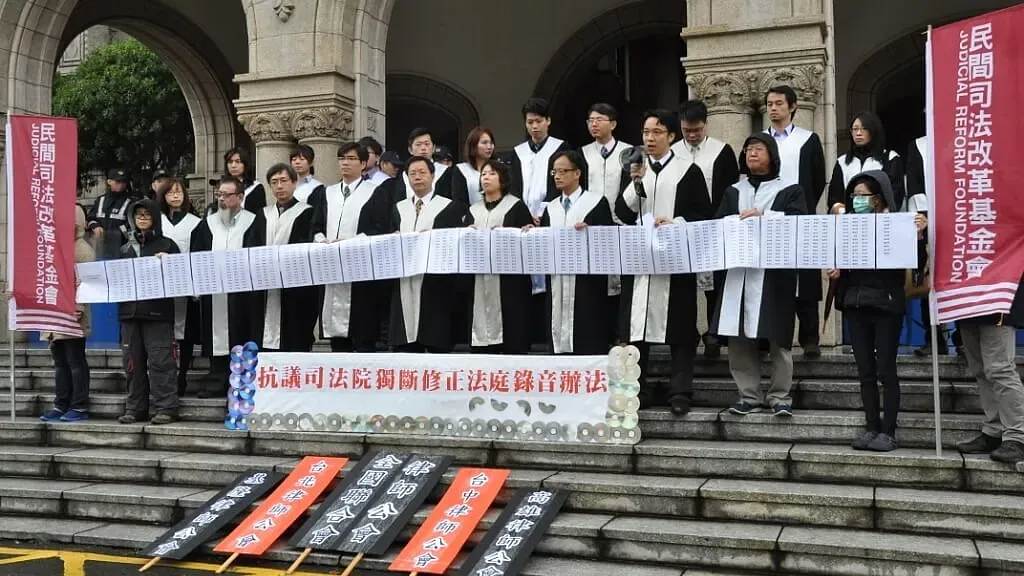
The Judicial Yuan is amending the Court Organization Act, focusing on courtroom audio recording and increasing penalties for the "crime of contempt of court." The Judicial Yuan states that the purpose of the amendment is to "enhance judicial quality and efficiency, boost public confidence in the judiciary, and balance the rights and interests of litigants and participants present in court."
First, regarding the issue of courtroom audio recording. The public has already grown extremely impatient with the government's abuse of the Personal Data Protection Act to resist sunshine, transparency, and information disclosure. Previously, the Judicial Yuan directly issued an order to "force it through," after which lawyers and litigants could almost never obtain courtroom audio recordings, sparking a major backlash.
The reasons for the strong backlash are very simple. Given Taiwan's current situation, prosecutors and police violating the principle of non-disclosure of investigations is ubiquitous, and citizens' unseemly moments are frequently and inexplicably exposed to the public. Once prosecutors' misconduct in hearings is exposed by the media, the entire system jumps up and resists. Why should prosecutors be allowed to hide while ordinary citizens deserve to be exposed? Just because they are the ruling officials? This is from the perspective of oversight.
Furthermore, courts are inherently public trials, and public trials are used to ensure the dignity, credibility, and justice of the judiciary. Providing audio recording discs has been practiced for years without any insurmountable difficulties. Hearing transcripts are often very concise, and our judicial culture places an extreme emphasis on transcripts, making it inevitably necessary to listen to the recordings afterward to seek corrections. Looking back, if President Ma had not had the opportunity to listen to the recordings and correct the transcripts when he was indicted, and had instead been convicted all the way through, would he have still had the chance to become president?
The Judicial Yuan's simultaneous amendment of courtroom audio recordings and the "crime of contempt of court" naturally leads one to associate the move with raising criminal penalties to "fix" people they deem to be "improperly using" courtroom audio recordings. We must warn the Judicial Yuan: do not live in your own ivory tower. Improperly raising the threshold for obtaining courtroom audio recordings, aside from infringing upon the litigation rights and interests of the people, creates the most direct public perception that the judiciary is rejecting sunshine, rejecting transparency, and rejecting oversight.
To threaten people with severe crimes is nothing more than judicial intimidation. This defensive mindset will not "boost public confidence in the judiciary"; instead, it will invite the mockery of returning to the "secret trials" of the Middle Ages, taking the judiciary backward. Greater transparency and openness are the ways for courts to earn dignity and respect, not the other way around.
Finally, we must emphasize that we do not oppose the "crime of contempt of court"; rather, we are concerned that this charge will only be used to discipline "disobedient citizens." From then on, no one will dare to defy a judge's will in the courtroom, and no lawyer will be willing to speak up vigorously for their clients.
Violations of the non-disclosure of investigations that result in trial by media and populist pressure constitute the true "contempt of court." Prosecutors failing to actively present arguments and missing deadlines to submit evidence are what actually obstruct judicial adjudication. We do not believe any prosecutor will ever be punished for "contempt of court," just as we worry that the judiciary is prescribing the wrong medicine in its quest to win dignity.
※ This article was published in the Liberty Times under the title "Can the Judiciary Win Dignity This Way?". This is the original full text.
This article is an AI-generated translation of the original Chinese text. In the event of any discrepancy, the Chinese version shall prevail.