
The Psychological States of Death Row Inmates and Judges
Last edited: 2026-07-27
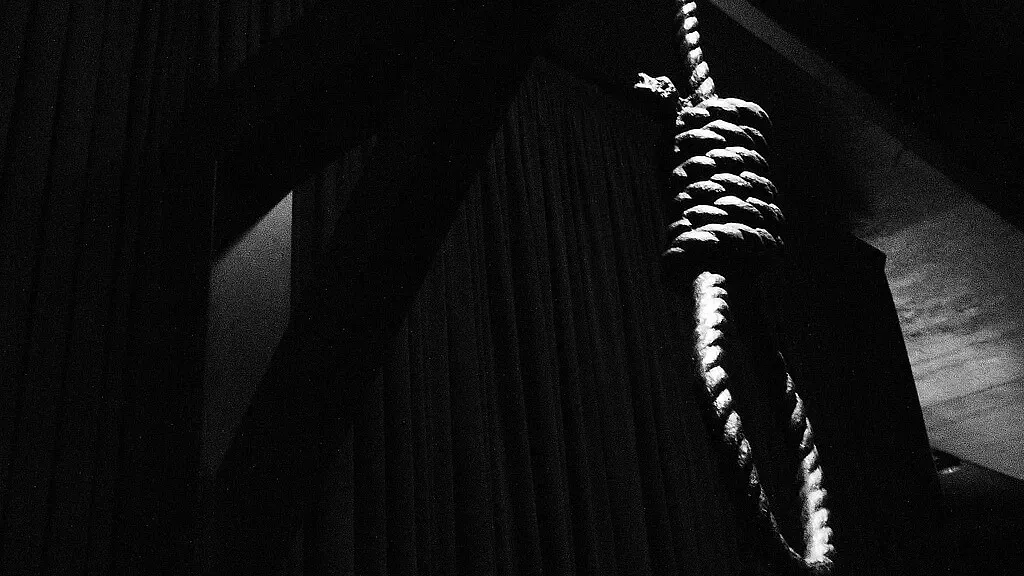
Photo source / Global Panorama
"What were you thinking in your mind when you killed someone?" I asked. "I forgot," he replied. "Oh..." I responded thoughtfully. A brief silence. "However, that single moment affects your entire life; how could you possibly forget?" This was what I truly thought in my heart. I found it hard to believe his words.
Much, much later, the same question came up in conversation again. "When you killed the person, what were you thinking?" I asked once more. He replied: "The me of today cannot really understand the me of the past. Gradually, I feel that my past was actually absurd, and I slowly find it hard to understand what on earth the past me was thinking." Then, he added: "At the moment of the killing, my mind was a complete blank. Recalling it afterwards, no matter how hard I tried, I couldn't remember." Looking at his gaze and expression, based on my understanding of him over the years, I believe what he said. Yet, it remains hard to understand: at such a crucial moment, why would it be a "blank"? How could he "forget"?
A Blank Psychological State
Later on, I found an answer to the question in my own mind—this might be a psychological self-protection mechanism. He rejected his past self; therefore, in order to continue living, that darkest part of him was psychologically blanked out, forgotten, and dissolved.
Much like losing consciousness, to a certain degree, it may be a "protective device." Because the body suffered severe trauma or the psychology was too painful, one temporarily fainted. Once the body adjusts and can adapt, one slowly wakes up. The psychology may share a similar mechanism with the body. Of course, I am not a psychologist; this is merely my conjecture.
I surmise that "that" moment is simply too heavy for a death row inmate. Especially years later, if they have gradually come to reject their past selves. In the dead of night, facing the state and society using the death penalty to pronounce judgment—which symbolically means all people connected to them condemning them in the harshest possible way, severing all forms of relationship with them.
Rejecting oneself and wanting to survive may require a bit of a protection mechanism. Being blank is a protection mechanism; forgetting is a way of protecting oneself. Perhaps it is not that they truly want to forget, but rather that no matter how hard they try, they cannot remember. Especially given the uncertainty of not knowing when they might be executed—to put it nicely, this often fosters the ability to "live in the moment"; to put it bluntly, it is simply "taking it one day at a time."
Taking the "Spirit" of the Covenants Seriously
Recently, led by judges of the Supreme Court, alongside otherwise well-regarded judges, there has been a seemingly earnest effort to use the International Covenant on Civil and Political Rights (ICCPR) from the two Covenants to lecture on how the two Covenants do not prohibit the use of the death penalty. Starting from statutory interpretation, they argue all the way to which body is the competent interpreting authority; employing both positive deductions and inverse interpretations. They make it sound terribly serious.
After all, Taiwan is still a country with the death penalty. Regardless of what laws judges use to sentence someone to death, they should not pull out the two Covenants to "escort" or justify it. Ask anyone in the world: which human rights covenant is representative of the abolition of the death penalty? Everyone will answer: the International Covenant on Civil and Political Rights (ICCPR) among the two Covenants.
If one were to view it sincerely, honestly, and seriously: every single invocation of the Covenant can only serve to reduce or minimize the application of the death penalty, rather than being used to legitimize a death sentence. Statutory interpretation should aim to avoid the death penalty as much as possible. The competent interpreting authority also tells you not to hand down death sentences whenever possible. Positive deduction aims to abolish the death penalty, while inverse interpretation dictates that the imposition of the death penalty must be restricted with extreme rigor. This is the spirit of the Covenant.
The difference between a legal pedant and a true jurist lies within a razor-thin margin. It solely depends on whether one grasps the spirit of the law and delivers the most holistic and comprehensive interpretation. We rely far too heavily on the death penalty without any self-awareness. When that reliance grows so deep that we try to resolve every problem with the death penalty, we are nearing madness. Irrationality is not necessarily always wrong; sometimes people do need a touch of irrationality to balance life. However, the state cannot afford to be irrational. Judges, who represent the state, even more so; they can hardly just be ordinary "people."
Have the Judges Forgotten Too?
To a certain degree, after the implementation of the two Covenants, requiring judges to accept a drastic shift—from being able to hand down death sentences straight to nearly being barred from doing so—is practically asking judges to reject their past actions. Especially for judges who have previously handed down death sentences that were subsequently carried out, how excruciating it must be; it is virtually demanding that their present self reject their yesterday's self. Depriving a person of life inevitably involves the deepest moral dimensions of the psyche, which cannot be altered simply by amending laws.
Regardless of the form—whether killed by the state or executed by one's own hands—those who kill carry psychological pressure to varying degrees. The sophistry of judges may merely be a psychological protection mechanism, and before abandoning their past beliefs, they can only protect themselves in this manner. What is rather disheartening is the lack of vision; having finally introduced world-class systems, those who operate them still emit only the lamentations of a small nation.
What we need are vision and forward-looking perspectives.
This article is an AI-generated translation of the original Chinese text. In the event of any discrepancy, the Chinese version shall prevail.