
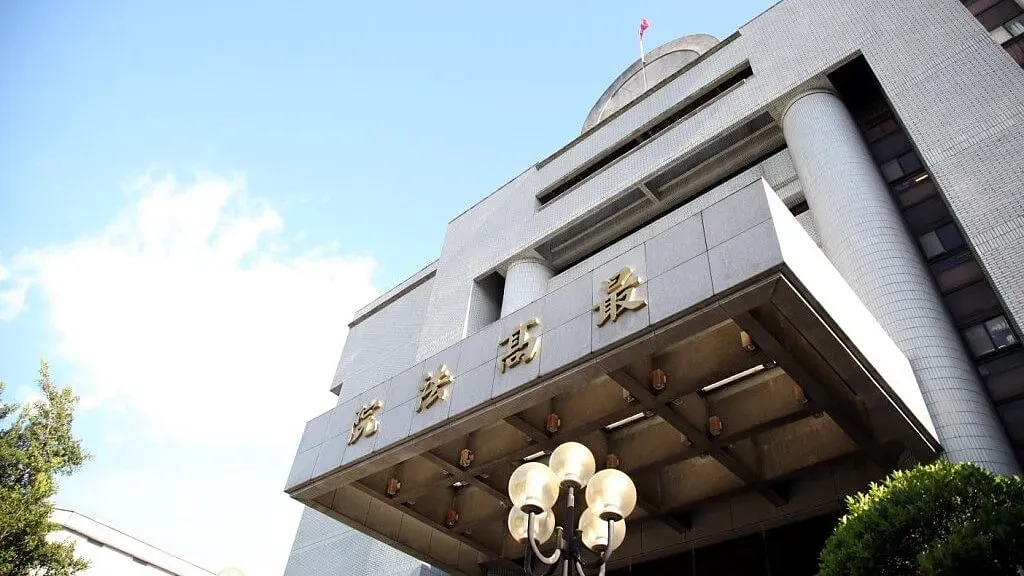
The Soul-less and Lifeless Supreme Court
Last edited: 2026-07-27
Just as the Supreme Court was about to reach a full-year record without a single finalized death sentence, it broke the streak. The Supreme Court upheld the death penalty for P'eng Chien-yüan, who set fire to a friend's karaoke bar, resulting in five deaths and three injuries. Notably, this case underwent a rare two rounds of oral argument. Although the previous ruling was revoked and remanded on weak grounds, the reasoning in the current judgment still failed to highlight the focal points of the oral arguments. In particular, the Supreme Court consistently refused to allow the defendant to appear in court to make statements, and shockingly assigned the same panel of judges for both appellate reviews—both of which are grave procedural flaws.
The reasoning behind this finalized death sentence even more egregiously violates the principle of horizontal binding force among courts of last resort. First, in another murder case last year, the Supreme Court rendered a correct and exemplary judgment (102-Tai-Shang-4289), establishing the legal interpretation that individuals with mental disabilities must not be sentenced to death or executed, based on compliance with the two Covenants, the views of the Human Rights Committee, and concluding observations by international independent experts reviewing Taiwan. This was the best demonstration of Taiwan's commitment to the path of abolishing the death penalty and respecting the right to life following the passage of the Enforcement Act of the Two Covenants. Yet, why would this death penalty judgment, rendered by a different division, prefer to take a regressive path of degradation? Furthermore, regarding defendant P'eng Chien-yüan—who was not found by the fact-finding court to have a mental disability—the Court "usurped the role of the main guest" by arguing, in a manner resembling obiter dicta, that individuals with mental disabilities can be sentenced to death, thereby issuing an "ultra petita" ruling on an issue not petitioned.
Even more absurd are the substantive reasons. The Supreme Court has reduced itself to mere etymological pedantry, fussing over whether the "Human Rights Committee" under the Economic and Social Council (ECOSOC) differs from the "Human Rights Committee" specified in Article 3 of the Enforcement Act of Entity Covenants, while ignoring the true meaning of Article 3: that all agencies, when applying the two Covenants, must refer to the interpretations of the United Nations supervisory authorities for the Covenants. Otherwise, if the statutory provisions explicitly name only the "Human Rights Committee" under the ICCPR, does that mean interpretations by the "Committee on Economic, Social and Cultural Rights" governing the ICESCR do not count? Would the two Covenants thus become just one Covenant? Do "general comments" prior to 1985 not count either? Moreover, the Constitution of our country has never explicitly stated that constitutional interpretation must refer to the interpretations of the Judicial Yuan Justices; yet, the interpretations by the Grand Justices—the competent authority for constitutional interpretation—are precisely the binding legal norms through which the Constitution is implemented.
Judgments Reduced to Word Games
Even more outrageously, the Supreme Court actually treated "urge," a polite term used internationally out of respect for national sovereignty, as if it were a humble plea by the United Nations, interpreting it as "having no binding force of compliance"? Thus, an international consensus protecting the rights of persons with mental disabilities—which inherently carries forward-looking human rights significance—was turned by the Supreme Court into a pedantic, nitpicking writing competition.
What the Supreme Court ought to have corrected, it failed to do; instead, it compounded its errors. The Ministry of Justice translated "The Most Serious Crimes" in Article 6, Paragraph 2 of the ICCPR as "情節(最)重大之犯罪" (crimes of the gravest nature/circumstances), which fails to match the Covenant's text and risks broadening the scope to "crimes that are not the most serious, but whose circumstances are the gravest" (such as trafficking hundreds of kilograms of heroin). Rather than correcting this, the Supreme Court argued instead that the crimes referred to in the Covenant are not limited to "murder," and then pulled out the ECOSOC resolution—which it had just claimed moments earlier lacked binding force—blindly twisting the facts to label a defendant acting with "oblique intent" (dolus eventualis) as committing a grave crime of "intentional" murder. Such contradictory reasoning reveals nothing more than a Supreme Court anxiously seeking to put someone to death.
Most ironically, just last month the Legislative Yuan third-read the Enforcement Act of the Convention on the Rights of Persons Persons with Disabilities. Pursuant to the United Nations Convention on the Rights of Persons with Disabilities, the state has an obligation to ensure the right to life of persons with disabilities, protection under judicial proceedings, and freedom from torture or cruel, inhuman, or degrading treatment or punishment. Yet, is the Supreme Court racking its brains to put a person with a mental disability to death? While the legislative and executive branches rack their brains and apply ingenuity to integrate into the international human rights system, why does the highest judicial adjudicative organ stubbornly seek to exclude itself from the binding constraints of international covenants? Seeing this kind of judgment, stripped of everything save hollow verbal logic—soul-less and lifeless—makes my "heart ache even more"...
※ This article was published in the Apple Daily on September 6, 2014. This is the full version of the author's article.
This article is an AI-generated translation of the original Chinese text. In the event of any discrepancy, the Chinese version shall prevail.